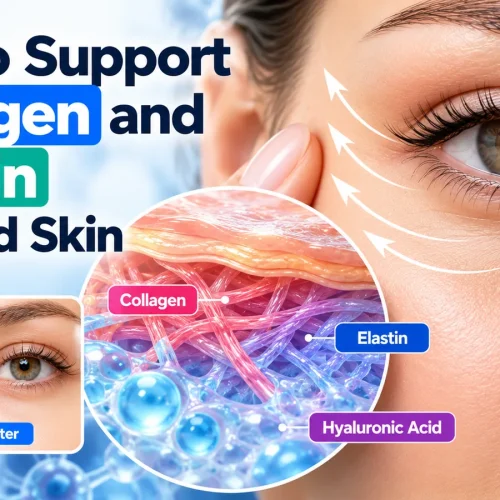
The first changes around the eyes can appear surprisingly early. The fine lines become more noticeable, the upper lids can appear less firm, and the area under the eyes can begin to look looser and less smooth. This is partly because the skin on the eyelids has little structural margin to spare.
It is the thinnest skin on the human body, less than 1 millimetre thick. It also has a relatively thin outer layer and sits very close to the underlying eye muscle, with no intervening layer of subcutaneous fat. These features make it particularly susceptible to age-related changes and environmental effects.
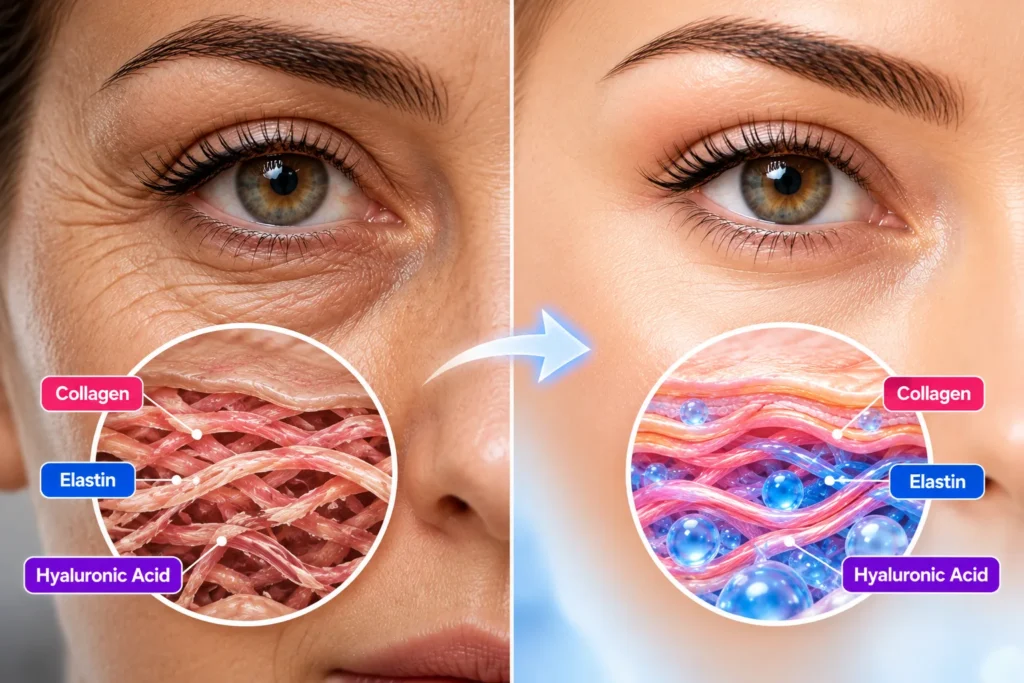
So supporting the eyelid area is more than just smoothing its surface temporarily. The state of collagen, elastin and hyaluronic acid in the skin’s extracellular matrix is also important.
Why does eyelid skin lose firmness
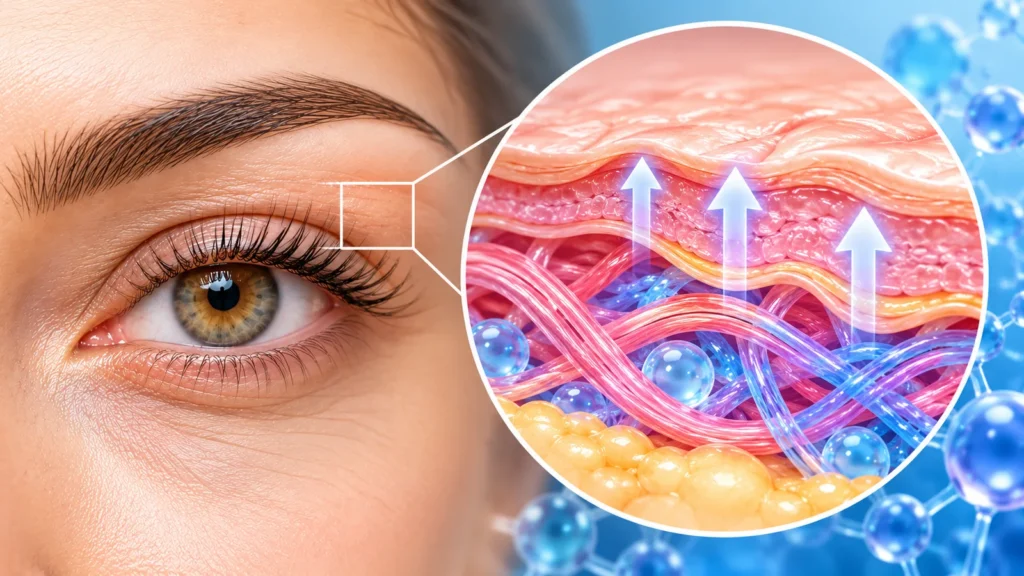
Skin aging is caused by a combination of intrinsic and extrinsic factors.
Intrinsic aging is the natural biological process that occurs over time, including changes associated with the decline in levels of estrogens and androgens. These processes can contribute to tissue atrophy, dryness, wrinkles and reduced elasticity in the dermis and epidermis.
Some of the most dramatic changes occur in the extracellular matrix, the structural milieu where skin cells live. Aging is associated with a reduction in the production of collagen, elastin and glycosaminoglycans such as hyaluronic acid.
Extrinsic aging is the result of external factors, especially ultraviolet exposure. As eyelids are exposed areas, the intrinsic aging effect may be added to photo-ageing. Environmental irritants and pollutants can add stress to this already delicate skin.
You may notice fine lines on the upper and lower lids, crow’s feet, laxity, under-eye bags, dark circles and changes in the way the eyes open. They are not all features of the same origin, so you should not anticipate a single topical treatment to address every concern.
Collagen, elastin, and hyaluronic acid perform different tasks
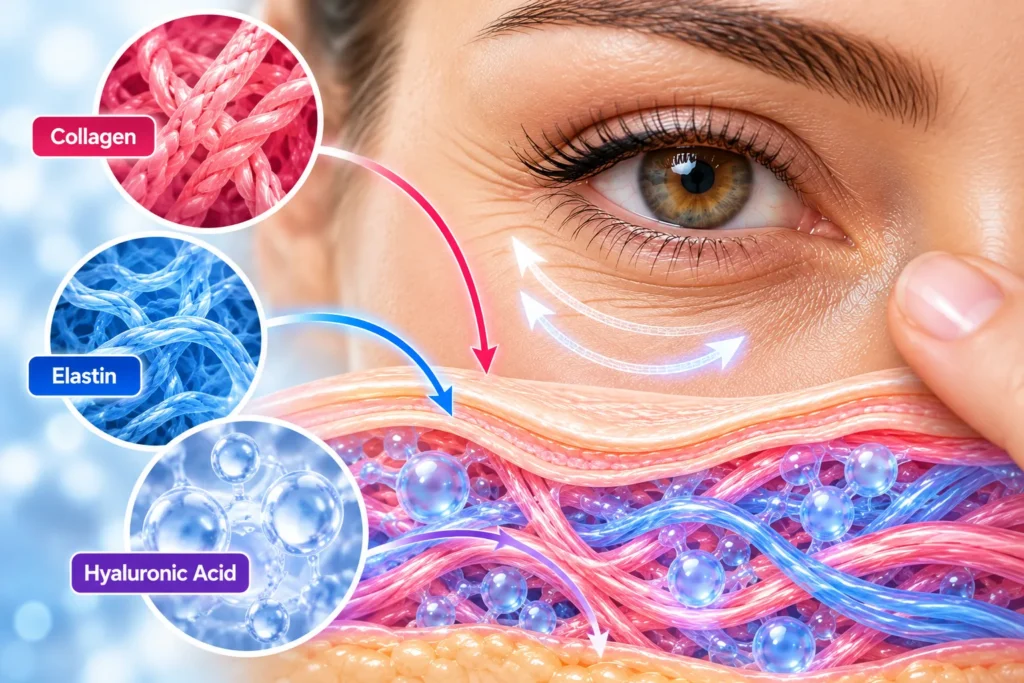
Collagen and elastin are often discussed together, but they make different contributions to skin structure.
Fibrillar collagens provide tensile strength. Elastic fibres, formed from elastin and fibrillin microfibrils, help the skin stretch and return to its previous shape. Together, these components give skin much of its strength and resilience.
The elastic-fibre network can deteriorate as enzymes that degrade these fibres become more active. A similar process affects collagen. As these structural elements decline, thin eyelid skin may appear less taut and lines can become more noticeable.
Hyaluronic acid plays another important role. This glycosaminoglycan has a strong affinity for water and can increase in volume within an aqueous environment. More than half of the body’s total hyaluronic acid is found in the skin, where it helps maintain hydration and structural integrity. A significant age-related decline can contribute to dryness, wrinkles and sagging.
This distinction is useful when evaluating eye products. A formula shown to affect elastin or hyaluronic acid should not automatically be described as increasing collagen unless collagen production was also measured.
What does the research show?
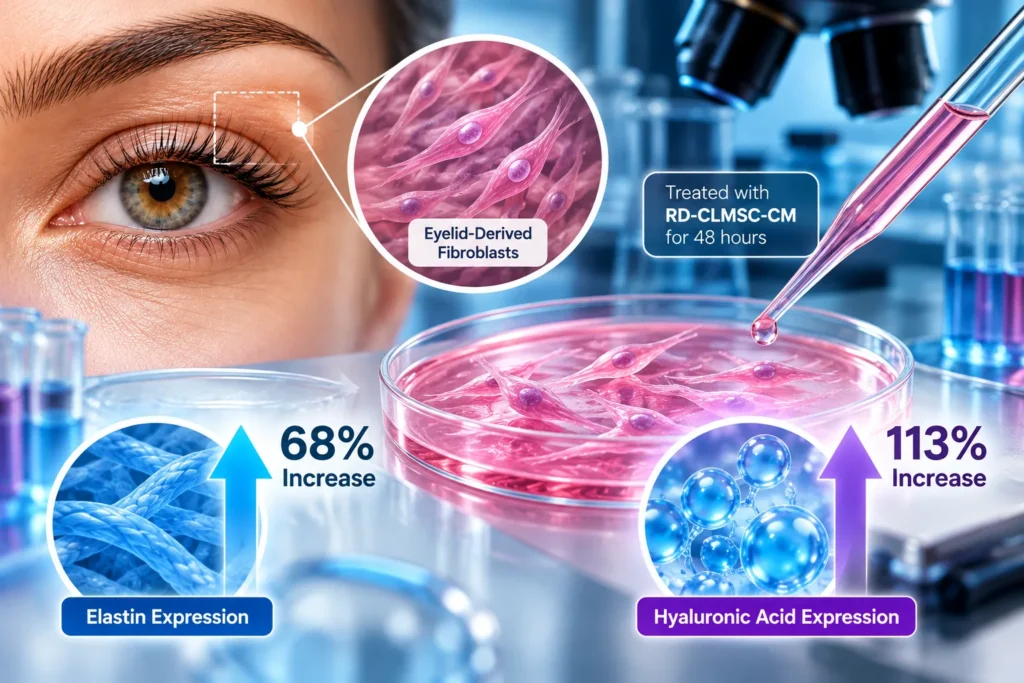
One study published in the peer-reviewed journal Dermatologic Surgery examined red deer umbilical cord lining mesenchymal stem cell-conditioned media, abbreviated as RD-CLMSC-CM. This conditioned media is an exosomal suspension containing protein cytokines and growth factors in particular ratios and proportions.
Researchers exposed human dermal fibroblasts isolated from the upper-eyelid skin of nine donors to the conditioned media for 48 hours. The donors included men and women between 23 and 69 years old.
Compared with the control culture medium, fibroblasts exposed to RD-CLMSC-CM showed a 68 per cent increase in elastin expression and a 113 per cent increase in hyaluronic acid expression. The effects were observed across the donor age groups represented in the experiment.
These are laboratory findings involving cultured cells, providing evidence that the conditioned media can influence elastin and hyaluronic acid expression in eyelid-derived fibroblasts.
Did the laboratory changes translate into visible results?
The researchers also conducted a small volunteer case series using an eye formulation containing the same conditioned media. Four existing users of the Calecim’s facial cream applied Calecim Professional Eye Contour Lifting Cream to their upper and lower eyelids twice daily after cleansing.
Photographs were taken before treatment and again after 35 days. The volunteers completed self-assessments, while a medical professional evaluated features including wrinkles, texture and fine lines, laxity, pigmentation irregularities, and the appearance of under-eye bags.
All four volunteers reported improvements in laxity and the appearance of their eye bags. Three of the four reported improvements in wrinkles, texture or fine lines, and pigmentation irregularities. The investigator recorded improvement in texture or fine lines, laxity, and eye-bag appearance in all four participants. Investigator assessments also found improvement in wrinkles among three participants and pigmentation irregularities among two.
No major or minor adverse effects were reported during the study period.
A more precise approach to eyelid firming
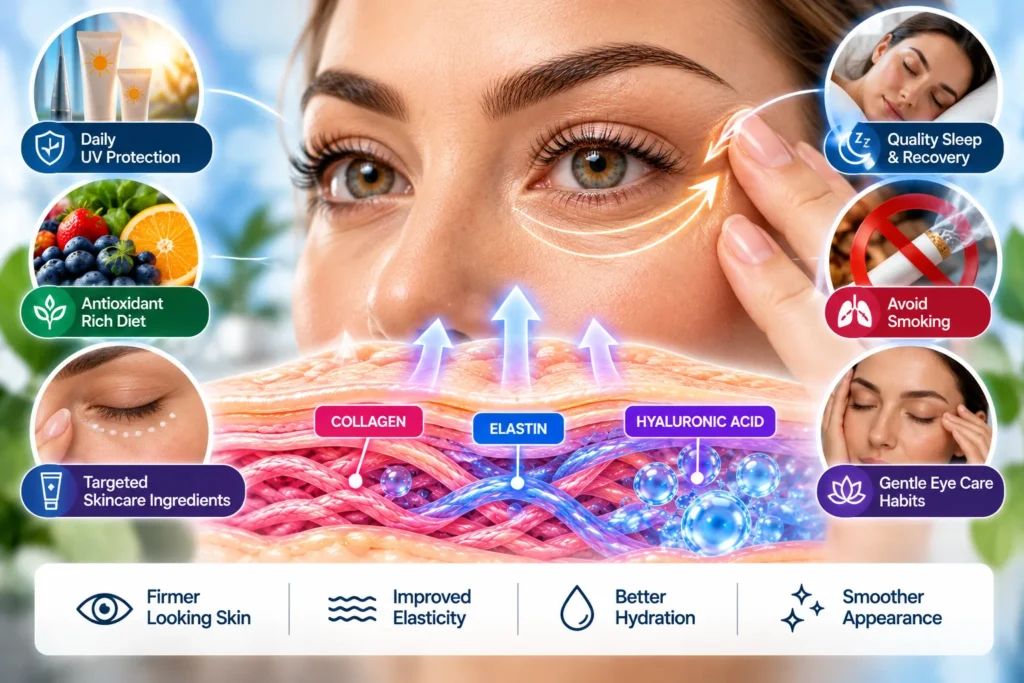
For someone looking to support collagen and elastin in eyelid skin, understanding what has been demonstrated in research helps guide product selection.
The available research described here supports the potential of RD-CLMSC-CM to increase elastin and hyaluronic acid expression in cultured eyelid fibroblasts. A related five-week case series also documented visible improvements in several aesthetic measures.
Collagen remains a major part of the extracellular matrix and an important contributor to skin strength. It simply means that the evidence for each structural component should be stated on its own terms.
Eyelid skin is unusually thin, exposed, and structurally delicate. Products developed for this area should therefore be judged by targeted research, appropriate formulation, and accurately described outcomes. The strongest case is not made by promising that one cream rebuilds everything. It is made by showing precisely what was measured, where the results were observed, and what questions still remain.