
A good skincare routine for dry skin should focus on hydration, moisture retention and protecting the skin’s natural barrier. If your face often feels tight after washing, looks flaky under makeup or becomes uncomfortable during colder weather, your current skincare products may not be providing enough moisture.
Dry skin needs a gentle approach. Using too many exfoliating products, harsh cleansers or strong active ingredients can make dryness more noticeable. Instead, a simple routine with a suitable cleanser, hydrating ingredients and a nourishing moisturiser can help your skin feel softer and more comfortable.
The good news is that you do not need a complicated collection of expensive products. Choosing the right ingredients and following a consistent morning and night routine can make a meaningful skincare routine for dry skin difference.
What Causes Dry Skin?
Dry skin develops when the skin loses too much water or does not retain enough moisture. It may feel rough, tight, flaky or itchy, and in more severe cases it can become cracked.
Several everyday factors can contribute to dryness:
- Hot showers: Hot water can remove some of the skin’s natural oils.
- Harsh cleansers: Strong soaps and foaming products may leave skin feeling tight.
- Cold or dry weather: Low humidity can increase moisture loss.
- Over-exfoliation: Frequent scrubbing and strong exfoliating acids can irritate the skin.
- Fragranced products: Some fragrances can trigger irritation in sensitive skin.
- Age and skin changes: Skin can become drier as it ages.
Sometimes persistent dryness is associated with a skin condition such as eczema or psoriasis. If dryness is severe, painful or does not improve with gentle care, professional advice is important.
The American Academy of Dermatology explains that dry skin can become itchy, cracked and irritated, and recommends gentle cleansing and regular skincare routine for dry skin moisturising.
Best Skincare Routine for Dry Skin: Morning Steps
Your morning routine should help replenish moisture and protect your skin throughout the day. Keep the steps simple and choose products that feel comfortable rather than heavy or irritating.
Step 1: Cleanse with a Gentle Face Wash

Start your morning with a gentle cleanser that removes overnight oil and impurities without leaving your face feeling stripped.
Look for:
- Fragrance-free formulas.
- Cream or lotion-based cleansers.
- Glycerin-containing products.
- Gentle cleansing ingredients.
- Formulas designed for dry or sensitive skin.
Avoid cleansers that leave your face feeling unusually tight or squeaky clean. If your skin is very dry or sensitive, rinsing with lukewarm water in the morning may be enough, depending on your skincare routine for dry skin needs.
Step 2: Apply a Hydrating Serum
A hydrating serum can help improve the feel of dry skin by attracting and holding water.
Some useful ingredients include:
Hyaluronic acid: Helps attract water and supports skin hydration. Apply it according to the product instructions, often on slightly damp skin, and follow with moisturiser.
Glycerin: A humectant that attracts water and is commonly used in moisturisers and hydrating products.
Panthenol: Also known as provitamin B5, panthenol is used in skincare to support hydration and soothe the feel of dry skin.
You do not need all these ingredients in separate serums. A single well-formulated hydrating product may be skincare routine for dry skin sufficient.
Step 3: Use a Nourishing Moisturiser
Moisturiser is one of the most important steps in a skincare routine for dry skin.
A cream-based moisturiser is often more suitable than a lightweight lotion when your skin needs extra moisture. Look for ingredients such as:
- Ceramides: Help support the skin’s natural protective barrier.
- Shea butter: Helps soften and condition dry skin.
- Squalane: An emollient that helps soften the skin.
- Glycerin: Helps attract water.
- Petrolatum: Helps reduce water loss by forming a protective layer.
Apply your moisturiser while your skin is slightly damp. This helps retain water on the skin’s surface.
If your skin is prone to clogged pores, choose a formula labelled non-comedogenic and see how your skin skincare routine for dry skin responds.
Step 4: Finish with Sunscreen
Sunscreen is an essential morning skincare step, including for people with dry skin.
Choose a broad-spectrum sunscreen with SPF 30 or higher. A moisturising formula may feel more comfortable if your skin is dry.
Apply it to exposed skin and follow the product’s directions for the correct amount and reapplication. Remember that sunscreen works alongside other sun-protection habits, such as seeking shade and wearing protective clothing.
Night Skincare Routine for Dry Skin
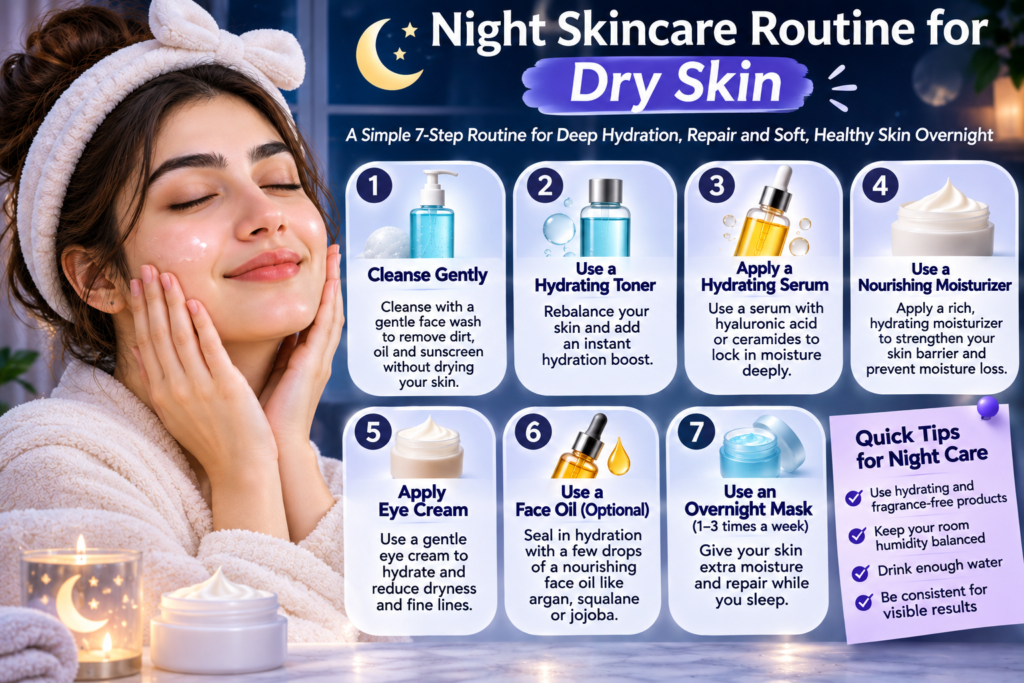
Your evening routine should remove sunscreen, makeup and daily impurities while helping your skin stay comfortable overnight.
Step 1: Remove Makeup and Sunscreen
If you wear makeup or water-resistant sunscreen, use a suitable cleansing oil, balm or gentle makeup remover.
Follow with a mild cleanser if needed. Avoid rubbing your face aggressively, particularly around the skincare routine for dry skin eyes.
Step 2: Apply a Hydrating Product
After cleansing, you can apply a simple hydrating serum containing glycerin, hyaluronic acid or panthenol.
If your skin is easily irritated, keep this step optional. A gentle cleanser followed by a suitable moisturiser may be enough.
Step 3: Apply a Rich Moisturiser
Use a nourishing cream to reduce moisture loss overnight.
Ingredients such as ceramides, shea butter and petrolatum can be useful in products designed for dry skin. If some areas are particularly dry, a small amount of an appropriate protective ointment may help.
You do not need to apply several layers of products. Consistency and comfort are more important than the number of skincare routine for dry skin skincare steps.
Best Ingredients to Look for in Products for Dry Skin
Understanding skincare ingredients can make choosing products easier. Here is a simple guide to some commonly used ingredients.
| Ingredient | Main skincare role |
|---|---|
| Hyaluronic acid | Attracts water to support hydration |
| Glycerin | Helps attract and retain water |
| Ceramides | Support the skin’s protective barrier |
| Shea butter | Softens and conditions skin |
| Squalane | Helps soften dry skin |
| Petrolatum | Helps reduce moisture loss |
| Panthenol | Supports hydration and skin comfort |
| Urea | Helps moisturise and soften rough skin |
Not every ingredient suits every person. For example, urea can be useful in some moisturisers for dry or rough skin, but certain formulations may sting irritated or cracked skin. Introduce new products carefully.
Skincare Ingredients and Habits to Be Careful With
Dry skin does not always respond well to strong or excessive skincare routines.
Consider reducing or avoiding the following when your skin is dry or irritated:
Harsh exfoliation: Frequent scrubs can make dryness and irritation worse.
Strong cleansing products: Some soaps and cleansers remove too much of the skin’s natural oil.
Fragrance: Fragranced skincare can irritate some people, particularly those with sensitive skin.
Too many active ingredients: Combining several exfoliating acids or retinoids can increase irritation.
Very hot water: Long, hot showers can contribute to dryness.
You do not necessarily have to avoid every active ingredient permanently. However, if your skin is uncomfortable, simplifying your routine is often a sensible skincare routine for dry skin first step.
Daily Tips to Keep Dry Skin Comfortable
Your daily habits can support your skincare routine and help prevent unnecessary moisture loss.
- Use lukewarm water: Avoid washing your face with very hot water.
- Pat your face dry: Use a soft towel instead of rubbing your skin.
- Moisturise regularly: Apply moisturiser after washing and whenever your skin feels dry.
- Avoid excessive exfoliation: Give your skin time to recover between exfoliating treatments.
- Choose comfortable fabrics: Soft clothing can reduce friction if your body skin is also dry.
- Protect your skin outdoors: Use sunscreen and suitable protective clothing.
- Keep your routine consistent: Avoid changing several products at the same time.
- Consider indoor humidity: A humidifier may help if the air in your home is particularly skincare routine for dry skin dry.
How Long Does It Take to Improve Dry Skin?
There is no fixed timeline because dryness can have different causes and levels of severity.
Some people notice that their skin feels more comfortable after changing to a gentle cleanser and using a suitable moisturiser regularly. More persistent dryness may take longer to improve, particularly if irritation or an underlying skin condition is involved.
Pay attention to how your skin responds rather than expecting an overnight transformation.
If your skin remains very itchy, painful, cracked, bleeding or irritated, consult a qualified healthcare professional or dermatologist. Persistent dryness may need more than a cosmetic skincare skincare routine for dry skin routine.
Frequently Asked Questions
What is the best skincare routine for dry skin?
A simple routine includes a gentle cleanser, hydrating serum if needed, nourishing moisturiser and SPF 30 or higher in the morning. At night, remove makeup and sunscreen, cleanse gently and apply moisturiser.
Which ingredient is best for dry skin?
Glycerin, hyaluronic acid, ceramides, shea butter and petrolatum are useful ingredients to look for. They have different roles, so a combination in a well-formulated moisturiser may be helpful.
Should I use a serum or moisturiser first?
Generally, apply a lightweight water-based serum before your moisturiser. The moisturiser helps soften the skin and reduce moisture loss.
Is hyaluronic acid good for dry skin?
Hyaluronic acid is a humectant that attracts water. It can be useful in a dry-skin routine, especially when followed by a moisturiser.
Should people with dry skin exfoliate?
Exfoliation is not essential for everyone. If your skin is already flaky, irritated or sensitive, avoid scrubbing and strong exfoliating products until it feels comfortable. Ask a dermatologist if you are skincare routine for dry skin unsure.
Can I use the same moisturiser in the morning and at night?
Yes. If a moisturiser feels comfortable and works well for your skin, you can generally use it in both routines. You may prefer a lighter texture during the day and a richer cream at night.
Final Thoughts
The best skincare routine for dry skin is one that protects moisture, supports the skin barrier and avoids unnecessary irritation. Start with a gentle cleanser, choose hydrating ingredients such as glycerin or hyaluronic acid, use a nourishing moisturiser and apply sunscreen every morning.
You do not need dozens of products to care for dry skin. A simple, consistent routine with suitable ingredients can be a better starting point than constantly trying new treatments.
Most importantly, listen to your skin. If dryness becomes painful, persistent or severely irritated, seek professional advice rather than relying on skincare products alone.