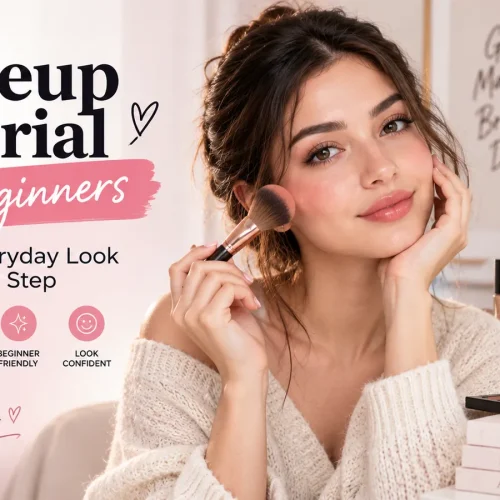


Makeup feels difficult when tutorials jump straight into contour maps, cut creases and ten different brushes. Beginners do not need any of that. A polished everyday look can be built with a small kit and a repeatable order that is easy to adjust for your own face.
Quick answer: Prep the skin, apply a light base only where needed, add concealer, set high-movement areas, define brows, add simple eye makeup, use mascara, bring colour back with blush and finish with a comfortable lip product. Start sheer and build slowly.
For more on this, see our guides to easy everyday eye makeup looks for beginners, a no-nonsense buying guide to Real Techniques brushes and beauty tips that make your routine easier.
What You Need for This Beginner Makeup Tutorial
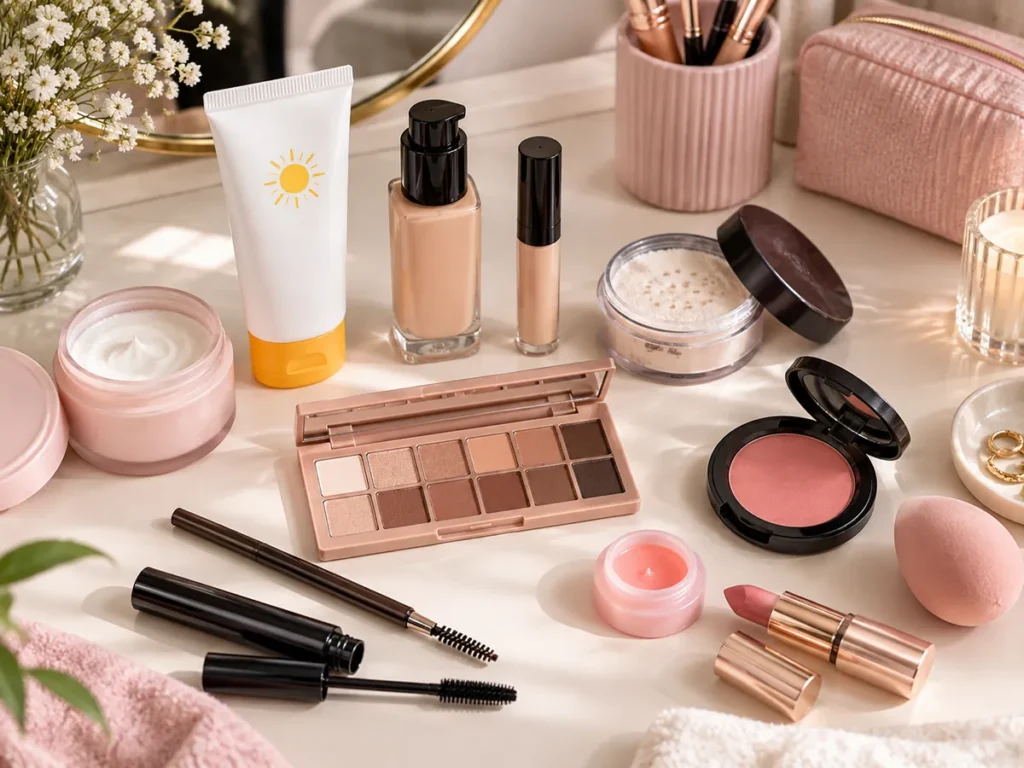
- Moisturiser and sunscreen for daytime
- Skin tint, BB cream or foundation
- Concealer
- Optional translucent powder
- Brow pencil or gel
- Neutral eyeshadow or bronzer
- Mascara
- Blush
- Lip balm, tint or lipstick
Step 1: Prep Your Skin
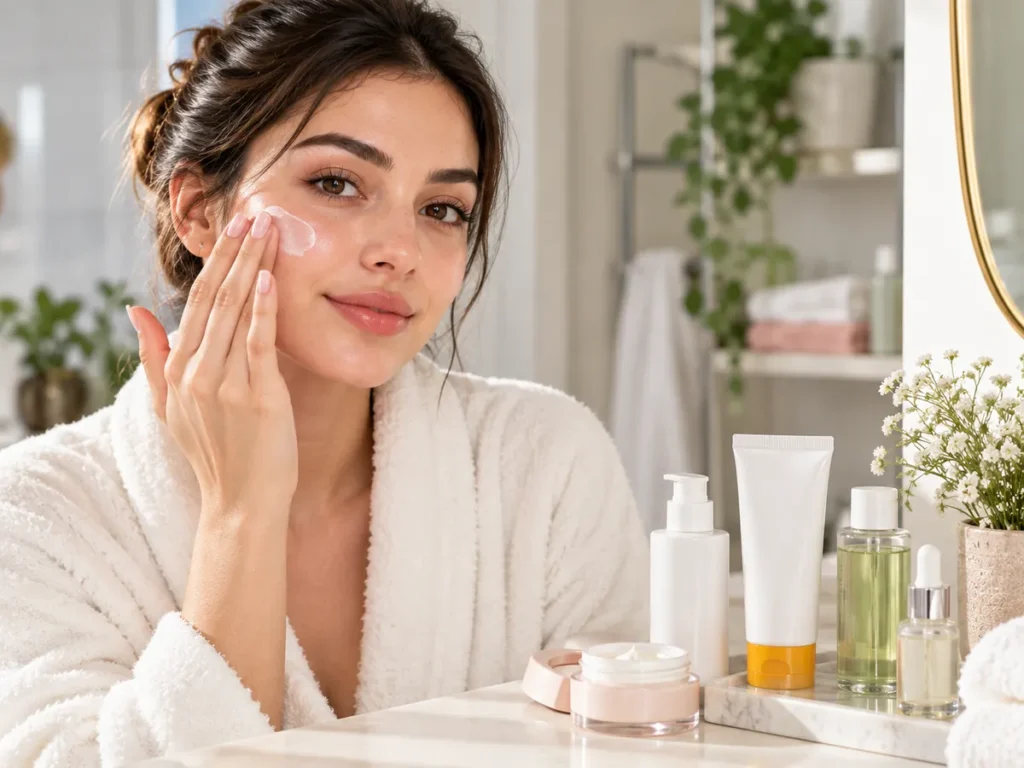
Makeup sits better on comfortable, moisturised skin. Use your normal skincare rather than trying a new heavy primer routine on the same day. In daytime, sunscreen goes after skincare and before makeup.
Step 2: Apply a Light Base
Start with less product than you think you need. Dot foundation or tint around the centre of the face and blend outward with fingers, a damp sponge or a brush. If your skin already looks even, skip full-face foundation and use concealer only where you want coverage.
Step 3: Conceal Strategically
Add small amounts under the eyes, around the nose or over blemishes. Let high-coverage concealer sit for a few seconds before blending. This often gives more coverage with less product.
Step 4: Set Only Where Needed
Powder is useful on areas that crease or become shiny, but a dry or glowy skin type may not need it everywhere. Press a small amount into the T-zone or under-eye area instead of dusting the whole face heavily.
Step 5: Fill Brows Lightly
Brush brows upward, then fill visible gaps with short strokes. Keep the front softer and add slightly more definition through the arch and tail. Brow gel can hold the hairs in place without making the brow look drawn on.
Step 6: Add Easy Eye Definition
Use one neutral shadow over the lid and a slightly deeper shade close to the lash line or outer corner. A matte bronzer can work as a simple crease colour. If you want more ideas, GlowCulture already has a separate 2026 eye makeup trends guide.
Step 7: Curl Lashes and Apply Mascara
Curl lashes before mascara, never after it has dried. Wiggle the mascara wand gently at the roots and pull upward. One coat gives a natural result; a second coat adds definition.
Step 8: Bring Colour Back With Blush
After foundation, the face can look flat. Add blush to the apples or upper cheek depending on the effect you like. Cream formulas tend to look dewy; powder formulas can be easier to control over set makeup.
Step 9: Add Optional Bronzer or Highlighter
Bronzer can warm the perimeter of the face and highlighter can emphasise the high points. Both are optional. Beginners often get a cleaner result by mastering base, brows, lashes and blush first.
Step 10: Finish the Lips
For everyday makeup, choose a lip product you can reapply without a mirror. Balm, tint and soft lipstick are forgiving. Lip liner can add shape, but it does not need to be dramatically darker than the lip colour.
Beginner Makeup Mistakes to Avoid
- Using too much foundation at the start.
- Choosing a foundation shade without checking it in daylight.
- Applying heavy powder over dry texture.
- Drawing the same brow shape on every face.
- Trying several new techniques before learning a simple everyday look.
Frequently Asked Questions
What makeup should a beginner buy first?
A light base or concealer, brow product, mascara, blush and lip product are enough to build a complete look.
Does concealer go before or after foundation?
Usually after foundation so you can see which areas still need coverage. Colour corrector, if used, normally goes before foundation or concealer.
Do I need primer?
No. Primer can help with specific issues such as oil control, grip or smoothing, but it is not compulsory for a good makeup application.
How do I make makeup look natural?
Use thin layers, keep some natural skin visible, blend edges carefully and choose shades close to your natural colouring.
Final Thoughts
The best beginner makeup tutorial is one you can repeat. Build a light base, define one feature at a time and stop before the makeup feels heavy. Technique improves much faster when the routine stays simple.
Sources & Further Reading
- American Academy of Dermatology – Skin care in your 20s (sunscreen before makeup)
- GlowCulture – Eye Makeup Trends 2026
Editorial note: This article is for general information only and is not medical advice. Please speak to a qualified healthcare professional about any personal health or skin concern. Learn how we research and review our content in our Editorial Policy.