
Category: Health
Author: Aiman Shahzadi
Protein is everywhere in 2026: high-protein cereal, yoghurt, coffee, snacks, desserts and even foods that were never traditionally marketed as protein products. The internet calls the behaviour proteinmaxxing – trying to push protein intake as high as possible to build muscle, stay full or protect lean mass while losing weight.
For more on this, see our guides to whether the fibermaxxing trend is actually healthy, whether creatine actually improves brain health and anti-inflammatory foods to add to your diet.
Quick answer: Protein is essential, but more is not endlessly better. Needs vary by body size, age, activity, pregnancy, illness and training. Most people benefit more from adequate protein spread across meals than from chasing an extreme daily proteinmaxxing number.
Why Is Proteinmaxxing So Popular?
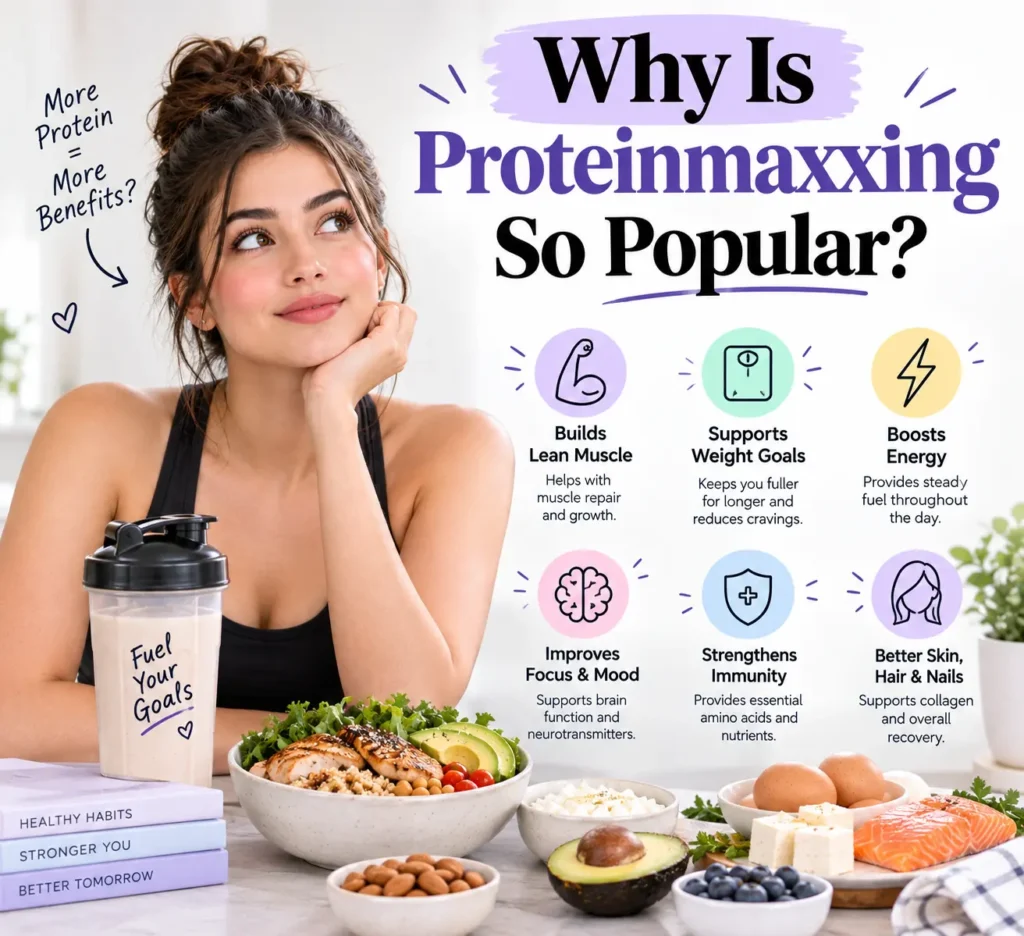
The trend sits at the intersection of gym culture, weight-loss conversations, GLP-1 medications, social media meal-prep content and aggressive “high protein” food marketing. Protein does matter for muscle maintenance and repair, but the marketing can make ordinary foods seem inadequate unless they contain a huge number on the front of the pack.
What Does Protein Do?
- Helps build and repair body tissues.
- Provides amino acids used in enzymes, hormones and immune functions.
- Supports maintenance of muscle, especially when paired with resistance training.
- Can contribute to fullness as part of a balanced meal.
How Much Protein Do You Need?
There is no one perfect number for every adult. UK public-health guidance focuses on eating a balanced diet with protein foods such as beans, pulses, fish, eggs, meat and other sources. People with higher training loads, older adults and those recovering from illness may have different requirements.
| Goal/context | Useful focus | What not to assume |
|---|---|---|
| General health | Include a protein source in regular meals | Every snack needs added protein |
| Building muscle | Resistance training + adequate energy + protein | Protein alone builds muscle |
| Weight management | Balanced meals with protein, fibre and produce | High-protein labels guarantee a low-calorie food |
| Vegetarian/vegan diet | Beans, lentils, tofu, tempeh, soya, nuts, seeds | Animal protein is required |
The 2026 Protein Guidelines Update
The old 0.8g/kg figure many people quote was only ever calculated as a floor to prevent deficiency in nearly all healthy adults — never meant as an optimal everyday target. The 2025-2030 Dietary Guidelines for Americans, released in January 2026, moved the practical recommendation to 1.2 to 1.6 grams per kilogram of body weight per day (for a 70kg/154lb adult, roughly 84-112g daily).
This shift reflects evidence that higher intakes in this range support better muscle maintenance, satiety, and long-term weight management, especially during calorie restriction. For adults 50 and over, the per-meal amount needed to trigger muscle protein synthesis also rises — closer to 30g per meal rather than 25g, because ageing muscle needs a slightly larger dose to respond the same way.
This update is not a licence for extreme “protein-maxxing”: intakes well above 2g/kg show no added muscle-building benefit for most people and can displace other nutrients, such as fibre, that most people already fall short on. UK reference intakes remain lower (around 0.75g/kg as a baseline), reflecting a different, deficiency-focused calculation — the US update reflects a shift toward optimal rather than minimal intake.
Signs Your Protein Strategy Is Becoming Unbalanced
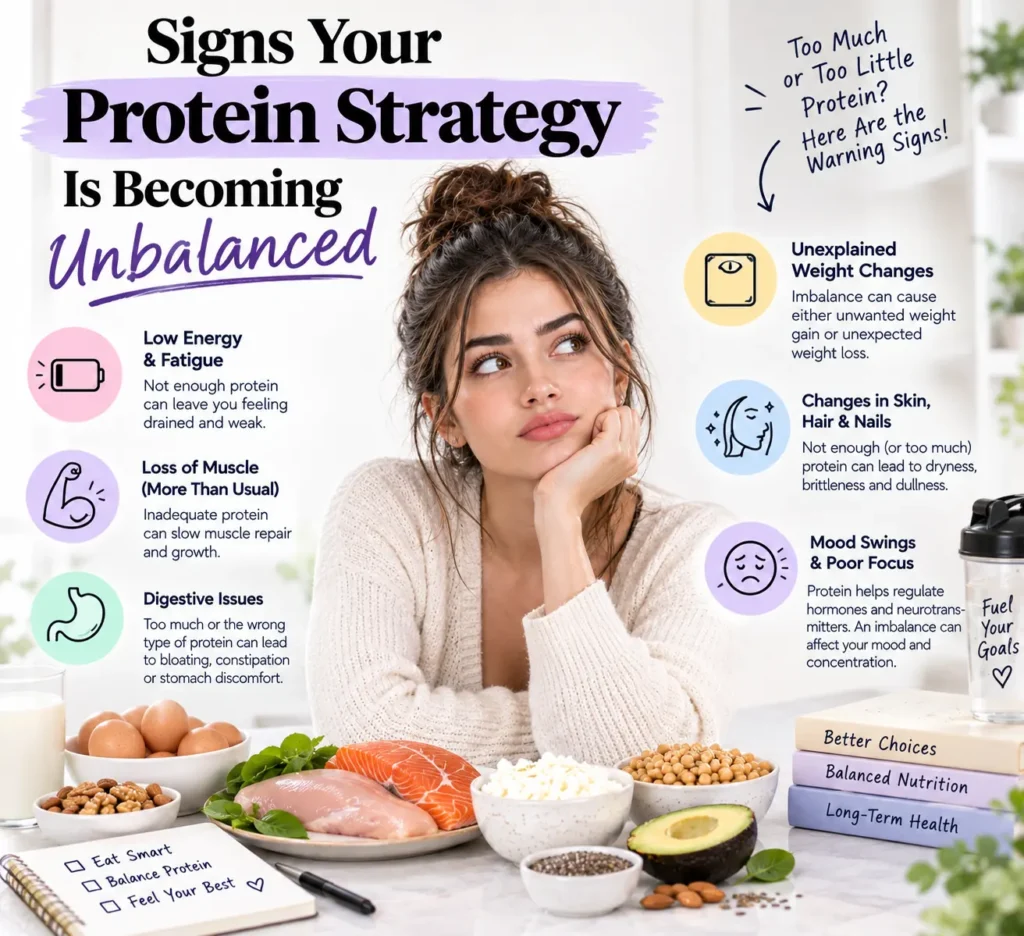
You are replacing fruit, vegetables and whole grains
A diet can be high in protein and still be low in fibre, potassium, vitamin C and other nutrients. If every meal becomes meat, shakes and bars, the rest of the diet can shrink too far.
You are relying heavily on processed “protein” foods
Protein biscuits, desserts and snacks can fit occasionally, but a protein claim does not automatically make a product nutritious. Check the full ingredient list, saturated fat, salt, added sugars and portion size.
You are treating a social-media target as medical advice
Protein requirements can change with kidney disease, liver disease, pregnancy, older age, cancer treatment and other conditions. Personalised advice is more appropriate in those situations.
How to Build a High-Protein Meal Without “Maxxing”
- Choose a protein base: eggs, fish, chicken, tofu, beans, lentils or yoghurt.
- Add fibre-rich carbohydrate: potatoes with skin, oats, brown rice, whole-grain bread or quinoa.
- Add vegetables or fruit.
- Include a source of unsaturated fat such as olive oil, nuts or seeds.
- Adjust the portion for appetite, activity and individual needs.
If stress or poor sleep is driving cravings or inconsistent eating, GlowCulture’s stress-management guide and sleep-quality guide are more useful than simply adding another supplement.
Proteinmaxxing and GLP-1 Weight-Loss Drugs
People taking prescription weight-management medicines may eat less overall, which can make adequate nutrition more important. However, medication users should not copy internet protein targets. Their prescribing clinician or dietitian can help with protein, energy, hydration and side effects in the context of their medical history.
Protein Sources Compared
- Eggs, fish and poultry: complete proteins that are easy to add to most meals. Oily fish also provides omega-3 fats.
- Dairy and yoghurt: convenient sources of protein and calcium. Plain versions usually contain less added sugar.
- Beans, lentils and chickpeas: inexpensive sources of protein and fibre that suit vegetarian and vegan diets.
- Tofu, tempeh and soya foods: versatile plant proteins that work in stir-fries, curries and salads.
- Nuts and seeds: useful in small amounts, but energy-dense, so portions matter.
A Sample Day That Does Not Overdo It
- Breakfast: porridge made with milk or a plant alternative, topped with berries and seeds.
- Lunch: lentil and vegetable soup with wholemeal bread and a boiled egg.
- Snack: plain yoghurt with fruit, or hummus with vegetable sticks.
- Dinner: grilled fish or tofu with potatoes, vegetables and olive oil.
What the Official Guidance Says
UK reference intakes for most adults are around 0.75g of protein per kilogram of body weight per day, although people who train regularly, older adults and those recovering from illness may need more. Exact figures depend on the individual, which is why it is worth discussing your own needs with a registered dietitian or your GP instead of copying a number from social media.
Practical Tips If You Want to Eat More Protein
- Increase protein gradually and spread it across meals rather than loading it into one.
- Keep fibre, fruit and vegetables in your meals so the diet stays balanced.
- Drink enough fluid, especially if you use protein powders or bars.
- Check labels on protein products for saturated fat, salt and added sugar.
- Speak to a healthcare professional first if you have kidney disease, liver disease or another long-term condition.
Frequently Asked Questions
Can too much protein be bad for you?
Very high intakes can crowd out other foods, add excess calories and may be inappropriate for certain medical conditions. The source of protein also matters: a diet dominated by processed meats is different from one based on fish, pulses, dairy, eggs, tofu and nuts.
Do I need protein powder?
No. Protein powder is a convenience product, not a requirement. Many people can meet their needs through food.
Is plant protein enough?
Yes, a well-planned diet can provide adequate protein from beans, pulses, soya foods, nuts, seeds and grains. Variety helps provide a broad amino-acid profile.
Should I eat protein at every meal?
Including a useful source at meals can be a practical way to distribute intake, but there is no need to turn every drink and snack into a protein product.
Final Thoughts
Proteinmaxxing reflects a real interest in muscle and nutrition, but the healthiest version is “protein adequacy,” not protein obsession. Build complete meals, spread protein through the day and make room for fibre-rich plants and healthy fats.
Related Reading
- Fibermaxxing in 2026: Is the Viral High-Fiber Trend Actually Healthy?
- 15 Healthy Breakfast Recipes for Busy Mornings
- 15 Healthy Snack Recipes That Are Easy and Satisfying
- Creatine for Brain Health: Does It Improve Memory, Focus or Mental Energy?
- The Forgotten Scientists Who Built Modern Nutrition
- The Nutrition Discoveries Science Forgot After WWII
Browse more in Health or return to the GlowCulture homepage.
Sources & Further Reading
Editorial note: This article is for general information only and is not medical advice. Please speak to a qualified healthcare professional about any personal health or skin concern. Learn how we research and review our content in our Editorial Policy.