
Skin Care6 min read
Skin Barrier Repair: Easy 5-Step Guide for UK Skin
 Aiman Shahzadi··Updated 20 Nov 2026·No Comments
On this page
- What is the skin barrier?
- Signs of a damaged skin barrier
- What damages the skin barrier?
- Step 0: Pause what might be irritating your skin
- The 5-step skin barrier repair routine
- How long does skin barrier repair take?
- UK tips: weather, heating and water
- How to bring actives back
- Common mistakes
- When to see a GP or pharmacist
- Frequently asked questions
- The bottom line
By [Aiman Shazadi]
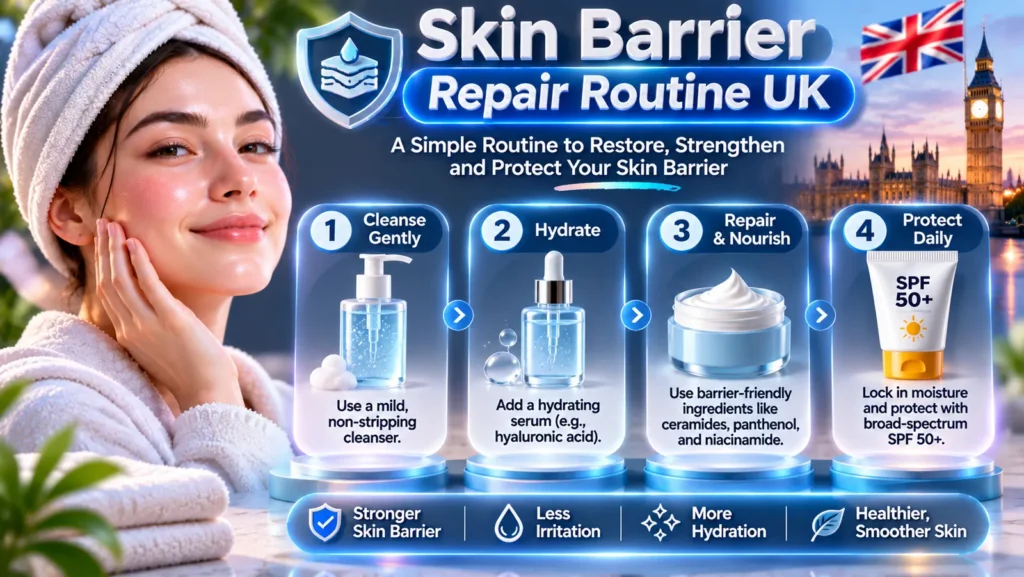
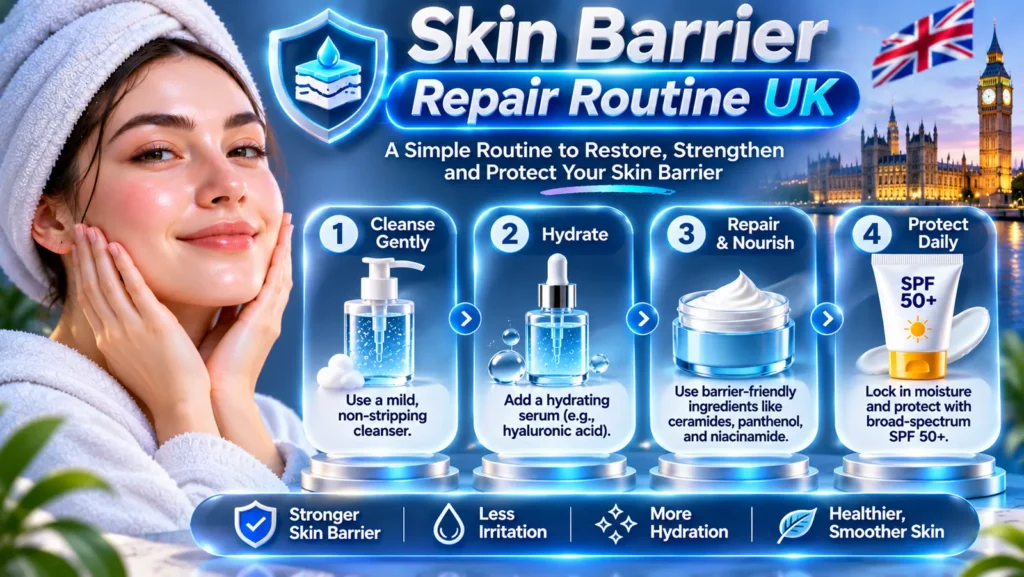
Skin barrier repair means calming and rebuilding the outer layer of your skin so it can hold water in and keep irritants out. In this guide you will learn the signs of a damaged barrier, what to stop using first, a simple five-step routine, and how to look after your skin in the UK climate.
Quick answer: To repair your skin barrier, strip your routine back to three basics: a gentle cleanser, a moisturiser with barrier-friendly ingredients such as ceramides, and sunscreen every morning. Pause exfoliating acids, scrubs and strong retinol until your skin feels comfortable again. Most people notice improvement within a few weeks, though full recovery can take longer.
What is the skin barrier?
Your skin barrier is the outermost layer of your skin. A common way to picture it is a brick wall: skin cells are the bricks and natural fats (lipids) such as ceramides are the mortar holding them together.
When the wall is strong, your skin keeps moisture in and keeps irritants, bacteria and pollution out. When it is weakened, water escapes more easily and the skin becomes dry, sensitive and reactive.
Signs of a damaged skin barrier
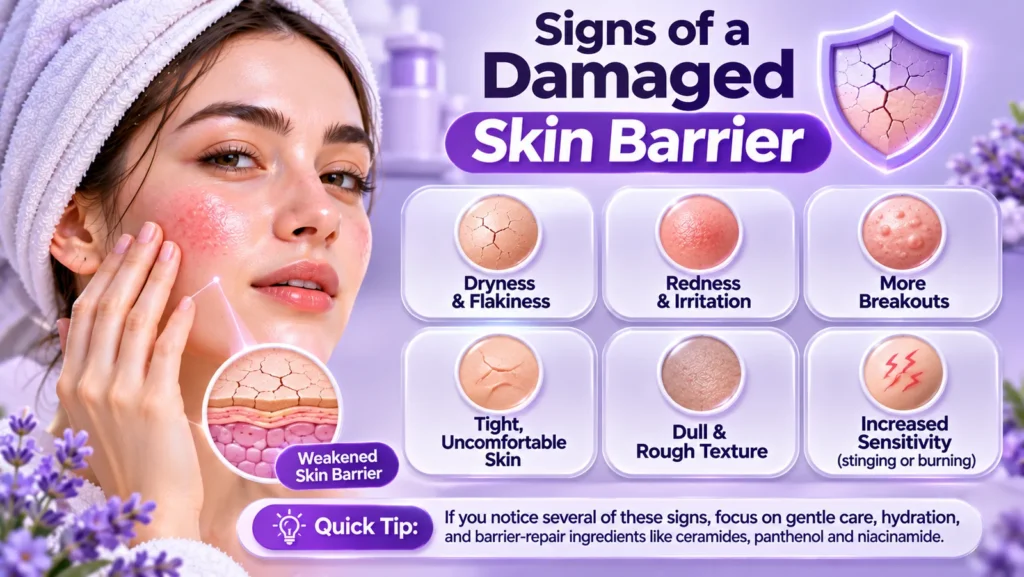
Your barrier may be struggling if your skin:
- feels tight or dry even after moisturiser
- stings or burns when you apply products that used to feel fine
- looks red, blotchy or flaky
- feels rough or looks dull
- is breaking out more than usual, or feels both oily and dehydrated
These signs can also come from other skin conditions, such as eczema, rosacea or contact dermatitis. If symptoms are severe or do not improve, see your GP or pharmacist.
What damages the skin barrier?
- Over-exfoliating with scrubs or strong acids
- Too many active ingredients at once (retinol, vitamin C, acids)
- Over-cleansing or using harsh, foaming cleansers
- Very hot water on the face
- UK weather and heating: cold, damp and windy conditions, then dry indoor heat
- Hard water, which is common in many parts of the UK and can leave skin feeling tight
- Sun exposure without sunscreen
Step 0: Pause what might be irritating your skin
Before adding anything, take things away. For the next few weeks, put these on hold:
- exfoliating acids (AHA, BHA) and physical scrubs
- retinol and other retinoids (if you are using a prescribed one, ask your prescriber before stopping)
- strong vitamin C serums
- fragranced products and essential-oil-heavy products
- cleansing brushes and face-steaming
If you normally follow a rotation like skin cycling, use only the recovery-night routine for now. (Link: Skin Cycling Routine for Beginners UK.)
The 5-step skin barrier repair routine
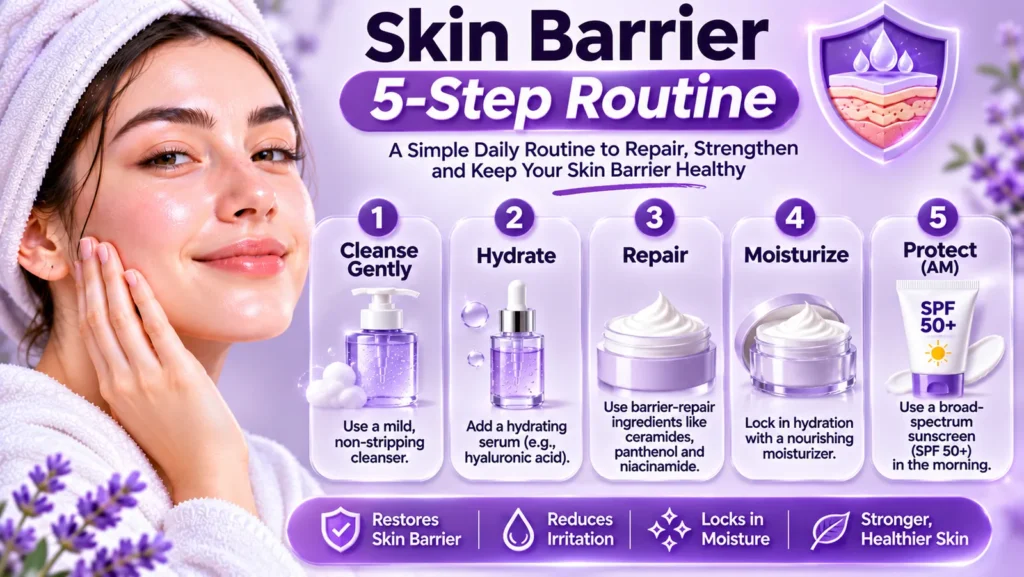
Step 1: Cleanse gently
Use lukewarm water and a mild, non-foaming or low-foam cleanser. In the morning, a splash of water may be enough if your skin is very dry. Do not scrub and pat dry with a clean towel.
Step 2: Add a hydrating layer (optional)
While skin is slightly damp, a simple hydrating serum with glycerin or hyaluronic acid can help. If your skin stings, skip this step and go straight to moisturiser.
Step 3: Moisturise generously
Choose a moisturiser with barrier-friendly ingredients:
- Ceramides, which help replace the skin’s natural fats
- Glycerin and hyaluronic acid, which draw in and hold water
- Squalane, shea butter or petrolatum, which help seal moisture in
- Panthenol (vitamin B5), which is known for its soothing feel
Pharmacy brands sold at Boots and Superdrug make ceramide moisturisers at different price points. Choose a fragrance-free option and try a small patch first.
Step 4: Seal at night if your skin is very dry
On very dry or sore areas, you can add a thin layer of a simple ointment-style balm over your moisturiser at night.
Step 5: Wear sunscreen every morning
Use SPF 30 or higher. A weakened barrier is more sensitive, so sun protection matters even on cloudy UK days. Mineral or fragrance-free formulas are often more comfortable on sensitive skin.
How long does skin barrier repair take?
Many people notice their skin feeling calmer within about two to four weeks of keeping things simple. A badly damaged barrier can take longer, sometimes several weeks to a few months, so stay consistent and be patient.
| Timeframe | What to expect |
|---|---|
| Days 1 to 7 | Less stinging and tightness if you have paused irritants |
| Weeks 2 to 4 | Skin feels more comfortable and less reactive |
| Weeks 4 to 8 | Redness and flaking settle, hydration improves |
| After 8 weeks | Slowly reintroduce one active at a time |
UK tips: weather, heating and water
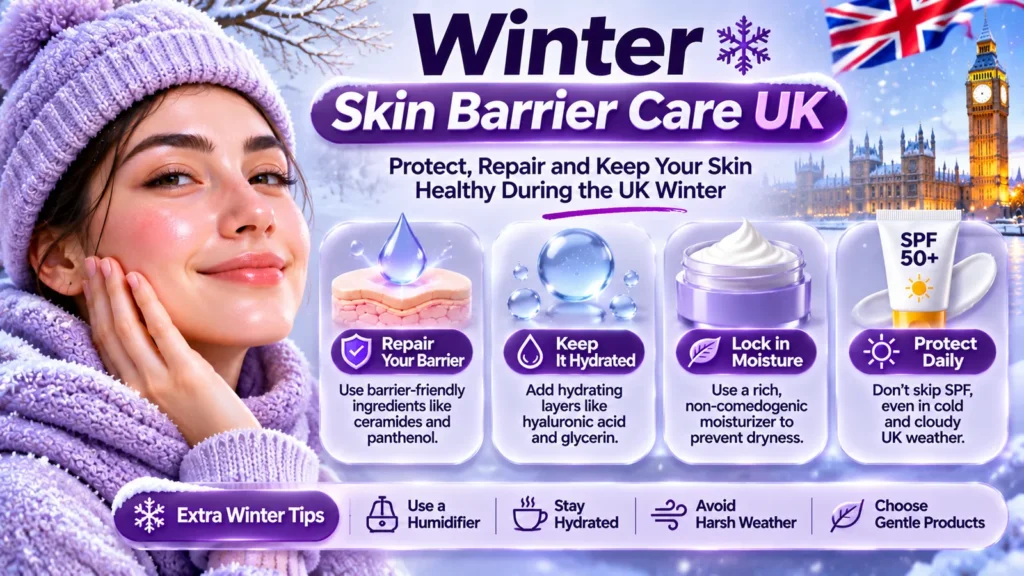
- Cold, windy days: protect your face with a richer moisturiser before going out.
- Central heating: dry indoor air pulls moisture from skin, so consider a humidifier in the bedroom and avoid sitting right next to radiators.
- Hard water: rinse with lukewarm water, pat dry gently and moisturise within a few minutes of washing.
- Winter sun: keep wearing SPF, especially on bright skin barrier repair days.
How to bring actives back
Once your skin feels comfortable for two to four weeks:
- Reintroduce one product at a time, starting with the one you miss most.
- Use it once or twice a week at first.
- Wait at least two weeks before adding another.
- If irritation returns, go back to the basic skin barrier repair routine.
Common mistakes
- Doing too much: new serums every few days
- Using a stronger moisturiser but keeping the harsh cleanser
- Skipping sunscreen
- Using hot water or a washcloth to scrub the face
- Giving up after one week
- Using “natural” fragranced oils that can still irritate
When to see a GP or pharmacist
Get advice if you have:
- a rash that is spreading, weeping or crusting
- swelling, severe pain or signs of infection
- no improvement after about four weeks of gentle care
- a long-term skin condition such as eczema or rosacea
This article is general information and not medical skin barrier repair advice.
Frequently asked questions
How do I know if my skin barrier is damaged?
Common signs are tightness, stinging, redness, flaking and products that suddenly feel irritating. If you are unsure, a pharmacist or GP can help.
How long does it take to repair a damaged skin barrier?
Many people see improvement in two to four weeks, but severe damage can take several weeks to a few months.
Can I use vitamin C or retinol while repairing my skin barrier?
It is usually best to pause them until your skin feels comfortable, then bring them back one at a time.
What ingredients help repair the skin barrier?
Ceramides, glycerin, hyaluronic acid, squalane, panthenol and petrolatum are commonly used to support the barrier.
Should I stop exfoliating?
Yes, for a few weeks. Over-exfoliating is one of the most common causes of a weakened barrier.
Do I still need sunscreen?
Yes. A damaged barrier is more sensitive, so daily SPF is important, even in winter.
The bottom line
Skin barrier repair is about doing less, not more. Cleanse gently, moisturise generously, protect with SPF and give your skin time. If things do not improve, or you are worried, speak to a pharmacist or your GP.

Writer & Blogger
Aiman Shahzadi writes and edits GlowCulture's guides on beauty, skincare, health, fashion and lifestyle, turning research and reputable sources into clear, practical advice.
Leave a comment