By Priya Sharma | Health & Wellbeing Editor, GlowCulture Reviewed against NHS and Sleep Foundation guidance
How to improve sleep quality tonight
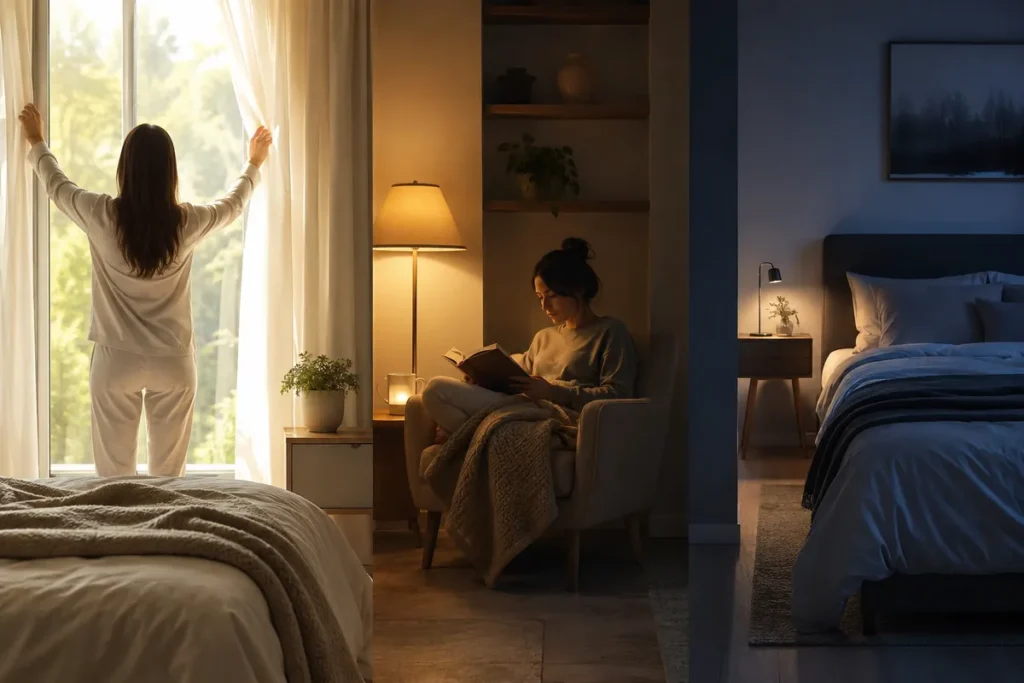
Sleep quality comes down to three levers: a stable body clock, a wind-down routine your brain recognises, and a bedroom built for rest.
For more on this, see our guides to a 5-minute beginner meditation practice, stress management techniques that calm anxiety and skincare ingredients that calm stressed skin.
Practically, that means:
Wake up at the same time every day – even weekends. This anchors your circadian rhythm more than bedtime does.
Get outside within an hour of waking. Morning light is the single strongest cue for a healthy sleep-wake cycle.
Cut caffeine after early afternoon and keep alcohol away from bedtime – both fragment deep sleep even if you don’t notice it.
Keep the room cool (around 18°C), dark, and quiet.
Give yourself 30–60 minutes of low-stimulation wind-down before lights out.
None of this is instant. Most people need 1–2 weeks of consistency before they notice a real difference. If sleep problems persist beyond that, see your GP – persistent insomnia can have treatable underlying causes.
What actually counts as “sleep quality”?
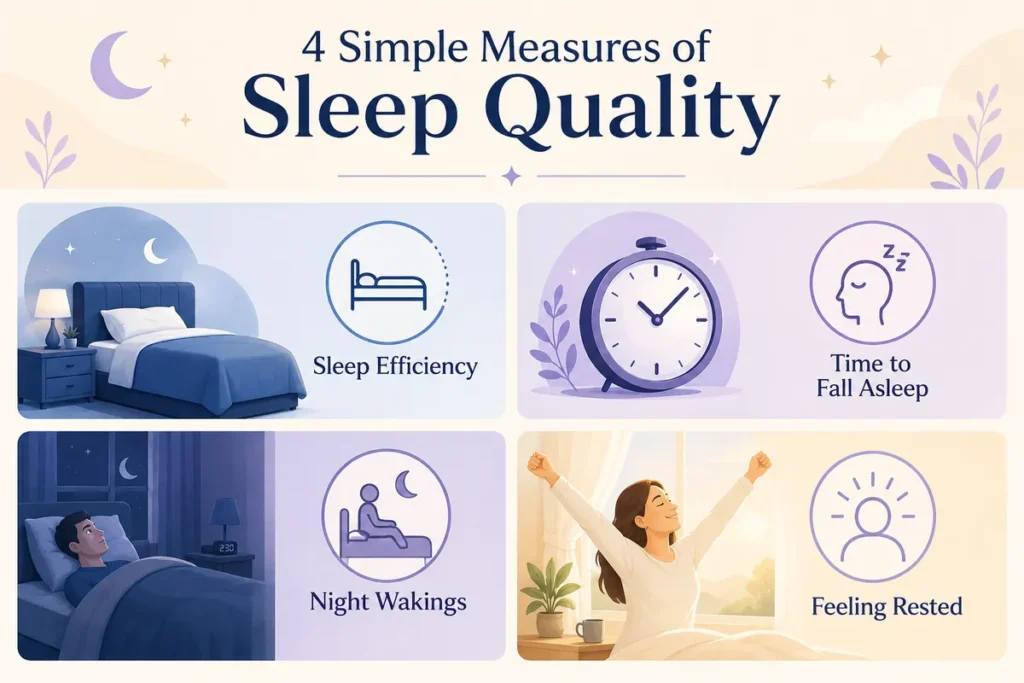
Sleep quality isn’t just hours logged. Sleep scientists usually judge it by:
Sleep efficiency – the percentage of time in bed actually spent asleep (85%+ is considered good).
Time to fall asleep – under 20–30 minutes is typical for healthy sleepers.
Night wakings – brief awakenings are normal, but frequent or long ones fragment restorative sleep stages.
Waking feeling rested – a subjective but meaningful marker.
You can sleep eight hours and still feel wrecked if that sleep is shallow or interrupted. That’s why sleep hygiene habits and circadian alignment matter more than simply “getting more hours.”
Why your circadian rhythm controls everything
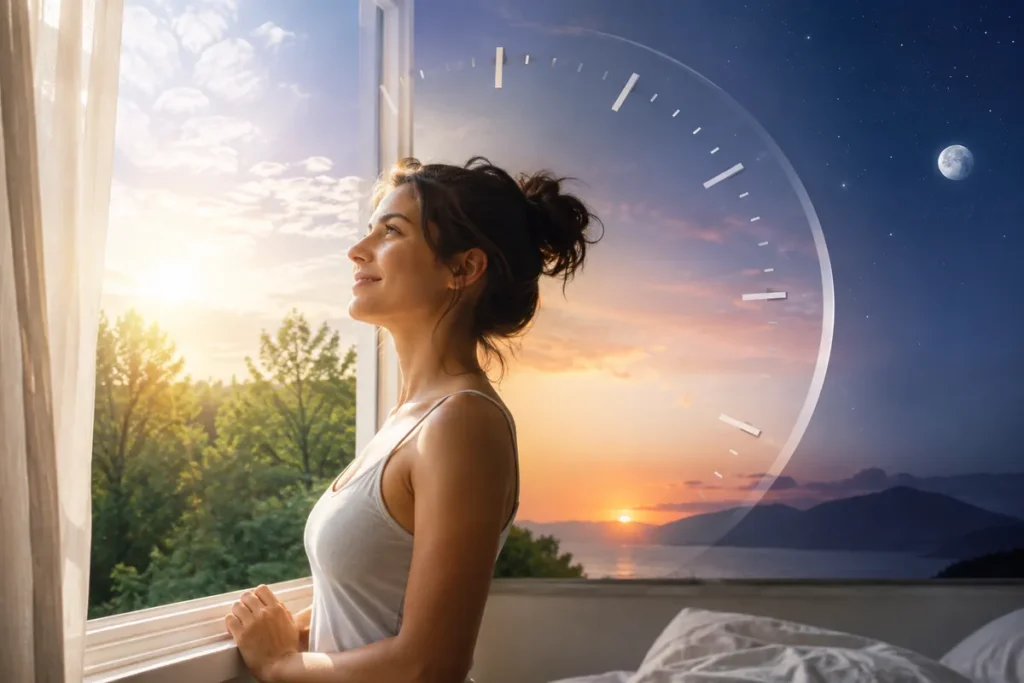
Your circadian rhythm is a roughly 24-hour internal clock, run by a cluster of neurons in the brain called the suprachiasmatic nucleus. It uses light as its main timing cue.
Here’s the mechanism in plain terms:
Morning light exposure suppresses melatonin and tells your body “day has started,” which sets a timer for sleepiness roughly 14–16 hours later.
Evening dimness allows melatonin to rise, signalling it’s time to wind down.
Irregular schedules – shift work, jet lag, weekend “social jet lag” – confuse this clock and reduce sleep quality even when total sleep time looks fine.
The Sleep Foundation recommends shifting your schedule by no more than an hour a day if you need to reset it, and locking in a consistent wake time once you get there. Consistency, not perfection, is what recalibrates the clock.
Common sleep disruptors people overlook
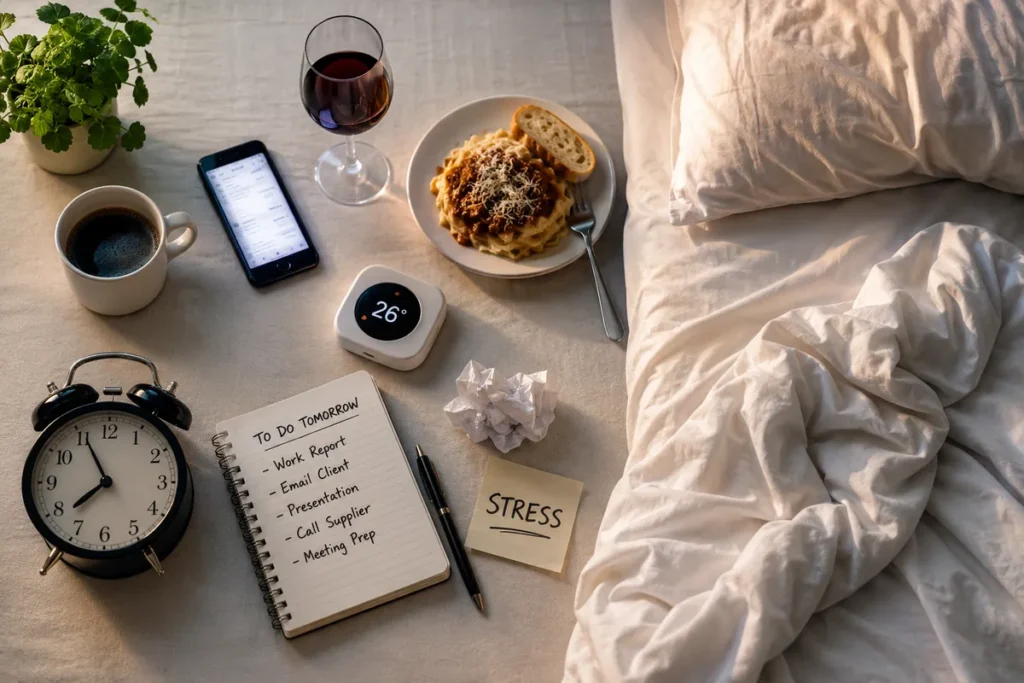
Late caffeine. Caffeine has a half-life of roughly 5–6 hours, so a 3pm coffee can still be a quarter in your system at 9pm.
Alcohol as a “nightcap.” It speeds up falling asleep but fragments sleep in the second half of the night and suppresses REM sleep.
Irregular weekend sleep. Sleeping in by more than an hour on weekends creates a mini jet-lag effect on Monday.
A too-warm bedroom. Your core body temperature needs to drop to initiate sleep; a hot room fights that process.
Scrolling in bed. More on this below – the mechanism isn’t quite what most people think.
Untreated pain, reflux, or anxiety. These commonly sit underneath “can’t switch off” complaints and are worth mentioning to a doctor if sleep problems persist.
Myth-check: is blue light really the problem?
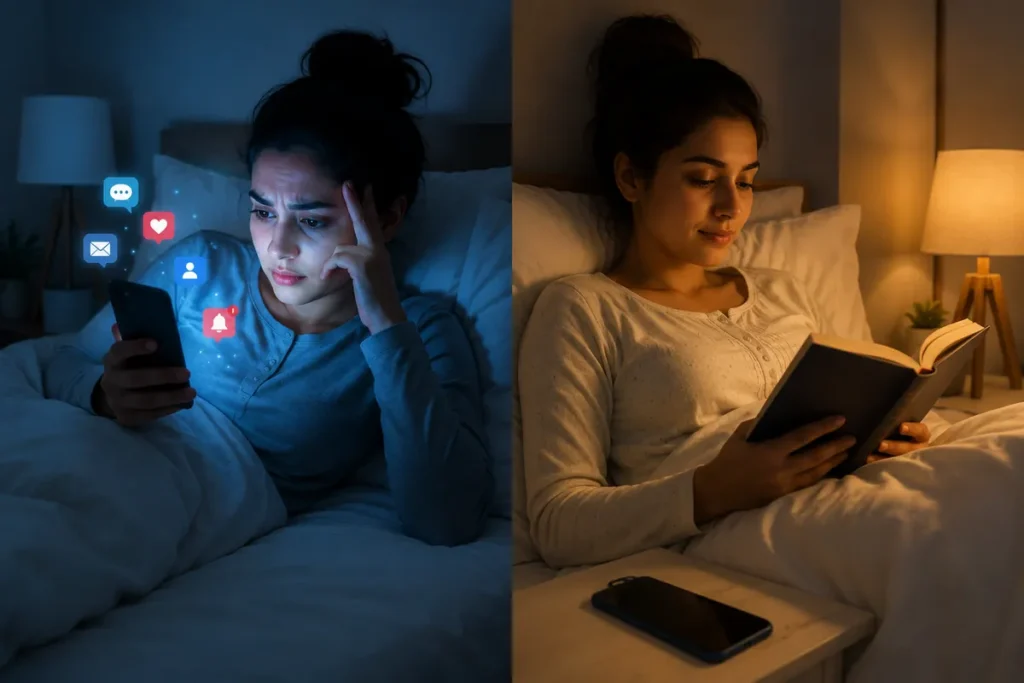
This is where a lot of advice online gets it wrong, so it’s worth pausing on.
The common claim: blue light from phones blocks melatonin and ruins your sleep.
What the evidence actually shows: blue light does suppress melatonin somewhat, but sleep researcher Dr Matthew Walker (UC Berkeley, author of Why We Sleep) has publicly revised his own earlier framing on this. Independent research – including work by sleep psychologist Michael Gradisar at Flinders University – found only a 3–4 minute difference in how quickly people fell asleep between bright-screen and dim-screen conditions.
The bigger culprit appears to be what you’re doing on the screen, not the light wavelength itself. Scrolling social media, replying to work messages, or watching a tense show all trigger psychological arousal – a kind of alertness that overrides your body’s sleepiness signal, regardless of blue light filters.
Practical takeaway: a blue-light filter alone won’t fix pre-bed scrolling. Swapping the activity – reading, a low-stimulation podcast, stretching – matters more than the colour of the light.
A practical night-routine walkthrough
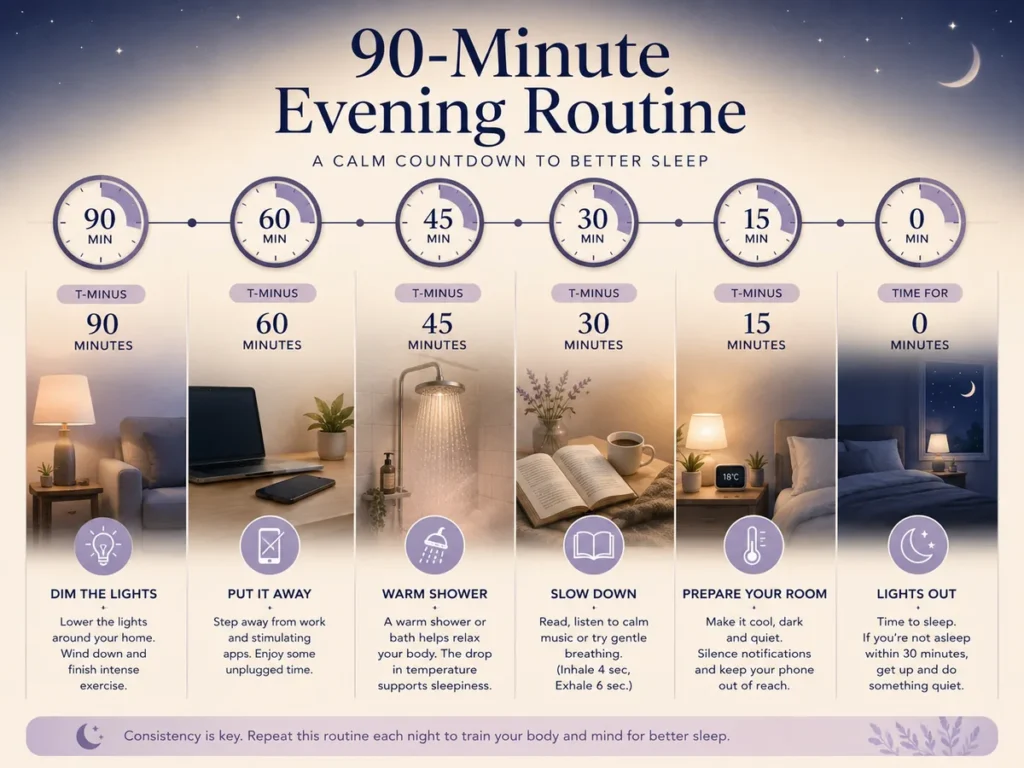
Here’s a realistic 90-minute wind-down, built from NHS and Sleep Foundation guidance, that you can adapt rather than copy exactly:
T-minus 90 minutes: Dim household lights to roughly half. Finish any intense exercise – light stretching or a short walk is fine.
T-minus 60 minutes: Put work and high-stimulation apps away. If you’re still hungry, a light snack (toast, banana) is fine – avoid a heavy meal this close to bed.
T-minus 45 minutes: Warm shower or bath. The drop in body temperature afterwards helps trigger sleepiness.
T-minus 30 minutes: Low-light reading, calm music, or a brief breathing exercise (try 4 seconds in, 6 seconds out, for a few minutes).
T-minus 15 minutes: Bedroom check – cool, dark, phone outside arm’s reach or on do-not-disturb.
Lights out: If you’re not asleep within about 30 minutes, get up, sit somewhere dim, and do something quiet until you feel sleepy again. Lying there frustrated tends to train your brain to associate bed with wakefulness – the opposite of what you want.
Run this for a week before judging it. Sleep habits respond to repetition, not one good night.
Evidence-based tactics that move the needle

Fix your wake time first. It’s the anchor point for your whole circadian rhythm.
Get 10–30 minutes of outdoor light in the morning, even on cloudy days – outdoor light is far brighter than indoor lighting.
Exercise regularly, but finish vigorous sessions at least 2–3 hours before bed.
Keep the bedroom for sleep and intimacy only – working or watching TV in bed weakens the mental association between bed and sleep.
Write down tomorrow’s worries if racing thoughts keep you up – externalising them reduces rumination for some people.
Limit naps to before 3pm and under 30 minutes if they’re affecting night sleep.
None of these guarantee a perfect night – sleep is variable, and an occasional bad night is normal. The goal is shifting your average over weeks, not chasing a flawless streak.
When to see a doctor about sleep
Self-help sleep hygiene helps most people, but it isn’t a substitute for medical care. Consider booking a GP appointment if:
Sleep problems last most nights for a month or longer, despite consistent effort.
You feel excessively sleepy during the day even after what should be enough sleep.
You or a partner notice loud snoring, gasping, or pauses in breathing – possible signs of sleep apnoea.
There’s ongoing pain, heartburn, or a “crawling” leg sensation disrupting sleep.
Low mood, anxiety, or a new medication seem to be affecting sleep.
You’re relying on alcohol or over-the-counter sleep aids most nights to fall asleep.
A GP can screen for underlying conditions and discuss options such as CBT-I (cognitive behavioural therapy for insomnia), which the NHS lists as a first-line, evidence-based treatment – often more effective long-term than sleeping tablets.
This article is for general information only and doesn’t replace personalised medical advice. If you have ongoing sleep difficulties or symptoms that worry you, speak to a doctor or registered healthcare provider.
FAQ
How long does it take to improve sleep quality? Most people notice smaller changes – falling asleep a bit faster, fewer night wakings – within one to two weeks of consistent sleep hygiene changes. Circadian rhythm shifts can take longer, especially if you’re correcting months of irregular schedules.
Does melatonin help with sleep quality? Melatonin supplements can help with circadian timing issues like jet lag or shift work, but evidence for improving general sleep quality in otherwise healthy adults is modest. Speak to a pharmacist or GP before starting one, especially alongside other medication.
Is it bad to check the time when I wake up at night? It can be. Clock-watching tends to increase anxiety about not sleeping, which makes falling back asleep harder. Turning the clock face away is a small, well-supported tweak.
Can naps ruin night-time sleep quality? Long or late naps can reduce your “sleep drive” for the night. A short nap (under 30 minutes) before mid-afternoon is generally fine for most people.
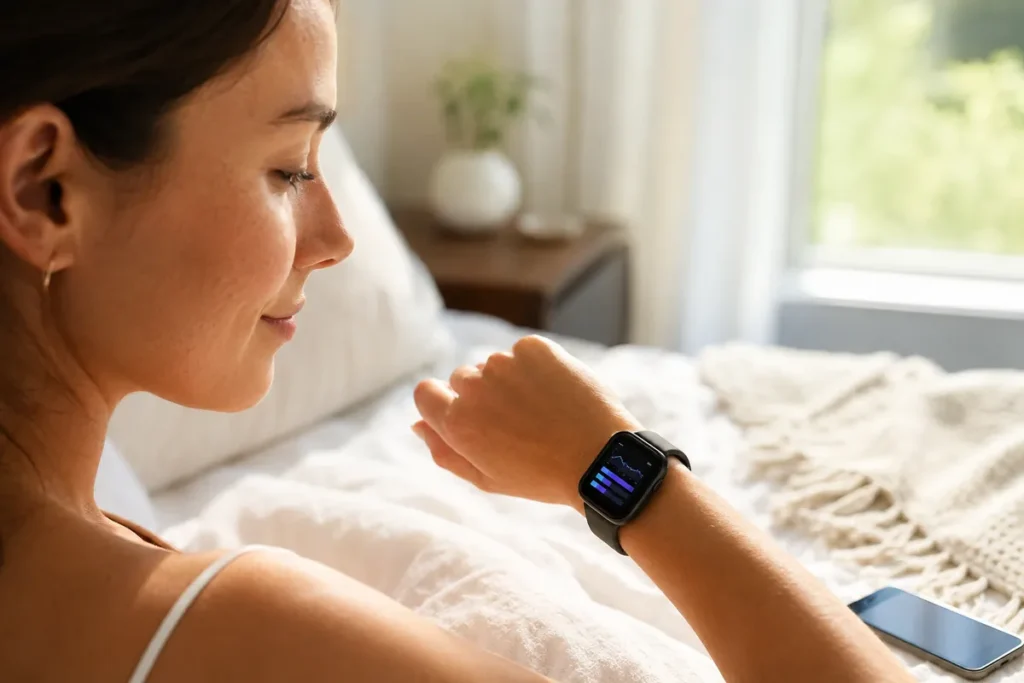
Do sleep tracking apps or wearables actually improve sleep? They can help you notice patterns, but obsessing over the data can itself cause anxiety-driven insomnia – sometimes called “orthosomnia.” Use them as a rough guide, not a verdict on every night.
Related Reading
- 9 Stress Management Techniques That Calm Anxiety
- Meditation for Stress and Anxiety: A Beginner-Friendly 5-Minute Practice
- Does Stress Actually Cause Wrinkles Faster? What the Research Shows
- Stress-Relief Skincare: Ingredients That Calm Your Skin Naturally
Browse more in Health or return to the GlowCulture homepage.
Useful sources
Related Reading
- 9 Stress Management Techniques That Calm Anxiety
- Meditation for Stress and Anxiety: A Beginner-Friendly 5-Minute Practice
- Does Stress Actually Cause Wrinkles Faster? What the Research Shows
- Stress-Relief Skincare: Ingredients That Calm Your Skin Naturally
Browse more in Health.