
Losing weight does not mean giving up every favourite food, skipping meals or following a complicated diet. A healthier approach starts with choosing nutritious foods, understanding portion sizes and building eating habits that you can maintain over time.
A well-planned healthy weight loss diet plan should provide enough protein, fibre, vitamins and minerals while helping you manage your overall food intake. It should also fit your lifestyle, budget and food preferences. Whether you prefer homemade meals, vegetarian dishes or a combination of different foods, you can make progress without relying on expensive diet products.
In this guide, you will learn which foods to include, how to manage portions, how to plan balanced meals and how to create a realistic eating routine for long-term weight healthy weight loss diet plan management.
1. What Makes a Healthy Weight Loss Diet Plan Effective?
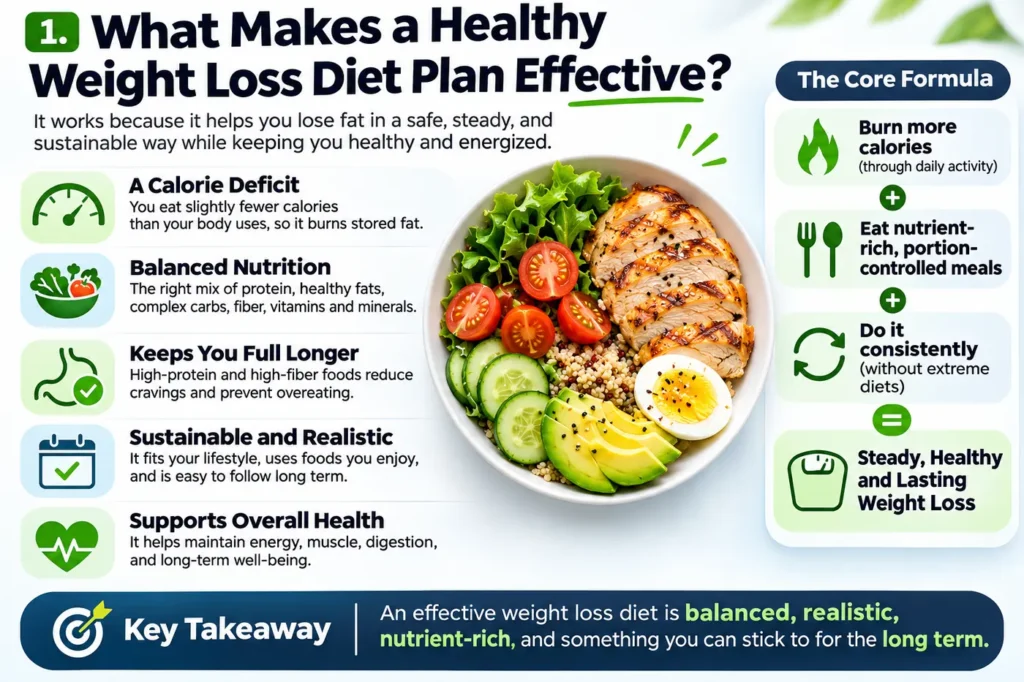
An effective eating plan is not based on one special food or a strict list of forbidden ingredients. It focuses on the overall quality and quantity of food you eat.
For weight loss to happen, your body generally needs to use more energy than it receives from food and drinks over time. However, reducing food intake too aggressively can make a diet difficult to follow and may leave you without important healthy weight loss diet plan nutrients.
A balanced approach should include:
- Vegetables and fruits for fibre, vitamins and minerals.
- Protein-rich foods to support muscle maintenance and fullness.
- Whole grains and other high-fibre carbohydrates for energy.
- Healthy fats in moderate amounts.
- Enough fluids to maintain hydration.
The best plan is one that supports your health while being realistic enough to follow consistently. There is no single perfect diet that works for everyone. <Cite refs={[“turn746492search0″,”turn746492search8”]}/>
2. Best Foods to Include in a Balanced Diet for Weight Loss
Choosing nutritious foods can make meals more satisfying and help you meet your daily nutritional needs.
Here are some useful food groups to include in your healthy weight loss diet plan healthy weight loss diet plan routine.
Protein-Rich Foods
Protein supports muscle maintenance and helps make meals more satisfying. Including a source of protein in your main meals can be useful when managing healthy weight loss diet plan hunger.
Good options include:
- Eggs
- Chicken
- Fish
- Lentils and chickpeas
- Beans
- Plain yoghurt
- Milk
- Tofu
- Nuts and seeds
You do not need expensive protein powders to get enough protein. Everyday foods can provide valuable amounts.
Fibre-Rich Vegetables and Fruits
Vegetables and fruits provide fibre, vitamins, minerals and water. Their fibre content can help meals feel more filling.
Useful choices include spinach, carrots, cucumber, broccoli, apples, oranges, guava and berries.
Try to include vegetables with lunch and dinner and choose whole fruit more often than healthy weight loss diet plan juice.
Whole Grains and Healthy Carbohydrates
Carbohydrates are an important source of energy. You do not need to remove them completely to manage your healthy weight loss diet plan weight.
Consider including:
- Oats
- Wholegrain bread
- Brown rice
- Whole-wheat roti
- Potatoes
- Other minimally processed grains
Pay attention to portion sizes and choose higher-fibre options when healthy weight loss diet plan practical.
Healthy Fats
Foods such as nuts, seeds, olive oil and other unsaturated fats can form part of a balanced diet.
They are nutritious but energy-dense, so moderate portions are healthy weight loss diet plan useful.
3. Portion Control: How Much Should You Eat?
Even nutritious foods can contribute to weight gain if you regularly eat more energy than your body needs. This is why portion control is an important part of a healthy eating healthy weight loss diet plan routine.
A simple method is to use the plate approach when planning main meals.
The Balanced Plate Method
For a typical main meal, try this visual guide:
- Half the plate: Vegetables or salad.
- One-quarter: Protein foods such as chicken, fish, eggs or lentils.
- One-quarter: Rice, potatoes or wholegrain roti.
- A small amount: Added fats, dressings or cooking oils.
This is a flexible guide rather than a strict measurement. Your individual food needs depend on factors such as age, body size, activity level and health.
Other practical portion-control habits healthy weight loss diet plan include:
- Use a smaller plate if your usual portions are very large.
- Serve food onto a plate instead of eating directly from a packet.
- Measure cooking oil rather than pouring it freely.
- Eat slowly and pay attention to hunger and fullness.
- Avoid eating meals while distracted by television or your phone.
Remember that a food label’s serving size is not necessarily the amount you personally need. <Cite refs={[“turn746492search1″,”turn746492search0”]}/>
4. Healthy Meal Planning for Breakfast, Lunch and Dinner
Planning meals ahead can make healthy eating easier, especially when your daily schedule is busy.
You do not need a completely different menu every day. A few simple combinations can provide variety without making healthy weight loss diet plan meal preparation complicated.
Breakfast Ideas
Choose a breakfast that combines protein and fibre.
Options include:
- Two eggs with whole-wheat toast and cucumber.
- Plain yoghurt with oats and fresh fruit.
- Vegetable omelette with a small whole-wheat roti.
- Oatmeal prepared with milk and a banana.
These meals can provide energy and help you start the day with a more balanced healthy weight loss diet plan choice.
Lunch Ideas
Lunch should provide a combination of vegetables, protein and carbohydrates.
Try:
- Grilled chicken with salad and rice.
- Lentils with a whole-wheat roti and vegetables.
- Chickpea salad with plain yoghurt.
- Fish with vegetables and a moderate serving of healthy weight loss diet plan rice.
If you enjoy traditional homemade meals, you do not need to stop eating dal, sabzi or roti. Consider cooking methods, oil quantities and serving sizes instead.
Dinner Ideas
Dinner can be satisfying without being unnecessarily heavy.
Examples include:
- Vegetable curry with lentils and roti.
- Grilled fish with cooked vegetables.
- Chicken with salad and a moderate portion of rice.
- Bean soup with wholegrain bread.
Choose a dinner that meets your hunger and nutritional needs rather than following an arbitrary rule that you must avoid carbohydrates at night.
5. A Simple 7-Day Healthy Meal Planning Example
The following is a general meal inspiration guide. It is not a personalised calorie-controlled diet, and portions should be adjusted to your individual needs.
| Day | Breakfast | Lunch | Dinner |
|---|---|---|---|
| Monday | Eggs and wholegrain toast | Chicken, rice and salad | Lentils and roti |
| Tuesday | Oats with milk and fruit | Chickpea salad | Vegetable curry and yoghurt |
| Wednesday | Vegetable omelette | Fish and rice | Chicken soup and bread |
| Thursday | Plain yoghurt and oats | Dal, roti and salad | Grilled chicken and vegetables |
| Friday | Eggs and fruit | Bean curry and roti | Fish with cooked vegetables |
| Saturday | Oatmeal and banana | Chicken salad and rice | Lentils and vegetable curry |
| Sunday | Wholegrain toast and eggs | Homemade chicken meal | Chickpea soup and roti |
You can swap meals according to your preferences, food availability and budget. Snacks such as fruit, plain yoghurt or a small portion of nuts can be included if you feel hungry between meals.
6. Foods and Drinks to Limit for Better Weight Management
A healthy eating plan does not require completely avoiding favourite foods. However, frequently consuming large amounts of certain foods and drinks can make it harder to manage your overall energy intake.
Consider limiting:
Sugary drinks: Soft drinks, sweetened juices and heavily sweetened tea can add energy without providing much fullness.
Deep-fried foods: Fried snacks and fast food can contain considerable amounts of fat and energy.
Highly processed snacks: Biscuits, crisps and packaged sweets are easy to overeat, particularly when eaten directly from large packets.
Excessive added sugar: Regularly consuming large amounts of sugar can make balanced eating more difficult.
Large portions of sauces and cooking oils: These can increase the energy content of meals without adding much volume.
You do not need to ban these foods. Focus on frequency, preparation methods and portion sizes instead.
7. Healthy Eating Habits That Make a Difference
Food choices matter, but the habits surrounding meals are important too.
Here are some practical ways to make your eating routine easier to maintain.
- Plan meals before shopping: Make a list of the ingredients you need to prepare balanced meals.
- Keep healthy snacks available: Store fruit, yoghurt and other convenient options where they are easy to reach.
- Drink water regularly: Choose water instead of sugary drinks more often.
- Eat at regular times: A routine can help you recognise hunger and avoid becoming excessively hungry.
- Cook at home when possible: Home cooking gives you more control over ingredients, oil and portions.
- Enjoy food without guilt: Occasional treats can fit into a balanced eating pattern.
Avoid trying to change everything in one day. Start with a few habits and build on them gradually.
8. Common Mistakes to Avoid When Following a Weight Loss Diet
Some dieting habits can make progress more difficult or create unnecessary nutritional restrictions.
Skipping Meals to Lose Weight
Skipping meals is not necessary for weight loss. For some people, it can lead to excessive hunger and larger meals later in the day.
Removing All Carbohydrates
Rice, potatoes, oats and wholegrain roti can all fit into a balanced eating plan. The type and amount of carbohydrate matter more than simply eliminating the entire food group.
Eating Too Little
Severely restricting food can make it difficult to meet your nutritional needs and maintain energy throughout the day.
Depending on Detox Drinks
There is no special drink that reliably removes body fat or replaces balanced nutrition. Be cautious of products promising rapid weight loss.
Expecting Immediate Results
Weight management takes time, and body weight can fluctuate naturally. Focus on consistent habits rather than expecting daily changes.
9. How to Make Your Healthy Weight Loss Diet Plan Sustainable
The most useful eating plan is one you can follow beyond a few weeks.
Start by identifying two or three changes that feel manageable. You might add vegetables to your main meals, replace sugary drinks with water or prepare lunch at home more frequently.
As these habits become part of your routine, consider adding other changes, such as regular walking and strength training.
It is also important to adapt your meals to your circumstances. Food preferences, culture, budget, work schedules and family responsibilities all influence what is realistic.
If you have diabetes, kidney disease, digestive conditions, are pregnant or have a history of disordered eating, seek individual advice from a qualified healthcare professional or registered dietitian before making major dietary changes.
Final Thoughts
A successful healthy weight loss diet plan does not depend on strict food rules or expensive products. It combines nutritious meals, sensible portions and everyday habits that support long-term health.
Include protein-rich foods, vegetables, fruits, whole grains and moderate amounts of healthy fats. Plan meals ahead, pay attention to portion sizes and allow room for flexibility.
Most importantly, choose an approach that fits your lifestyle. Consistent, realistic eating habits are more useful than extreme diets that are difficult to maintain.