A damaged skin barrier shows up as tightness, stinging from products you used to tolerate fine, flaking combined with oiliness, and small uniform breakouts — and the fix is almost always to simplify your routine, not add more products.
What Is a Damaged Skin Barrier and How Does It Work?
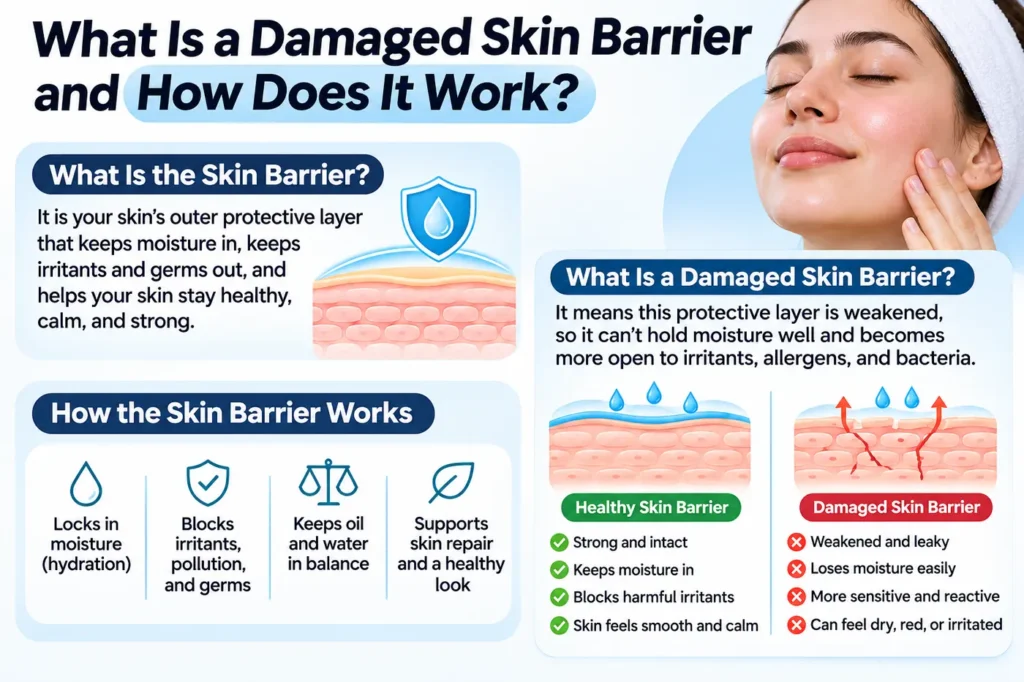
The outermost layer of skin works like a brick wall: skin cells are the “bricks,” and lipids — ceramides, cholesterol, fatty acids — are the “mortar” holding them together. This structure keeps moisture in and irritants, allergens and bacteria out. When that lipid matrix is disrupted, water escapes faster than normal and irritants penetrate more damaged skin barrier easily.
7 Signs of a Damaged Skin Barrier
Three or more of these together is a strong signal:
- Tightness rather than smoothness, especially right after cleansing
- Stinging or burning from products that never used to bother you
- Dryness and flaking that happens alongside oiliness (skin overproduces oil to compensate for water loss)
- New, small, fairly uniform breakouts, since a compromised barrier lets bacteria in more easily
- Redness, dullness, or a rough texture that doesn’t improve with your usual moisturiser
- Worsening of an existing condition like eczema or damaged skin barrier rosacea
Damaged Barrier vs Dehydrated Skin
Dehydrated skin lacks water; a damaged barrier is a structural problem with the lipid matrix itself. They often overlap, but barrier repair should be treated as the priority — fixing the structure usually resolves the hydration issue as a side effect.
Common Causes
- Over-exfoliating (physical scrubs or acids used too often)
- Over-cleansing or hot water
- Using too many active ingredients at once
- Harsh, stripping cleansers or alcohol-heavy products
- Environmental factors: cold dry air, excessive sun exposure, chlorinated pools
How to Repair It
- Simplify the routine. Drop down to a gentle cleanser, a barrier-repair moisturiser, and sunscreen — nothing else — until symptoms calm down.
- Pause actives. Retinoids and exfoliating acids increase cell turnover, which a struggling barrier can’t keep up with.
- Choose repair ingredients: ceramides, cholesterol and fatty acids; niacinamide (4% or less); hyaluronic acid or glycerin for hydration.
- Keep wearing sunscreen. A compromised barrier is more vulnerable to UV damage, not less.
- Use lukewarm water, not hot, and limit cleansing to morning and evening.
- Limit or pause exfoliation to 1-2 times a week at most while healing.
How Long It Takes
Mild barrier damage often improves within days to a couple of weeks of gentler care. If symptoms are not improving, worsening, or involve pain, swelling, oozing or signs of infection, see a dermatologist rather than continuing to self-treat.
Best Skincare Routine for a Damaged Skin Barrier
A simple skincare routine is often the best approach when your skin barrier is damaged. Instead of experimenting with several new products, focus on gentle cleansing, hydration and protection.
Morning routine:
- Wash your face with a gentle, fragrance-free cleanser or lukewarm water.
- Apply a moisturiser containing ceramides, glycerin or hyaluronic acid.
- Finish with broad-spectrum SPF 30 or higher sunscreen.
Night routine:
- Cleanse gently to remove sunscreen, dirt and excess oil.
- Apply a barrier-repair moisturiser to help reduce moisture loss.
- Avoid retinol, exfoliating acids and harsh treatments until your skin feels comfortable again.
Choose products with simple ingredient lists and introduce new products gradually. Consistency is important because the skin needs time to restore its natural protective function.
Sources & Further Reading
- Acibadem Health Library: Damaged skin barrier, signs, causes and how to repair it
- Dermatologist-reviewed sources on signs and repair of barrier damage
Related Reading
- Skincare Routine: The Correct Order for Morning and Night
- Stress-Relief Skincare Ingredients
- The Perfect Skincare Routine for Your Skin Type
- Aloe Vera for Acne-Prone Skin
Browse more in Skin Care.
Editorial note: This article is for general information only and is not medical advice. Please speak to a qualified healthcare professional about any personal health or skin concern. Learn how we research and review our content in our Editorial Policy.