Retinol is one of the most well-studied anti-ageing ingredients available, but most people’s first experience with it is redness, flaking and regret — almost always because they started too fast. Here is the slow, dermatologist-backed way to actually get the retinol for beginners benefits.
Retinol for Beginners: Pick the Right Strength
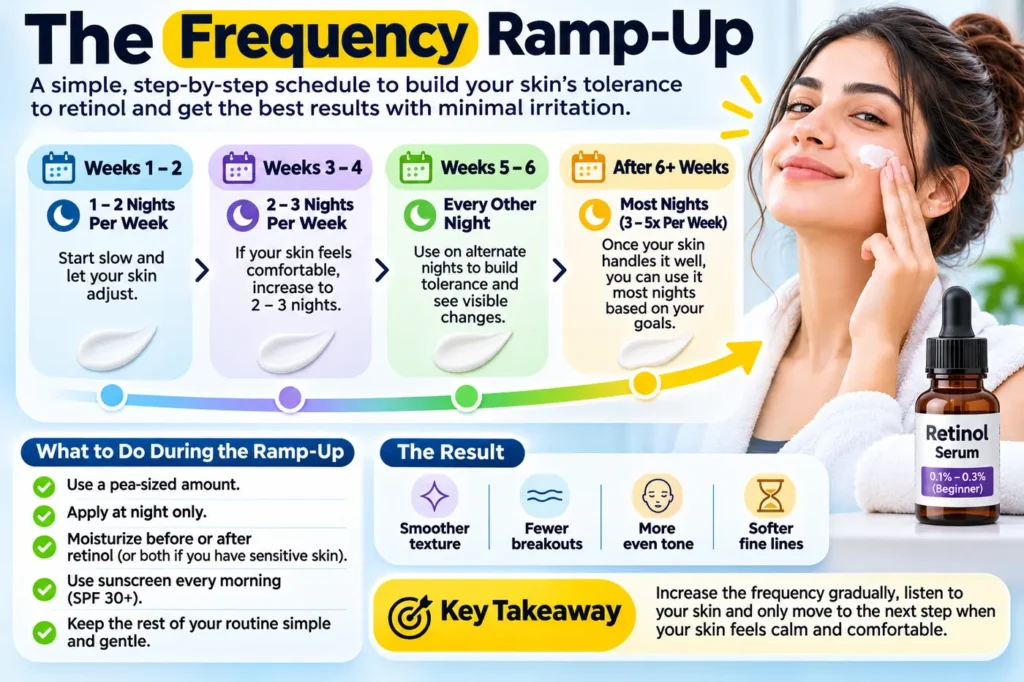
Start with a retinol concentration between 0.1% and 0.3%, not 0.5% or 1%. Frequency matters more than strength: a 0.3% retinol used three times a week consistently will outperform a 1% product used daily that you have to keep stopping and retinol for beginners restarting because of irritation.
Retinol for Beginners: How Often Should You Apply It?
The American Academy of Dermatology’s standing advice for beginners is to start with the least-intense formula, applied every other night, and build up slowly — skipping this step is one of the most common causes of “retinol burn.” A simple, workable schedule:
- Weeks 1-2: once or twice a week
- Weeks 3-4: every other night, if tolerated
- Weeks 5-6 onward: nightly, only once skin shows no redness or flaking at the previous frequency
If irritation shows up at any point, drop back to the previous frequency for another one to two weeks before trying to progress again. Daily use isn’t necessary even for experienced retinol for beginners users.
How to Apply It Correctly
- Cleanse with a gentle, non-stripping cleanser.
- Wait until skin is completely dry — this is the step most people skip, and the one that causes the most irritation. Damp skin absorbs retinol faster and deeper, increasing irritation risk without adding extra benefit.
- Apply a pea-sized amount for the entire face.
- Follow with a ceramide or hyaluronic acid moisturiser to help buffer and support the retinol for beginners barrier.
The “Sandwich” Method (for Reactive Skin)
If skin feels particularly sensitive, apply moisturiser first, let it absorb, then apply retinol on top, then a second light layer of moisturiser. This buffers and slightly slows absorption without cancelling out the retinol for beginners benefit.
Non-Negotiable: Sunscreen Every Morning
Retinol increases how quickly skin cells turn over, which makes skin more sensitive to the sun. See our guide to choosing the right SPF — broad-spectrum SPF 30+ every single morning isn’t optional while using retinol for beginners retinol.
Who Should Be Cautious or Avoid It
- Pregnancy: retinol and retinoids should be avoided entirely; speak to your doctor about alternatives.
- Rosacea or very reactive skin: retinol can still be used, but cautiously and ideally under a dermatologist’s guidance.
Common Mistakes That Cause “Retinol Burn”
- Starting at too high a strength or too high a frequency
- Applying to damp skin
- Skipping moisturiser afterward
- Skipping sunscreen the next morning
- Combining retinol with other strong actives before skin has adjusted
- What Results Can Beginners Expect from Retinol?
- Retinol does not produce overnight results. Most beginners need several weeks of consistent use before noticing improvements in skin texture and appearance. Fine lines, uneven skin tone and mild acne may gradually improve with regular application.
- During the first few weeks, some people experience mild dryness, peeling or temporary irritation as their skin adjusts. This adjustment period is often called retinisation.
- For better results, stay consistent with a suitable concentration, avoid using too many active ingredients together and keep your skincare routine simple. Remember that stronger retinol does not always mean better results. Patience and consistency are more important when starting retinol.
Sources & Further Reading
- Healthline: Retinol burn, causes, symptoms and what to do
- American Academy of Dermatology: guidance on starting retinoids at the least-intense formula, every other night, building up gradually
Related Reading
- Skincare Routine: The Correct Order for Morning and Night
- Peptides in Skincare
- AHA vs BHA vs PHA: A Complete Guide
- Sunscreen: How to Choose the Right SPF for Your Skin
Browse more in Skin Care.
Editorial note: This article is for general information only and is not medical advice. Please speak to a qualified healthcare professional about any personal health or skin concern. Learn how we research and review our content in our Editorial Policy.