
Sustainable weight loss comes from a modest, consistent calorie gap, enough protein and fibre to stay full, regular movement including some strength training, and decent sleep — not from short bursts of extreme restriction, which fail for most sustainable weight loss people within a year.
Why Extreme Diets Usually Don’t Work Long-Term
Very restrictive diets create rapid initial loss, but they’re hard to sustain, often cause muscle loss alongside fat loss, and tend to be followed by regain once the restriction ends. A safe, sustainable rate of loss is generally 1-2 lb (about 0.5-1 kg) per week, achieved through a moderate daily calorie deficit of roughly 500-750 sustainable weight loss calories.
What Actually Moves the Needle
- Protein at every meal. Roughly 20-30g of protein per meal helps preserve muscle during weight loss and keeps you fuller for longer. See our protein needs guide for daily targets.
- Fibre, not just fewer calories. High-fibre meals are one of the most consistently supported tools for both losing weight and keeping it off, mainly by improving satiety.
- Strength training, not just cardio. Resistance training protects lean muscle during weight loss; without it, a chunk of what’s lost on the scale is muscle rather than fat.
- Daily movement (NEAT). Walking 7,000-10,000 steps a day is consistently linked to meaningful weight management benefits, separate from formal exercise.
- Sleep. Poor sleep disrupts hunger hormones and makes a calorie deficit feel far harder to sustain. See our guide to improving sleep quality.
- Water before meals. A glass of water shortly before eating has been shown in clinical studies to modestly reduce how much people eat at that sustainable weight loss meal.
What to Skip
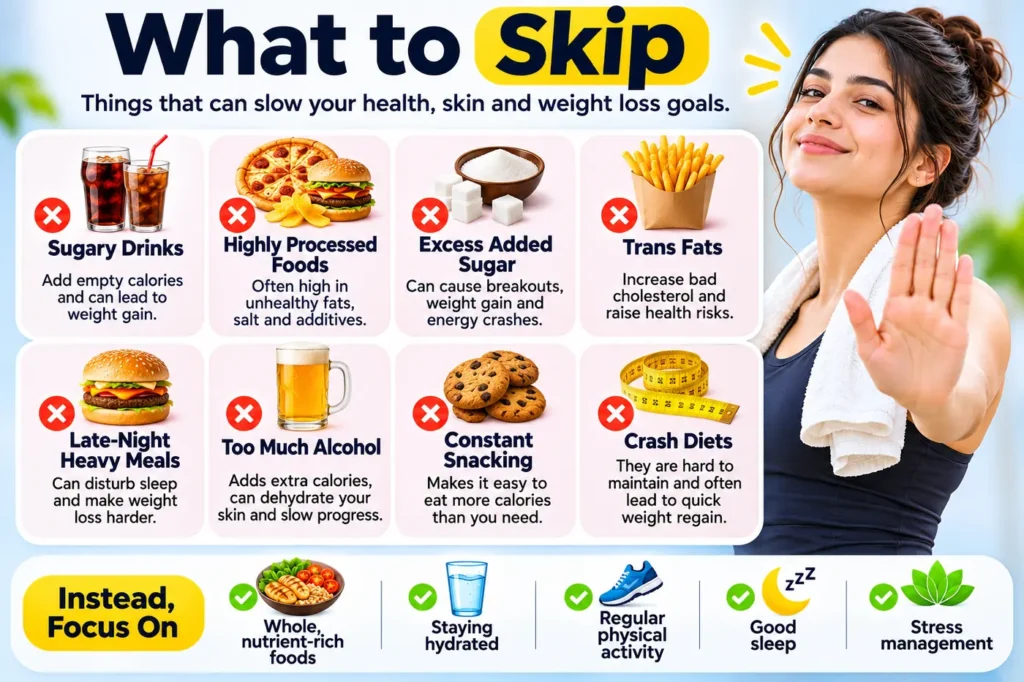
- Extreme fasting protocols (one meal a day, very long fasting windows) — harder to sustain and can backfire.
- “Detox” teas, miracle pills, and 10-day transformation challenges — no credible evidence, often just cause short-term water loss.
- Cutting entire food groups without a medical reason — usually unnecessary and makes a plan harder to stick sustainable weight loss to.
A Realistic Starting Point
Rather than overhauling everything at once, pick two or three of the above and build consistency before adding more. Gradual, behaviour-based changes applied consistently outperform short, intense bursts of restriction for almost sustainable weight loss everyone.
Sources & Further Reading
- American College of Sports Medicine: guidance on resistance training for weight management
- Evidence summaries on safe weekly weight-loss rates and sustainable nutrition for weight management
Related Reading
- How Much Protein Do You Actually Need?
- Fibermaxxing: What Your Gut Actually Needs
- How to Improve Sleep Quality
- Stress Management Techniques
Browse more in Health.
Editorial note: This article is for general information only and is not medical advice. If you have a medical condition, take medication, or have a history of disordered eating, please speak to a doctor or registered dietitian before making significant changes to your eating pattern. Learn how we research and review our content in our Editorial Policy.