Almost every dermatologist agrees: everyone needs a moisturiser, including oily and acne-prone skin. The real skill is matching the formula and ingredients to your skin, and using it the way dermatologists actually how to choose moisturizer recommend.
The Three Ingredient Types Behind Every Moisturiser
Nearly every moisturiser works through a combination of three ingredient categories:
- Humectants (hyaluronic acid, glycerin) pull water into the skin from the air and deeper layers.
- Emollients (ceramides, fatty acids, squalane) fill in the gaps between skin cells, making skin feel smoother and reinforcing the barrier.
- Occlusives (petrolatum, mineral oil, shea butter, dimethicone) sit on top and physically slow down water loss.
Lighter formulas (lotions, gel-creams) lean on humectants and light emollients. Richer formulas (creams, ointments) add more occlusives — which is why dry skin usually needs a thicker product and oily skin usually does better with less how to choose moisturizer of it.
Choosing by Skin Type
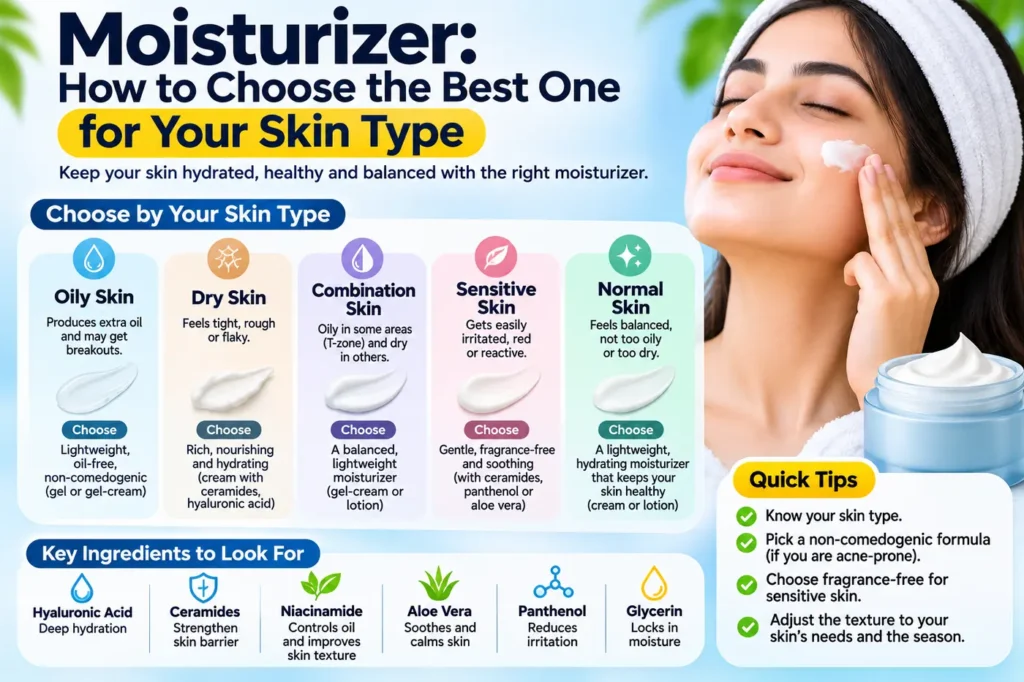
- Dry skin: rich creams or ointments with ceramides, shea butter, glycerin and hyaluronic acid. Ceramides make up roughly half of the skin’s natural lipids and directly support barrier repair.
- Oily or acne-prone skin: lightweight, oil-free, non-comedogenic gel-creams; hyaluronic acid for hydration without heaviness, niacinamide to help balance oil.
- Combination skin: a balanced gel-cream overall, with a richer product used only on the drier areas.
- Sensitive skin: fragrance-free, short ingredient lists, with ceramides and soothing ingredients like colloidal oatmeal or aloe vera.
- Mature skin (40s and up): a thicker moisturiser is often needed, since skin naturally produces less oil how to choose moisturizer with age.
- How to Choose the Right Moisturiser Texture
- Choosing the right moisturiser texture is just as important as selecting suitable ingredients. A product that feels comfortable on your skin is easier to use consistently and can help maintain a healthy skin barrier.
- Gel moisturisers: Best for oily and acne-prone skin because they feel lightweight and absorb quickly.
- Lotions: Suitable for normal and combination skin, offering hydration without feeling too heavy.
- Creams: Ideal for dry or dehydrated skin because they contain more moisturising ingredients.
- Ointments: Best for extremely dry, flaky or rough areas because they create a protective layer that reduces moisture loss.
- Before buying a moisturiser, consider your skin type, the climate you live in and how your skin feels throughout the day. You may need a lighter formula during hot weather and a richer cream during colder how to choose moisturizer months.
When and How to Apply It
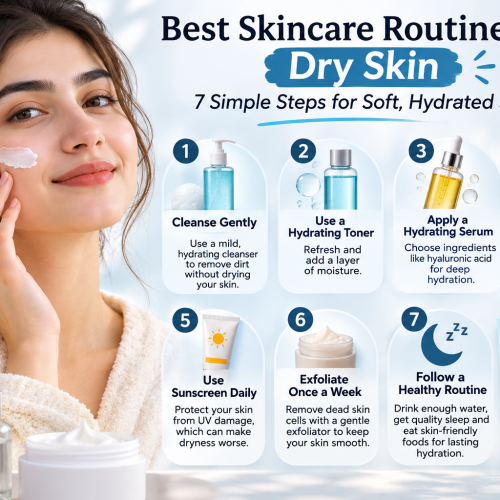
The American Academy of Dermatology’s advice is specific: apply moisturiser to skin that is still damp, right after cleansing or showering, not after it has fully air-dried. Damp skin holds more water, and the moisturiser traps that water in rather than just sitting on dry skin. Some dermatologists call this the “3-minute rule” — the window before surface moisture starts evaporating.
Practical order: cleanser → toner/serum (if used) → moisturiser → sunscreen in the morning. See our full guide to the correct skincare routine order. Most dermatologists recommend moisturising twice a day, morning and how to choose moisturizer night.
Common Mistakes
- Skipping moisturiser because skin is oily. Oily skin still loses water and still needs a barrier-supporting formula — just a lighter one.
- Applying to bone-dry skin. This is the single most common reason moisturiser “doesn’t work” for someone.
- Using a body lotion on the face, or vice versa. Face formulas are generally lighter and tested for facial skin.
- Skipping a patch test on a new product. Test on a small area for a few days before applying to the whole how to choose moisturizer face.
When to See a Dermatologist
If skin is cracking, bleeding, persistently itchy, or not improving despite a consistent routine and a well-matched moisturiser, that’s a sign to get a professional opinion rather than keep testing new products at how to choose moisturizer home.
Sources & Further Reading
- American Academy of Dermatology: How to pick the right moisturizer
- American Academy of Dermatology: Dermatologists’ top tips for relieving dry skin
Related Reading
- Skincare Routine: The Correct Order for Morning and Night
- AHA vs BHA vs PHA: A Complete Guide
- The Perfect Skincare Routine for Your Skin Type
- Stress-Relief Skincare Ingredients
Browse more in Skin Care.
Editorial note: This article is for general information only and is not medical advice. Please speak to a qualified healthcare professional about any personal health or skin concern. Learn how we research and review our content in our Editorial Policy.