
Skin Care6 min read
Menopause Skincare: Easy Routine for Changing Skin (UK)
 Aiman Shahzadi··Updated 20 Nov 2026·No Comments
On this page
By [Aiman Shazadi]
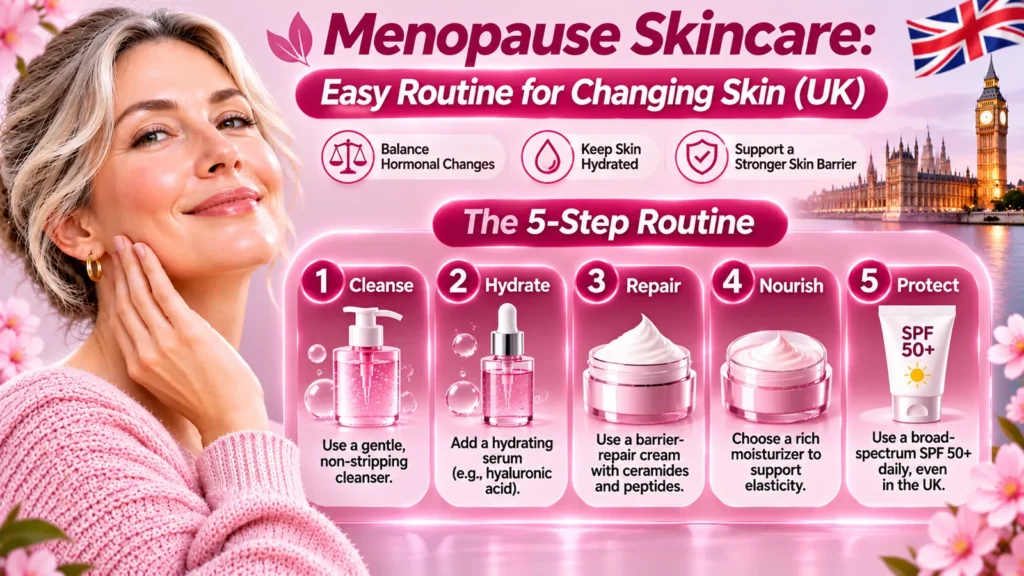
Menopause skincare is about adjusting your routine for skin that often becomes drier, thinner and more sensitive as hormones change. In this guide you will learn what happens to skin during perimenopause and menopause, a simple morning and evening routine, ingredients that can help, and when to speak to your GP.
Quick answer: During perimenopause and menopause, falling oestrogen can leave skin drier, thinner and more reactive. A simple routine usually works best: a gentle cleanser, a richer moisturiser, daily sunscreen (SPF 30 or higher), and, if suitable, a retinoid introduced slowly at night. Skincare can improve comfort and appearance, but it does not treat menopause itself. If symptoms bother you, talk to your GP.
Why does skin change during menopause?
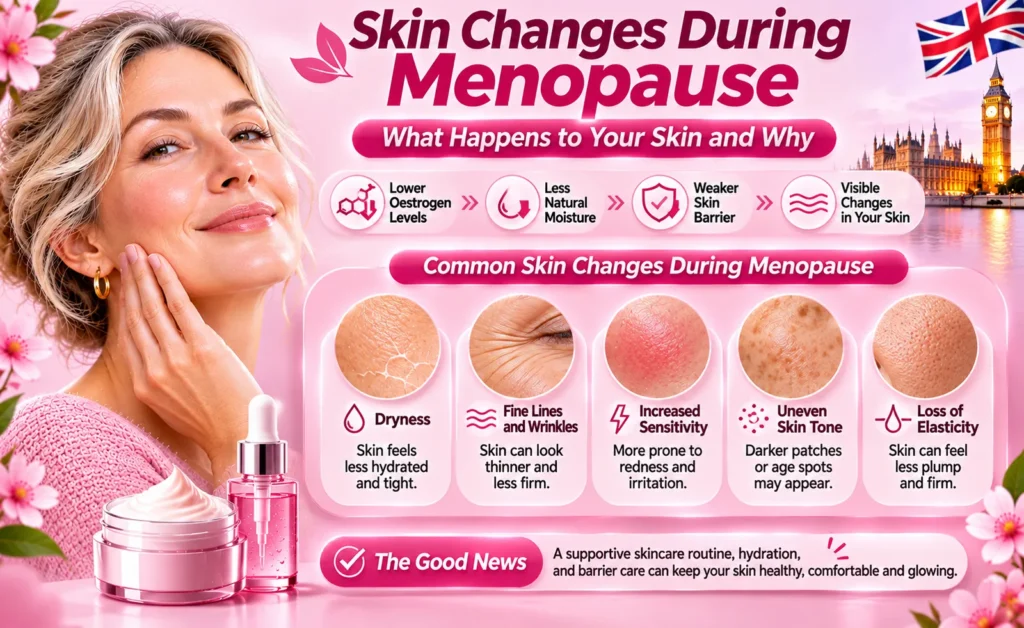
Oestrogen helps skin stay hydrated and supports collagen, the protein that keeps skin firm. As oestrogen levels fall during perimenopause (the years before periods stop) and after menopause, skin can change.
In the UK, perimenopause commonly begins in the mid-to-late 40s, and the average age of menopause is around 51, though it varies a lot from person to person. Experts often point out that skin loses collagen fastest in the first few years after menopause, so it is a good time to review your routine. Everyone is different, and not every change comes from menopause skincare hormones.
Common skin changes
- Dryness and tightness, even if your skin used to be normal or oily
- Thinner, more fragile skin that can bruise or feel sensitive more easily
- Dullness and a loss of firmness
- Fine lines and wrinkles
- Increased sensitivity to products that used to feel fine
- Breakouts or hormonal acne, especially around the chin and jawline
- Itchy skin, including on the body
- More visible sun damage or dark spots
Some of these can also be caused by other conditions or medicines, so check with a GP or pharmacist if something seems severe menopause skincare or sudden.
A simple menopause skincare routine
You do not need a whole new set of products. Often it is enough to simplify and add richness.
Morning routine
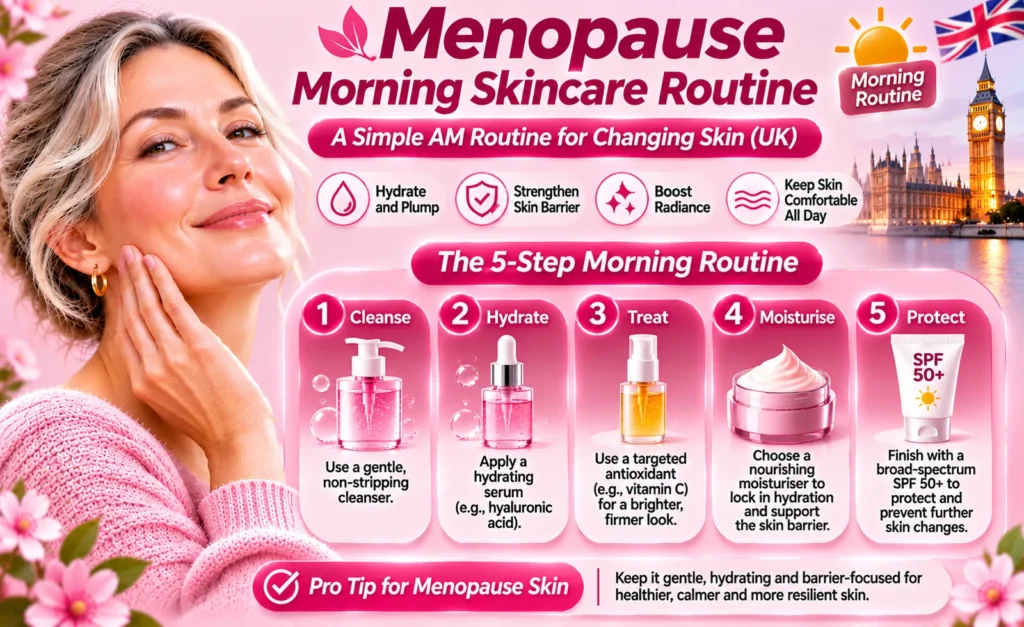
- Cleanse gently with a cream or low-foam cleanser, or just rinse with lukewarm water if your skin is very dry.
- Add an antioxidant serum (optional), such as vitamin C. Start slowly if your skin is sensitive.
- Moisturise with a richer cream. Look for ceramides, glycerin, hyaluronic acid or squalane.
- Wear sunscreen, SPF 30 or higher, every day. This is the most important step for protecting skin over time.
Evening routine
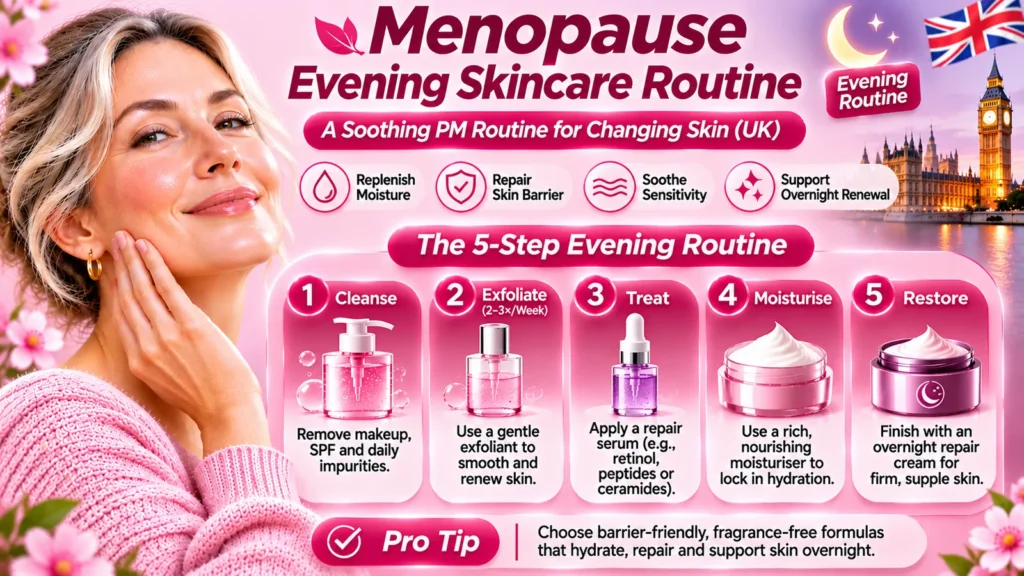
- Remove sunscreen and make-up with a gentle cleanser. A cleansing balm or cream cleanser can be kinder to dry skin.
- Retinoid (optional): introduce slowly, one or two nights a week at first, with moisturiser before or after. See our skin cycling guide for an easy schedule. (Link: Skin Cycling Routine for Beginners UK.)
- Moisturise with a rich night cream. On very dry areas you can add a thin layer of a simple balm.
Ingredients that can help
- Ceramides, glycerin and hyaluronic acid: support hydration and help the skin barrier.
- Squalane, shea butter and petrolatum: help seal in moisture.
- Niacinamide: can support the barrier and help with redness and uneven tone.
- Vitamin C: an antioxidant that supports brightness and helps protect against environmental stress.
- Retinoids (retinol, retinal): widely studied for supporting collagen and smoother skin. They can be drying, so go slowly. Results take months.
- Peptides: popular for firmness, but evidence varies. Treat them as a nice extra, not a must.
If your skin feels sore or tight, pause actives and focus on barrier care first. menopause skincare (Link: Skin Barrier Repair guide.)
What to be careful with
- Harsh scrubs and strong acids, which can irritate thinner, drier skin
- Hot showers and baths, which dry out skin
- Heavily fragranced products, which can trigger sensitivity
- Too many new products at once
- Retinoids if you could be pregnant. Pregnancy is still possible during perimenopause, so check with your GP or pharmacist if this applies to you.
Do not forget neck, hands and body
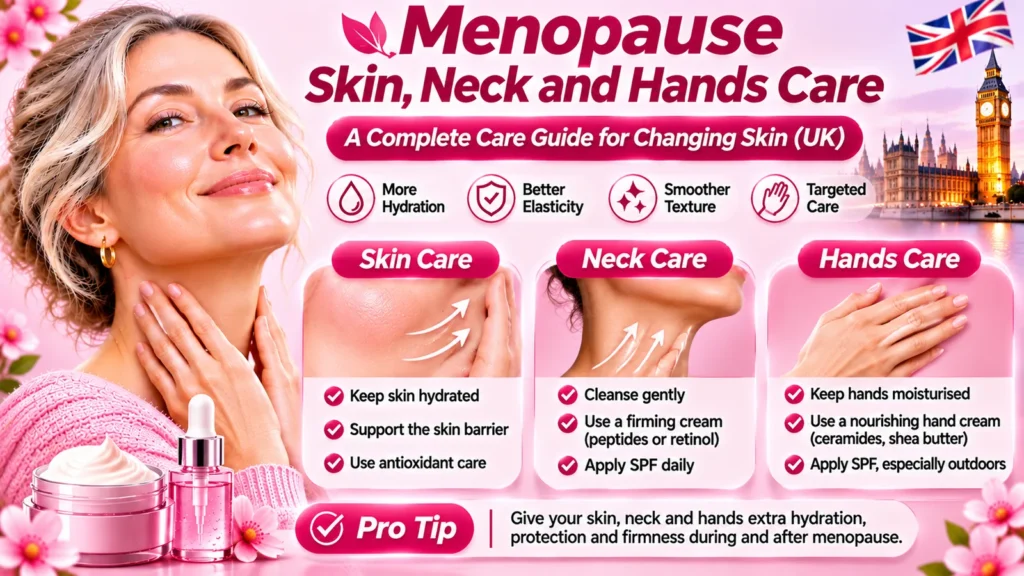
The skin on the neck, chest and hands often shows dryness and sun damage first.
- Use your moisturiser and sunscreen on neck and chest too.
- Use hand cream after washing and wear SPF on the backs of your hands.
- For itchy or dry body skin, use a fragrance-free body moisturiser right after showering, while skin is still slightly menopause skincare damp.
UK tips
- Cold weather and central heating dry the skin quickly. Choose a richer moisturiser in winter and consider a humidifier in the bedroom.
- Hard water in parts of the UK can leave skin feeling tight. Use lukewarm water and pat dry gently.
- SPF all year: UV is lower in winter, but daily sunscreen is still a good habit.
- Budget options: pharmacy brands at Boots and Superdrug make ceramide moisturisers and SPFs at many price points.
Healthy habits that support skin
- Drink enough water and eat a balanced diet
- Do not smoke and limit alcohol
- Sleep as well as you can
- Stay active and manage stress
- Wear sunscreen and a hat in strong sun
menopause skincare
When to see your GP or a dermatologist
Book an appointment if you notice:
- severe or constant itching, or a rash that does not clear
- skin that is very painful, weeping or cracked
- persistent or painful acne that does not respond to gentle care
- a mole that changes in size, shape or colour, or a sore that does not heal
- menopause symptoms that affect your daily life. Your GP can talk through your options, including treatments for menopause itself.
This article is general information and not medical menopause skincare advice.
Frequently asked questions
Why is my skin so dry during menopause?
Falling oestrogen can reduce the skin’s natural oils and its ability to hold water, so skin often feels drier and tighter.
What is the best moisturiser for menopausal skin?
A richer, fragrance-free cream with ceramides, glycerin or hyaluronic acid is a good starting point. The best one is the one your skin tolerates and you will use daily.
Can I use retinol during menopause?
Many people can, if they introduce it slowly. It may take a few months to see results, and it can be drying, so use a good moisturiser. Check with your GP or pharmacist if you could be pregnant or have a skin menopause skincare condition.
Does menopause cause acne?
It can. Hormonal changes can trigger breakouts, often around the chin and jawline. If acne is painful or persistent, speak to your GP or a dermatologist.
Do I need special menopause skincare products?
Not necessarily. Many standard products work well. Look for gentle, hydrating formulas rather than relying on the word “menopause” on the label.
Will skincare fix menopause skin changes?
Skincare can improve comfort, hydration and appearance, but it does not treat menopause. For wider symptoms, talk to your GP.
The bottom line
Menopause skincare does not have to be complicated. Keep the routine simple, moisturise generously, protect your skin with SPF every day, and introduce new products slowly. If your skin or other symptoms are bothering you, a conversation with your GP is a good next menopause skincare step.

Writer & Blogger
Aiman Shahzadi writes and edits GlowCulture's guides on beauty, skincare, health, fashion and lifestyle, turning research and reputable sources into clear, practical advice.
Leave a comment