





Category: Fashion
Author: Aiman Shahzadi
Sustainable fashion is often presented as a shopping category: buy this “green” dress, this recycled trainer or this ethical handbag. But the most practical version starts before you buy anything. Wearing clothes longer, buying fewer pieces, repairing what you own and choosing items that genuinely fit your life can reduce waste without turning your wardrobe into a research project.
For more on this, see our guides to sustainable fashion brands worth your money and how to dress more expensive on a budget.
Quick answer: Sustainable fashion means reducing the environmental and social impact of clothing across production, use and disposal. For an individual, the most realistic actions are to buy less, choose better-fitting pieces, wear items more often, care for them properly, repair when possible and use resale or second-hand options.
What Sustainable Fashion Means
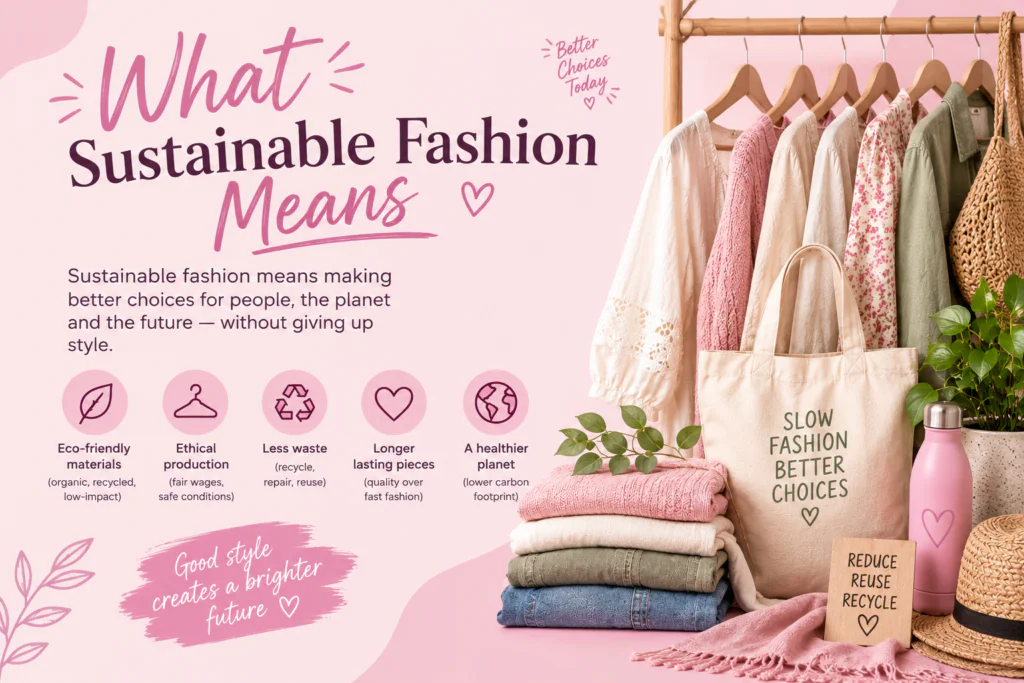
The phrase covers materials, energy, water, chemicals, labour practices, transport, durability, repairability and what happens when clothing is no longer wanted. No single fabric or label makes an item automatically “sustainable” in every context.
Step 1: Start With the Wardrobe You Already Own
The lowest-cost sustainable action is to use what you already have. Pull out pieces you rarely wear and ask why: wrong fit, awkward colour, difficult care, no matching items or simply forgotten?
Step 2: Create a 30-Wear Mindset
Before buying, imagine at least ten complete outfits or several real situations where the piece works. The exact number of wears is less important than the habit of thinking beyond one event or one social-media post.
Step 3: Prioritise Fit
A supposedly eco-friendly garment you dislike wearing is not a good purchase for your wardrobe. Fit and comfort strongly influence whether clothes are actually used.
Step 4: Shop Second-Hand Strategically
Second-hand is useful for coats, denim, leather, occasion wear, bags and statement pieces. Search by measurement, fabric and silhouette instead of just size labels.
Step 5: Learn Basic Clothing Care

- Wash only when needed.
- Use cooler cycles when suitable for the garment.
- Air dry when practical.
- Treat stains early.
- Store knitwear without stretching it.
- Follow care labels for delicate fabrics.
Step 6: Repair Before Replacing
A loose button, fallen hem, small seam split or worn heel does not automatically mean an item is finished. Learning a few basic repairs or using a local tailor can extend the life of clothes significantly.
Step 7: Be Careful With “Eco” Marketing
Words such as conscious, green, responsible and natural can sound reassuring but may be vague. Look for specific information about materials, certification, manufacturing, durability or repair rather than relying on one marketing phrase.
Step 8: Build a Connected Wardrobe
A smaller wardrobe becomes more useful when pieces work together. GlowCulture’s capsule wardrobe guide can help you create combinations before you buy more.
Step 9: Use Trends Selectively
Trend interest is part of fashion and does not need to disappear. Try a trend through accessories, styling or one versatile piece rather than buying multiple near-identical items that may be abandoned quickly.
Step 10: Resell, Donate or Recycle Thoughtfully
Reselling can keep good garments in use. Donation is useful when organisations can realistically redistribute the items. Textile recycling is a last option for clothing that cannot be repaired or reused, and availability varies by location.
Why Wearing Clothes Longer Makes a Difference
It is tempting to think sustainability is mostly about what a garment is made from, but how long you keep and wear it matters just as much. Research from the UK waste-reduction charity WRAP found that around 30% of the clothing in the average UK wardrobe had not been worn for at least a year, most often because it no longer fitted. The same research estimated that extending the life of clothes by just three months of active use per item would cut the carbon, water and waste footprints of clothing by roughly 5-10%. The exact figures depend on the study, but the direction is consistent: more wears per garment means less impact per wear.
A Simple Wardrobe Audit You Can Do This Weekend
- Take everything out of one category, such as tops or trousers, and lay it on the bed.
- Try on anything you are unsure about. If it does not fit, decide whether it can be altered or should go.
- Sort into four piles: wear now, repair or alter, sell or swap, and donate or recycle.
- Write down gaps rather than shopping straight away. Wait a week before buying anything to fill them.
Fabric Basics for Longer-Lasting Clothes
No fabric is perfect, so it helps to know the trade-offs.
- Cotton and linen are breathable and often durable, but conventional cotton needs a lot of water. Look at how the garment is made as well as the fibre.
- Wool is long-lasting and repairable, and it needs less frequent washing than many fabrics.
- Polyester and other synthetics can be hard-wearing but shed microfibres when washed and are difficult to recycle, especially in blends. Wash them less often and at lower temperatures where the care label allows.
- Blended fabrics often look convenient but are harder to recycle, so a single-fibre garment may be easier to keep in circulation at the end of its life.
What to Do With Clothes You No Longer Wear
- Sell or swap good-quality items through resale apps, local groups or clothes swaps.
- Donate clean items in good condition to a charity shop, and check what they accept before you go.
- Repair or alter anything that is worth keeping. A tailor can often adjust a waist, hem or sleeve for a modest cost.
- Recycle textiles that are too worn to reuse. Local collection points vary, so check your council website.
Cost-Conscious Ways to Shop More Sustainably
Shopping more sustainably does not have to cost more. Second-hand pieces, clothes swaps and repairs are often cheaper than buying new. When you do buy, consider cost per wear: a coat that costs more but is worn for years may be a better value than several cheaper items that lose shape quickly. For a shortlist of brands that are transparent about materials and production, see our guide to sustainable fashion brands, and use our capsule wardrobe guide to plan purchases that work with what you already own.
Frequently Asked Questions
Is sustainable fashion expensive?
It can be, but it does not have to be. Buying less, shopping second-hand, repairing and wearing clothes longer can reduce spending.
What is the most sustainable fabric?
There is no universal winner. Impact depends on farming or production methods, processing, durability, care and how long you use the garment.
Is second-hand always sustainable?
It extends the life of existing clothing, but buying large amounts second-hand can still create clutter and waste. The goal is useful wear.
How do I start a sustainable wardrobe?
Audit what you own, identify gaps, set a waiting period before purchases and choose items that create several outfits.
Final Thoughts
Sustainable fashion is not a purity test. The most useful approach is simple: own fewer pieces you genuinely wear, care for them, repair them and shop with a clear reason.
Sources & Further Reading
Editorial note: This article offers general style guidance. Trends, prices and product availability change, so check current details before you buy. Learn how we research and review our content in our Editorial Policy.