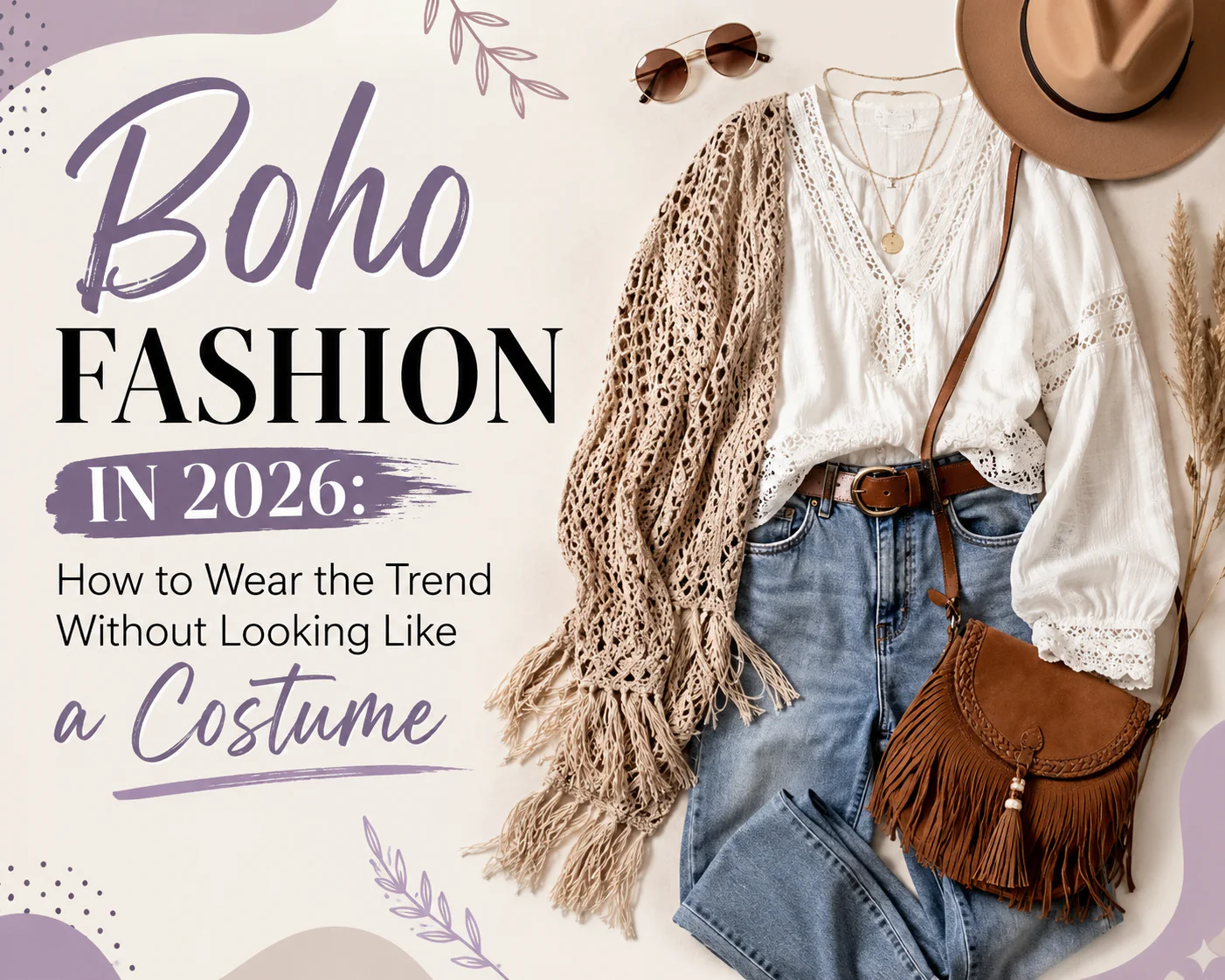
Category: FashionAuthor: Aiman Shahzadi Boho fashion in 2026 is all about texture, movement and romantic details without looking like a festival costume. This year’s version moves beyond the traditional bohemian look, mixing lace-trim dresses, embroidered jackets, pendant necklaces, paisley, soft blouses and handcrafted-looking fabrics with everyday denim and clean accessories. For more on this, see our guides to easy transitional outfits for late summer to autumn, how to wear polka dots without looking retro and how to dress more expensive on a budget. Quick answer: Pick one boho hero piece — a lace blouse, floaty dress, suede jacket or pendant necklace — and style it with modern basics such as straight jeans, barrel denim, a tailored coat or simple flats. What Does Boho Look Like in 2026? The current revival leans into lace, ruffles, embroidery, paisley, suede, flowing fabric and statement jewellery. Some runway styling is maximal, but the easiest everyday version is much more edited. 10 Wearable Boho Outfit Ideas 1. Lace blouse + straight jeans A romantic top and clean denim is the simplest 2026 boho formula. 2. Floaty dress + leather jacket The jacket adds weight and stops the dress from feeling too delicate. 3. Suede jacket + white tee + jeans Use texture rather than lots of print. Brown suede works especially well as the weather cools. 4. Paisley skirt + fitted knit Choose a plain top that repeats one colour from the print. 5. Crochet top + tailored trousers The contrast between handmade-looking texture and tailoring feels more modern than pairing crochet with every other boho element. 6. White dress + pendant necklace One long pendant can create the mood without adding fringe, boots and a hat. 7. Embroidered jacket + black basics Let the jacket act as the statement piece over a black top and trousers. 8. Ruffled blouse + barrel jeans The structured denim balances volume at the shoulders and sleeves. 9. Maxi skirt + simple tank + flat sandals Keep the jewellery small if the skirt already has print or embroidery. 10. Boho blouse + tailored coat for autumn A clean coat makes a romantic blouse work in cooler weather. 2026 Boho Colour Palette Boho Accessories Worth Trying Pendant necklaces, soft leather or suede bags, woven belts, oversized sunglasses and scarves are easy entry points. If your outfit already includes lace, embroidery and print, choose just one or two accessories. How to Shop the Trend More Sustainably Boho relies heavily on details that already exist in vintage and resale markets: suede bags, embroidered blouses, pendants, scarves and lace skirts. Check second-hand options before buying a trend-specific piece new. GlowCulture’s sustainable fashion brands guide and capsule wardrobe guide can help you shop more intentionally. How to Wear Boho for Different Occasions Boho is easiest to wear when you match the level of detail to the setting. The same lace blouse can look relaxed on a Saturday and polished at a dinner, depending on what sits around it. For work Choose boho pieces in structured or matte fabrics, such as a cotton blouse with subtle embroidery or a suede belt, and pair them with tailored trousers or a straight skirt. Keep prints small and jewellery to one pendant or a pair of earrings so the outfit still reads as professional. For weekends This is where the trend is most forgiving. A floaty dress with a denim jacket and flat sandals, or a crochet top with relaxed jeans, gives you the boho mood without much effort. If you want denim inspiration, our guide to styling barrel jeans shows how a wider leg balances a voluminous top. For evenings and events Swap casual textures for something with a little more drape: a lace-trim dress, a satin skirt with an embroidered jacket, or a black outfit lifted by one statement piece. Dark colours and clean shoes make boho details look deliberate rather than festival-ready. For holidays and travel Lightweight cotton, linen and viscose pieces pack well and suit warm weather. Pick items that mix and match, so a maxi skirt, a white tank and a printed blouse can make several outfits from a small suitcase. Fabric, Fit and Proportion: What Makes Boho Look Polished Boho clothing is often loose and layered, which means proportion matters more than the trend details themselves. A few checks before you buy or wear a piece: Common Boho Mistakes to Avoid Build a Small Boho Capsule Over Time You do not need a whole new wardrobe. Start with pieces that will also work outside the trend, then add one or two boho accents each season. Our capsule wardrobe guide explains how to choose versatile basics first. A starter set might include: Frequently Asked Questions Is boho fashion back in 2026? Yes. Fashion coverage for 2026 has highlighted lace, paisley, pendants, embroidered pieces and romantic tops as part of a renewed bohemian direction. What is modern boho? Modern boho uses artisanal texture and romantic pieces but combines them with cleaner denim, tailoring and restrained accessories. Can boho work in winter? Yes. Layer lace blouses and dresses with suede, leather, wool coats, boots and knitwear. How do you make boho look expensive? Focus on fabric, fit and restraint. One textured piece with clean basics often looks more polished than many inexpensive trend details worn together. Final Thoughts The most wearable boho fashion in 2026 is expressive but edited. Choose one piece with story or texture, then let modern basics do the rest. Related Reading Browse more in Fashion or return to the GlowCulture homepage. Sources & Further Reading Editorial note: This article offers general style guidance. Trends, prices and product availability change, so check current details before you buy. Learn how we research and review our content in our Editorial Policy.
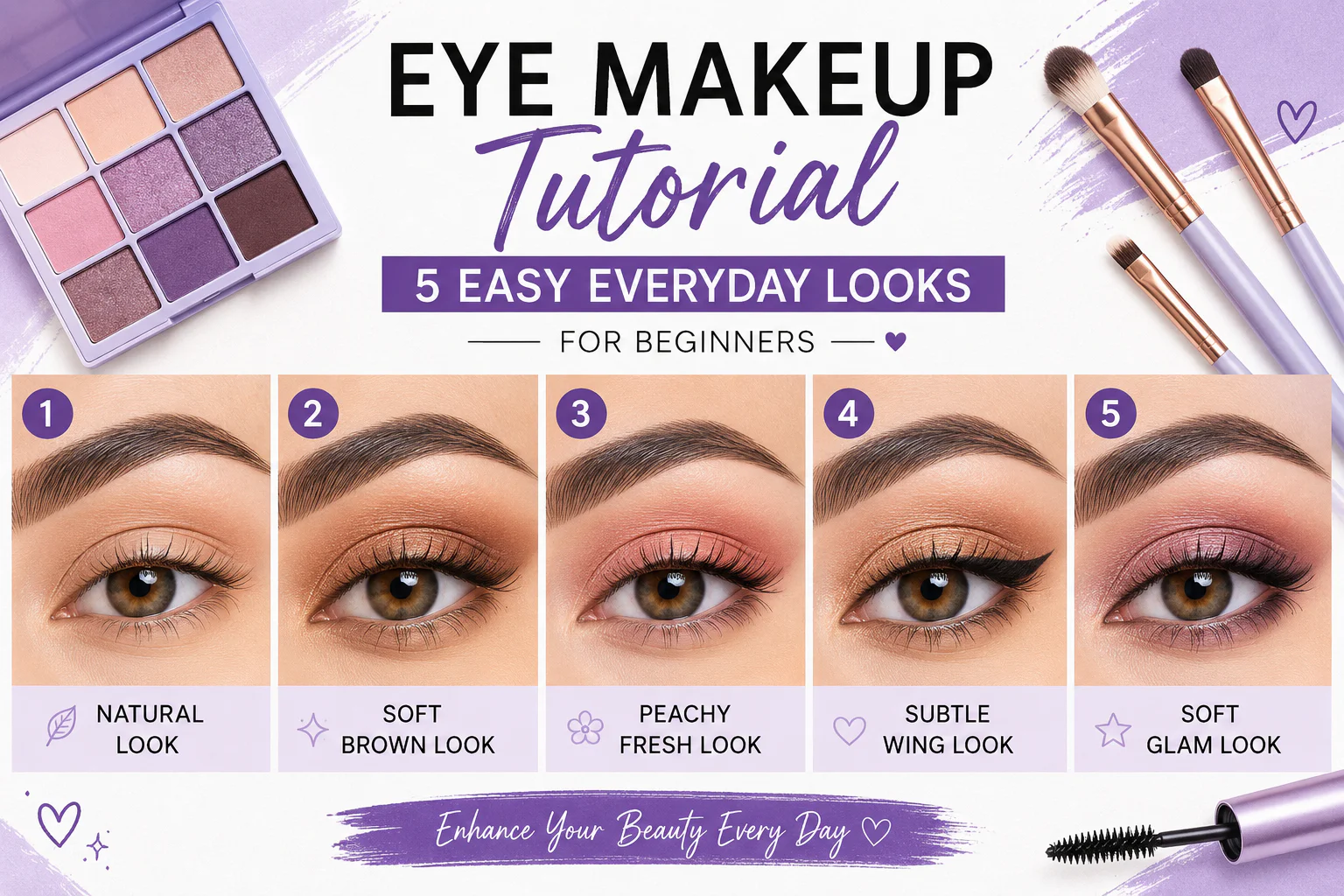
Eye Makeup Tutorial: 5 Easy Everyday Looks for Beginners
Category: BeautyAuthor: Aiman Shahzadi Eye makeup for beginners does not require a 20-shade palette to make your eyes look polished. Most everyday eye makeup can be built from three simple ideas: add soft depth around the lashes, keep edges blended, and place light or shimmer where you want the eye to look more open. For more on this, see our guides to an easy everyday makeup tutorial for beginners and a no-nonsense buying guide to Real Techniques brushes. Quick answer: For the easiest eye makeup, use one mid-tone matte shade through the crease or outer corner, a darker shade or pencil close to the lashes, optional shimmer on the lid, and mascara. Adjust the placement to your eye shape rather than copying an exact diagram. Before You Start: The 6-Minute Eye Kit Look 1: Soft Brown Everyday Eye This is the easiest look to learn because one shade teaches placement and blending without colour-matching problems. Look 2: One-Shadow Shimmer Eye A soft reflective lid catches light without requiring complicated blending. Look 3: Beginner Winged Liner Instead of drawing a long wing immediately, sketch a tiny outward flick from the outer corner. Connect it to the upper lash line, fill the triangle, then clean the edge with a cotton bud. A short wing is easier to balance than a dramatic one. Look 4: Hooded-Eye Friendly Soft Lift Keep your eyes open and look straight ahead while placing the deeper shadow slightly above the natural fold. Concentrate darkness on the outer third and avoid a very thick liner across the centre of the lid if it hides visible lid space. Look 5: Bright, Awake Eye Use a light satin or matte shade on the inner corner and centre of the lid, then add mascara mainly to the upper lashes. If you use a nude pencil on the lower waterline, keep it subtle and stop if your eyes feel irritated. How to Choose Eyeshadow Colours Brown, taupe, bronze and soft rose are forgiving on many skin tones. You do not need to follow rigid “eye colour rules.” Choose shades that harmonise with your clothing, undertone and the contrast level you enjoy. How to Make Eye Makeup Last Longer For trend inspiration beyond beginner basics, read GlowCulture’s Eye Makeup Trends 2026. Adjusting These Looks to Your Eye Shape Eye shapes vary a lot, and the placement that flatters one person can look different on another. Treat the looks above as a starting point and adjust as you go. These general pointers can help: If a look feels wrong, look in the mirror with your eyes open and straight ahead. What you see in that position is what other people see, not what you see with your eyes closed. The Only Tools You Really Need A beginner routine does not need a full brush roll. Two or three brushes cover almost every look in this guide: If you are deciding which brushes to buy, our Real Techniques brush guide compares popular sets by what they include and who they suit. Common Beginner Mistakes and Easy Fixes Removing Eye Makeup Gently The skin around the eyes is thin, so removal should be gentle. Hold a soaked cotton pad against the lid for a few seconds so the product loosens, then wipe softly instead of rubbing. Use an oil-based or dedicated eye-makeup remover for waterproof formulas, and cleanse your face afterwards to remove any residue. It is also worth following basic hygiene rules for eye products. The US Food and Drug Administration advises against sharing eye cosmetics and avoiding eye makeup altogether if you have an eye infection, and notes that manufacturers usually recommend discarding mascara two to four months after purchase (see the FDA eye cosmetic safety guidance). Stop using a product and speak to a healthcare professional if your eyes become red, painful or swollen. A Five-Minute Routine to Practise Repeat this routine for a week and change only one thing each time. That is the quickest way to learn what suits your eyes. Frequently Asked Questions Should eyeliner go before or after eyeshadow? Usually after shadow. If you want a smoky effect, pencil can go first and be blended with shadow over it. What is the easiest eyeliner for beginners? A soft pencil is forgiving because you can smudge it. Felt-tip liquid liner gives a sharper line but usually needs more practice. How do I stop eyeshadow from looking muddy? Use fewer shades, tap off excess powder and blend the edges rather than mixing every colour together across the entire lid. Do I need false lashes? No. Curled lashes and mascara are enough for most everyday looks. Final Thoughts Eye makeup becomes easier when you stop treating every look as a new technique. Learn soft brown depth, lash-line definition, one shimmer placement and a small wing. Those four skills can create dozens of looks. Related Reading Browse more in Beauty or return to the GlowCulture homepage. Sources & Further Reading Editorial note: This article is for general information only and is not medical advice. Please speak to a qualified healthcare professional about any personal health or skin concern. Learn how we research and review our content in our Editorial Policy.

15 Healthy Snack Recipes That Are Easy and Satisfying
Category: HealthAuthor: Aiman Shahzadi Healthy snacks can be part of a balanced diet when they solve a real need: you are hungry between meals, you need fuel before activity, or your next meal is several hours away. The most satisfying snacks usually combine at least two elements, such as fibre, protein or healthy fats. For more on this, see our guides to healthy breakfast recipes for busy mornings, anti-inflammatory foods to add to your diet and the complete anti-inflammatory diet food list. Quick answer: Good everyday snacks include fruit with yoghurt, apple with peanut butter, hummus with vegetables, wholegrain crackers with cheese, boiled eggs, popcorn, overnight chia pots, oat-energy bites and nuts with fruit. A Simple Snack Formula Try pairing one fibre-rich food with one protein or fat source. Examples: apple + nut butter, berries + yoghurt, carrots + hummus, wholegrain crackers + cheese. 1. Apple and Peanut Butter Slice an apple and serve with a tablespoon or two of peanut butter. Cinnamon is optional. 2. Yoghurt, Berries and Seeds Use plain yoghurt, fresh or frozen berries and a spoon of chia, pumpkin or sunflower seeds. 3. Hummus and Crunchy Vegetables Pair hummus with carrots, cucumber, peppers or sugar-snap peas. 4. Wholegrain Crackers and Cheese Add tomato or cucumber to make the snack more substantial. 5. Boiled Egg and Fruit A boiled egg with an orange, apple or pear is simple, portable and balanced. 6. Air-Popped Popcorn Season with herbs, paprika or a small amount of grated cheese instead of relying on very salty or sugary coatings. 7. Banana Oat Bites Mash banana with oats and a spoon of nut butter, shape into small bites and bake until set. 8. Cottage Cheese With Tomato Top cottage cheese with chopped tomatoes, pepper and herbs. Serve with wholegrain crackers. 9. Frozen Yoghurt Berry Bark Spread yoghurt on a lined tray, scatter berries and chopped nuts, freeze, then break into pieces. 10. Edamame With Lemon Steam edamame and add lemon, pepper or chilli. It provides plant protein and fibre. 11. Pear and Walnut Bowl Slice a pear and pair it with a small handful of walnuts. 12. Mini Overnight Chia Pot Mix chia seeds with milk or fortified plant drink, refrigerate until thick and top with fruit. 13. Tuna Cucumber Bites Top thick cucumber slices with a small amount of tuna mixed with yoghurt or mayonnaise and herbs. 14. Toasted Chickpeas Drain chickpeas, dry well, season and roast until crisp. Keep portions moderate because crunchy snacks are easy to eat mindlessly. 15. Dark Chocolate, Fruit and Nuts If you want something sweet, pair a small amount of chocolate with berries or fruit and nuts instead of turning snack time into an all-or-nothing rule. Are Snacks Necessary? No. If meals keep you satisfied, you do not need to force snacks into the day. The NHS Eatwell Guide focuses on the overall pattern across a day or week, not a fixed number of eating occasions. How to Make Packaged Snacks Work Better Packaged foods can still fit. Compare labels, watch portion size and pair a carbohydrate-heavy snack with protein or fruit if you want it to be more satisfying. Snack Ideas for Different Situations Make-Ahead Snacks A little preparation on a quiet day makes healthy choices easier when you are hungry. Chop vegetables into sticks and keep them in a container in the fridge, portion nuts into small tubs, bake a batch of banana oat bites, and boil several eggs at once. Keep anything containing dairy, egg or cooked ingredients in the fridge and follow the storage advice on the packaging or from the Food Standards Agency. Reading Labels on Packaged Snacks Packaged snacks can fit into a balanced diet if you choose them thoughtfully. In the UK, many products show traffic-light colours for fat, saturated fat, sugars and salt, and choosing more green and amber options is a simple starting point. Check the portion size on the back, because a single bar or bag may contain more than one serving. The NHS Eatwell Guide and its advice on food labels are good places to start if you want to go deeper. Safety Notes A Simple Weekly Snack Plan If you like to plan ahead, choose three or four snacks each week and buy ingredients for them. For example: fruit and yoghurt pots, hummus with vegetable sticks, popcorn and boiled eggs. Rotating a small set keeps shopping simple and reduces waste. For breakfast ideas that pair well with this approach, see our healthy breakfast recipes. Frequently Asked Questions What is the healthiest snack? There is no single healthiest snack. Fruit plus yoghurt, nuts, hummus or another protein-rich food is a practical pattern. What snack is high in protein? Greek-style yoghurt, cottage cheese, eggs, edamame, tuna and some nuts or seeds can contribute protein. What snack is high in fibre? Fruit, vegetables, oats, chickpeas, popcorn, wholegrain crackers, nuts and seeds can all contribute fibre. Are snacks bad for weight? Not automatically. Total intake, hunger, portions and overall diet matter more than whether food is labelled a meal or snack. Final Thoughts A healthy snack should be easy enough to make when you are actually hungry. Combine fibre with protein or healthy fat, keep options visible and avoid turning normal food choices into rigid rules. Related Reading Browse more in Health or return to the GlowCulture homepage. Sources & Further Reading Editorial note: This article is for general information only and is not medical advice. Please speak to a qualified healthcare professional about any personal health or skin concern. Learn how we research and review our content in our Editorial Policy.
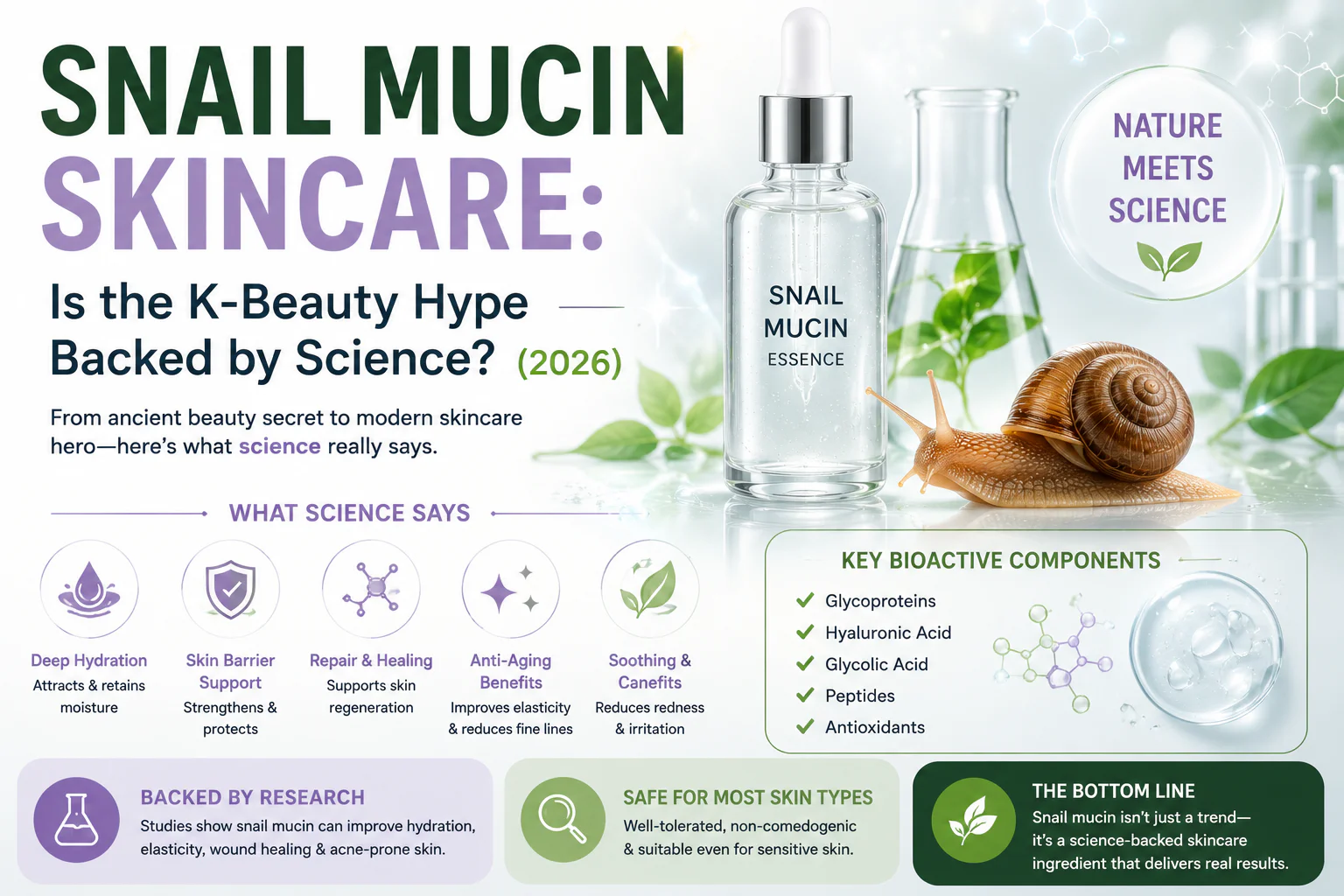
Snail Mucin Skincare: Is the K-Beauty Hype Backed by Science? (2026)
Snail Secretion Filtrate in Clinical Dermatology: Biochemistry, Efficacy, Immunological Safety, and Industrial Extraction Snail secretion filtrate (SSF)—colloquially termed snail mucin—has evolved from an empirical cornerstone of East Asian beauty routines into a primary therapeutic subject in clinical cosmeceuticals. While mainstream consumer discussion centers on superficial hydration and the “glass skin” aesthetic, dermatological literature reveals a complex bioactive fluid defined by specific enzymes, cellular signaling peptides, distinct immunogenic risks, and advanced bio-engineering protocols. 1. Molecular Biochemistry and Anatomical Secretion Mechanics Terrestrial gastropods (primarily Cornu aspersum / Helix aspersa and Achatina fulica) produce biochemically distinct fluids depending on the specific anatomical gland stimulated: For more on this, see our guides to how to build the perfect skincare routine for your skin type, skincare rituals from Korea, Japan and South Asia and the science behind glass skin. Bio-Active Enzymatic and Peptide Complexes Beyond basic humectant molecules, native SSF contains specialized functional macromolecules: 2. Percutaneous Penetration and Trans-Epidermal Signaling Mechanics The structural proteins in SSF—native gastropod collagen (~300 kDa) and elastin (~60–70 kDa)—far exceed the classic 500-Dalton molecular weight limit required to penetrate an intact human stratum corneum. Snail mucin does not remodel dermal tissue through the direct physical integration of topical animal fibers. Instead, it works through a coordinated dual-action biological pathway: Molecular Weight & Penetration Profile Chemical Constituent Molecular Weight (MW) Target Depth Dominant Biological Mechanism Native Gastropod Collagen ~300 kDa Stratum Corneum (Surface) Occlusive hydrophilic film formation; moisture retention. Native Gastropod Elastin ~60–70 kDa Stratum Corneum (Surface) Surface elasticity; reduction of micro-shear stress. Glycosaminoglycans (GAGs) 10–50 kDa Upper Stratum Corneum Intercellular hydration and viscoelastic cushioning. Achacin Glycoprotein 30–35 kDa Follicular Orifice / Surface Antimicrobial oxidative membrane lysis via L-amino acid oxidase. Glycolic Acid (AHA) 76 Da Stratum Granulosum Desmosomal cleavage; mild stratum corneum micro-exfoliation. Allantoin 158 Da Stratum Granulosum Mitotic epithelial stimulation; erythema suppression. Copper Oligopeptides <500 Da Dermis / Fibroblasts FAK phosphorylation; triggers β-catenin nuclear entry for COL3A1 activation. 3. Immunological Safety: Tropomyosin Cross-Reactivity Adverse reactions to SSF are frequently misdiagnosed as simple cosmetic sensitivities or generic acne breakouts. The primary clinical mechanism is specific allergen cross-reactivity driven by conserved panallergic invertebrate proteins. 4. Microbiome Dynamics and Clinical Acne Efficacy Compatibility with Malassezia Species Malassezia yeasts (M. furfur, M. globosa, M. restricta) are lipophilic fungi implicated in Malassezia folliculitis (“fungal acne”). Because they lack enzymatic machinery for de novo fatty acid synthesis, they depend entirely on exogenous C12–C24 lipid chains. Clinical Evidence: Mask-Induced Acne RCT A 12-week double-blind, randomized, placebo-controlled trial ($n = 66$) published in the Journal of Cosmetic Dermatology evaluated a standardized combination serum containing Snail Secretion Filtrate, Calendula officinalis, and Glycyrrhiza glabra (SCGS) on mild-to-moderate inflammatory acne: Clinical Endpoint (12 Weeks) SCGS Treatment Serum Placebo Control Group Statistical Significance Inflammatory Lesion Reduction -33.89% mean reduction relative to baseline Minimal baseline fluctuation p = 0.03 (Significant) Subgroup: Concurrent Acne Actives -50.30% mean reduction relative to baseline Minimal change p = 0.01 (Significant) Non-Inflammatory Comedone Count No significant reduction No significant reduction p > 0.05 (Not Significant) Transepidermal Water Loss (TEWL) Maintained stable barrier function Degradation under occlusion p > 0.05 (Tolerability Confirmed) The trial demonstrated that SSF functions primarily as a soothing, anti-inflammatory barrier agent rather than a primary keratolytic exfoliant. 5. Industrial Extraction Technologies and Botanical Alternatives Commercial heliciculture has moved away from historical chemical and physical harvesting methods toward non-destructive, standardized industrial extraction. Animal SSF vs. Botanical Phyto-Mucin To satisfy vegan cosmeceutical demands, manufacturers produce “Phyto-Mucins” sourced from Wild Yam (Dioscorea opposita) and Okra (Abelmoschus esculentus). Functional Attribute Gastropod Secretion Filtrate (SSF) Botanical Phyto-Mucin (Wild Yam / Okra) Biological Origin Terrestrial Gastropod (Cornu aspersum) Plant Mucilage Extraction Primary Molecules Proteoglycans, Glycosaminoglycans Polysaccharides, Glucomannans, Pectins Active Enzymes Achacin, SOD, GST, TIMPs Plant Catalases, Polyphenol Oxidases Fibroblast Collagen Signaling High (Direct FAK / β-catenin activation) Indirect (Surface ROS suppression) Tropomyosin Cross-Reactivity Risk Moderate-to-High (Der p 10 / Hel as 1) Zero Ethical / Vegan Status Non-Vegan (Cruelty-Free certified) 100% Vegan Certified While phyto-mucins effectively replicate the slippery rheology and surface hydration of animal mucin without allergy risks, they lack the animal signaling peptides and specialized enzymes required to stimulate endogenous human fibroblast collagen synthesis. 6. Clinical Integration Protocols and Active Compatibility Integrating SSF into clinical routines requires ordering products by molecular weight and viscosity while taking advantage of ingredient synergies: Frequently Asked Questions Does snail mucin contain collagen that absorbs directly into the dermis? No. Native gastropod collagen is a macromolecule (~300 kDa) that cannot penetrate an intact stratum corneum. It acts as a surface humectant and barrier film, while low-molecular-weight oligopeptides (<500 Da) penetrate the skin to signal dermal fibroblasts to synthesize endogenous human collagen. Why do some individuals experience breakouts or contact dermatitis from snail mucin? Cutaneous reactions are primarily caused by an immunological cross-reactivity between gastropod tropomyosin (Hel as 1) and house dust mite panallergens (Der p 10) in sensitized individuals. In other cases, breakouts stem from formulation additives (e.g., L-Arginine) or heat and sebum trapped under the film-forming matrix. Can snail mucin be safely used by individuals prone to fungal acne (Malassezia folliculitis)? Pure, unadulterated snail secretion filtrate contains no lipids or fatty acids and cannot directly feed Malassezia yeasts. However, individuals with active folliculitis should inspect finished product ingredient labels to ensure the formula does not contain added lipids, esters, or free amino acid combinations. How do vegan phyto-mucins compare to real snail secretion filtrate? Botanical phyto-mucins (from wild yam or okra) use plant polysaccharides and glucomannans to provide equivalent surface hydration and slip without animal extraction or dust mite cross-allergy risks. However, phyto-mucins lack the animal signaling peptides, TIMPs, and Achacin enzymes needed to up-regulate human collagen synthesis pathways directly. What the Experts Say Research on snail secretion filtrate is growing but still limited. A 2024 review in the Journal of Cosmetic Dermatology brings together laboratory work and small clinical studies. In one 12-week trial covered by the review, a serum combining snail secretion filtrate with calendula and liquorice root extract produced a greater reduction in inflammatory acne lesions in people
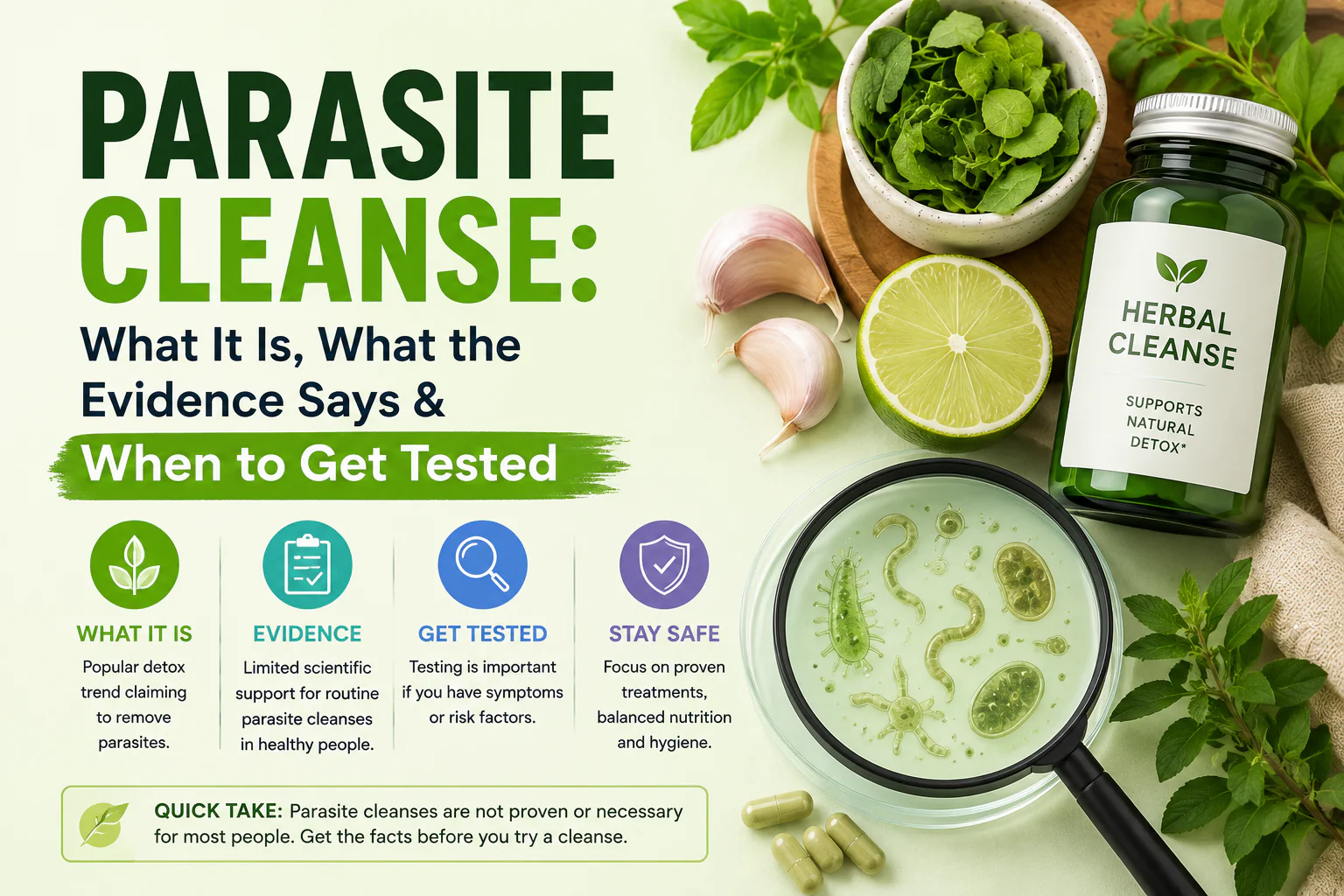
Parasite Cleanse: What It Is, What the Evidence Says & When to Get Tested
Category: HealthAuthor: Aiman Shahzadi “Parasite cleanse” videos often begin with a long list of vague symptoms: bloating, tiredness, skin problems, sugar cravings or brain fog. The creator then suggests that hidden parasites are the cause and recommends herbs, teas, drops or supplements to “flush” them out. The problem is that common symptoms do not prove a parasitic infection. For more on this, see our guides to whether creatine actually improves brain health, whether the fibermaxxing trend is actually healthy and how much protein you actually need. Quick answer: There is no good evidence that routine over-the-counter parasite cleanses are needed for healthy people. Real parasitic infections are diagnosed based on symptoms, travel/exposure history and appropriate tests, then treated with medicines chosen for the specific organism. What Is a Parasite Cleanse? The term usually describes herbal or supplement protocols containing ingredients such as wormwood, black walnut, clove, garlic, oregano oil or laxative herbs. Products may promise to remove worms, eggs, toxins or “biofilm.” These claims can sound medical while avoiding the steps used in real diagnosis. What Symptoms Can Parasites Cause? Symptoms depend on the organism. Some intestinal infections can cause diarrhoea, abdominal pain, weight loss, itching around the anus, nausea or visible worms/segments. Other parasites affect the liver, blood, skin or other organs. Many symptoms promoted in cleanse videos are nonspecific and can have dozens of unrelated causes. Seek medical advice promptly for blood in the stool, persistent diarrhoea, dehydration, severe abdominal pain, unexplained weight loss, fever after travel, symptoms after untreated freshwater exposure abroad, or significant symptoms in a child or pregnant person. How Are Parasitic Infections Actually Diagnosed? A clinician may ask about recent travel, food and water exposure, contact with infected people, pets, symptoms, and how long the problem has lasted. Depending on the suspected infection, testing can include stool samples, tape/swab tests, blood tests or imaging. Not every parasite is diagnosed in the same way. Why “Detox Reactions” Are Not Proof Some cleanse sellers describe diarrhoea, cramping, nausea or fatigue as proof that parasites are “dying off.” Those symptoms can also be direct side effects of laxatives, irritating herbs or dehydration. A reaction to a supplement does not confirm an infection. Can Herbal Parasite Cleanses Be Harmful? What About Threadworms? Threadworms are common, especially in children, and are a useful example of why specific diagnosis matters. NHS guidance describes characteristic night-time itching and treatment with mebendazole plus hygiene measures. That is very different from taking a broad “cleanse” for vague symptoms. How to Reduce Your Risk of Some Parasitic Infections For general wellbeing, focus on proven foundations such as sleep, balanced meals and stress support. GlowCulture’s sleep guide and stress-management guide can help with those basics without turning vague symptoms into self-diagnosis. Ingredients Commonly Found in Cleanse Products Products sold as parasite cleanses often contain herbs such as wormwood, black walnut hull, clove or oregano oil. Laboratory studies on some plant compounds do not show that a home dose is safe or effective for treating an infection in people. Some herbs can cause side effects or interact with medicines, and they are not suitable for everyone, particularly during pregnancy or when breastfeeding. Always check with a pharmacist or doctor before taking a herbal product. Other Causes of the Symptoms Often Blamed on Parasites Bloating, tiredness, skin changes and changes in bowel habits are common and have many possible causes. These can include irritable bowel syndrome, food intolerances, coeliac disease, low iron, thyroid problems, stress and poor sleep. A doctor can help identify the cause, which is more useful than treating an unproven one. How to Prepare for a Medical Appointment A Note on Home Test Kits Some companies sell stool test kits online. The quality and interpretation of these tests vary, and a result should be discussed with a qualified healthcare professional rather than acted on alone. If you have symptoms after travel or a possible exposure, it is usually better to go through your GP or a travel clinic. Supporting Digestive Health Safely Everyday habits help most people: eat a varied diet with plenty of fibre, drink enough fluids, wash your hands well, store and cook food safely and follow travel advice for the places you visit. If you are worried about your digestion, our guide to fibermaxxing explains how to increase fibre gradually and what to watch for. Frequently Asked Questions Does everyone have parasites? No. Humans can acquire parasites, but the idea that every healthy person is secretly “full of parasites” is not a medically sound reason to take routine cleanses. Can you see parasites after a cleanse? Stringy material in stool after herbs or laxatives is not reliable proof of worms. Mucus, fibre and other intestinal contents can look unusual. Diagnosis should not be made from social-media images. Can garlic or oregano oil kill parasites? Laboratory findings about an ingredient do not prove that a home dose safely treats a human infection. Effective treatment depends on the exact parasite and clinical context. Should I take deworming medicine just in case? Routine self-treatment is not appropriate for everyone. Ask a pharmacist or clinician when you have a specific concern, especially for children, pregnancy, chronic illness or recent travel. Final Thoughts The viral parasite-cleanse trend takes a real medical issue and turns it into a one-size-fits-all wellness story. If you have a genuine exposure or concerning symptoms, testing and targeted treatment are much safer than guessing. Related Reading Browse more in Health or return to the GlowCulture homepage. Sources & Further Reading Editorial note: This article is for general information only and is not medical advice. Please speak to a qualified healthcare professional about any personal health or skin concern. Learn how we research and review our content in our Editorial Policy.
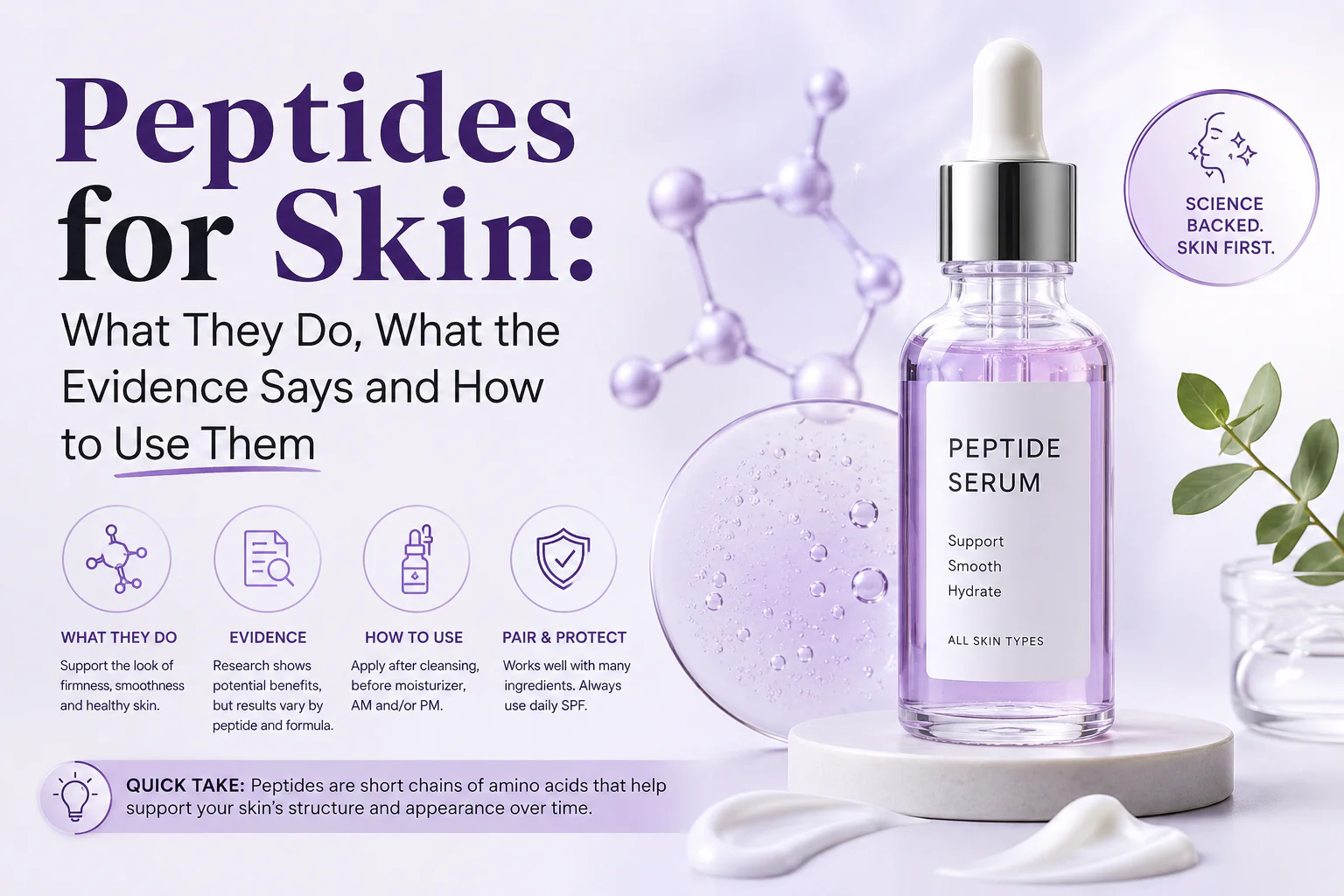
Peptides for Skin: What They Do, What the Evidence Says and How to Use Them
Category: SkincareAuthor: Aiman Shahzadi Peptides in skincare have moved from a niche anti-ageing ingredient to one of the most talked-about parts of modern skincare. Search interest surged in early 2026, and peptide serums now appear beside retinol, vitamin C and hyaluronic acid in many routines. But “peptide” is a broad category, not one single ingredient with one guaranteed result. For more on this, see our guides to how to build the perfect skincare routine for your skin type, the correct order for your skincare routine and what vitamin C serum actually does for your skin. Quick answer: Peptides are short chains of amino acids used in skincare formulas to support functions related to the skin’s structure and appearance. Some peptide products may improve hydration, texture or the look of fine lines over time, but results depend on the specific peptide, formula and consistency. They are supportive skincare, not a replacement for sunscreen or prescription treatments. What Are Peptides in Skincare? Proteins such as collagen are built from amino acids. Peptides are shorter chains of those amino acids. In topical skincare, different peptides are designed to act as signalling or supportive ingredients. Their effects vary widely, which is why a product labelled “peptide serum” cannot be judged by the word peptide alone. Why Are Peptides So Popular in 2026? Early-2026 US search data published by Okoaskin found peptide-related skincare queries far ahead of other tracked ingredients. This does not prove that peptides work better than retinoids or sunscreen; it shows consumer interest. The appeal is understandable because peptide formulas are often marketed as gentler anti-ageing options and tend to layer easily with moisturisers. Potential Benefits of Peptide Skincare 1. Supporting the look of firmer skin Some peptide-containing products are used to target visible loss of firmness and fine lines. Dermatology guidance includes topical peptides among options used for signs of sun-damaged or ageing skin. 2. Improving hydration and texture Many peptide products are built in moisturising bases with humectants and barrier-supporting ingredients. Part of the visible benefit may come from the whole formula, not the peptide in isolation. 3. A gentler supporting option People who cannot tolerate frequent exfoliating acids or stronger retinoids may find some peptide products easier to use, although any formula can still cause irritation or allergy. Are Peptides Better Than Retinol? They are not direct substitutes. Retinoids have a long evidence base for acne, photoageing and fine lines. Peptide products may offer supportive cosmetic benefits, but their evidence is more ingredient- and formula-specific. If your main concern is visible ageing, daily sun protection remains foundational regardless of which serum you choose. How to Add a Peptide Serum to Your Routine You can also choose a moisturiser that already contains peptides rather than adding a separate serum. The goal is not to increase the number of steps; it is to use a formula you will tolerate consistently. Can You Use Peptides With Retinol? Many peptide moisturisers can be used in the same routine as retinol, especially when the peptide formula is moisturising and non-irritating. However, check your specific products. A “peptide” serum may also contain acids or other actives that change the irritation risk. Can You Use Peptides With Vitamin C? In many modern formulas, yes. Old internet rules often treat whole ingredient categories as incompatible without considering formulation. If two products layer well and your skin stays comfortable, they may be used together. If stinging or redness develops, simplify. Who Should Be Careful? People with highly reactive skin should still patch test. If you have eczema, rosacea, active dermatitis or unexplained facial irritation, prioritise barrier repair and professional guidance over adding trending actives. For a broader look at how to choose ingredients by concern, see GlowCulture’s skincare treatment guide. Common Peptides You May See on Labels Ingredient lists use technical names, which can make peptide products hard to compare. You may see terms such as palmitoyl tripeptide, palmitoyl pentapeptide, acetyl hexapeptide or copper tripeptide (GHK-Cu). Each has different claimed functions, and the evidence for individual peptides varies. Much of the published data comes from small studies or studies funded by manufacturers, so treat strong claims with caution. How to Read an Ingredient List Realistic Expectations Peptide products are unlikely to produce dramatic changes. Improvements in hydration and skin feel may be noticeable within a few weeks, while changes in fine lines are usually subtle and take longer. Consistent sunscreen, not smoking and a balanced routine matter more for long-term skin health than any single ingredient. Storing Your Products Keep serums in a cool, dry place away from direct sunlight, close the lid tightly and check the period-after-opening symbol on the packaging. Discard products that change smell, colour or texture. If you are building a wider routine, our guide to the correct skincare order explains where peptides fit. Frequently Asked Questions How long do peptides take to work? Cosmetic improvements are usually gradual. Judge the product over several weeks rather than after a few days, unless irritation tells you to stop sooner. What percentage of peptides is best? There is no universal ideal percentage because peptide types and delivery systems differ. A reputable finished formula matters more than chasing the highest number. Are copper peptides different? Copper peptides are a specific subgroup. They are popular in skin-repair and anti-ageing products, but the same rule applies: evaluate the whole formula and evidence rather than assuming every copper-peptide product is peptides in skincare equivalent. Do peptides replace collagen supplements? No. Topical peptides and oral collagen products are different approaches with different evidence and mechanisms. Final Thoughts Peptides are worth understanding because they are more than a social-media buzzword, but they are not magic. Choose a well-formulated product, keep expectations realistic, protect your skin from UV and judge the routine by comfort and peptides in skincare gradual improvement. Related Reading Browse more in Skin Care or return to the GlowCulture homepage. Sources & Further Reading Editorial note: This article is for general information only and is not medical advice. Please speak to a

How to Style Barrel Jeans in 2026: 10 Outfit Formulas for Every Season
Category: FashionAuthor: Aiman Shahzadi Barrel jeans have a curved silhouette: fuller through the hip and thigh, then tapering toward the ankle. That shape looks dramatic on a hanger, which is why people often search for how to style barrel jeans before buying them. In 2026, the easiest answer is balance: keep the top cleaner, show some waist or wrist, and choose shoes that make the ankle shape feel intentional. For more on this, see our guides to easy transitional outfits for late summer to autumn, how to wear polka dots without looking retro and how to dress more expensive on a budget. Quick answer: Start with a fitted tee, tank, fine knit or tucked shirt. Add simple trainers, loafers, ballet flats or a low heel. Dark wash is easiest for smart outfits; mid-blue denim feels casual; cropped lengths work especially well for petites. 10 Barrel Jeans Outfit Ideas 1. Fitted white T-shirt + dark barrel jeans + loafers This is the easiest entry point. The close-fitting top balances the curved denim and the dark wash feels polished. 2. Tank top + barrel jeans + ballet flats A simple warm-weather formula that keeps the upper half light while the jeans provide shape. 3. Fine cardigan + barrel jeans + slingbacks Button the cardigan as a top or wear it over a camisole. Pointed or slingback shoes visually lengthen the foot. 4. Cropped jacket + high-rise barrel jeans A jacket ending near the waistband helps maintain proportion. This works with leather, suede, denim or lightweight utility jackets. 5. Oversized shirt, half tucked If you prefer volume on top, create one clear waist point with a partial tuck and keep the sleeves rolled. 6. Blazer + knit top + dark denim Choose a blazer with a clean shoulder line. A monochrome top and shoe combination can make the denim shape look more refined. 7. Boho blouse + barrel jeans Use the jeans as a modern counterweight to lace, ruffles or embroidery. Keep accessories simple. 8. Leather jacket + white tank This works well for late summer into autumn. A cropped or waist-length jacket gives the strongest proportion. 9. Sweatshirt + barrel jeans + slim trainers For casual outfits, avoid making every piece oversized. A neat shoe keeps the silhouette from becoming too heavy. 10. Evening top + heel A satin camisole, structured corset-style top or fitted knit turns barrel jeans into a date-night option. Are Barrel Jeans Flattering? “Flattering” is subjective, but the curved leg can create shape and make a basic outfit feel current. The main fit issue is length. If the hem stacks heavily at the ankle, the curve can lose definition. Trying petite, ankle or cropped versions often solves that. Barrel Jeans for Petites Barrel Jeans for Curvier Figures Look for denim with enough room through the hip and a waistband that lies flat. The best pair should follow your shape without pulling across pockets or creating a large waist gap. Curvy-fit options can help when hip-to-waist proportions differ. What Shoes Go With Barrel Jeans? Shoe Best effect Ballet flats Light, feminine, easy for cropped denim Loafers Polished daytime look Minimal trainers Casual and clean Pointed slingbacks Lengthens the foot and dresses up denim Ankle boots Best when the boot shaft sits neatly under or near the hem Use GlowCulture’s capsule wardrobe guide to see how one pair can work across multiple outfits instead of being treated as a one-season trend purchase. How Barrel Jeans Should Fit Choosing a Wash and Colour A darker wash looks smarter and is easier to dress up for work or evenings. Mid-blue is the classic casual choice, and lighter washes suit summer. Black or grey denim can look sleek with a matching top, while ecru or white barrel jeans work best with darker or textured tops so the outfit does not look flat. Barrel Jeans Compared With Other Relaxed Jeans Styling Mistakes to Avoid Caring for Your Denim Denim usually lasts longer if you wash it less often. Turn jeans inside out, use a cool cycle, and air dry when possible to help keep the colour and shape. Spot clean small marks between washes. For more on getting long-term value from what you own, read our guide to sustainable fashion. Frequently Asked Questions Are barrel jeans still in style in 2026? Yes. They remain visible in 2026 denim coverage and celebrity styling, especially as a relaxed alternative to skinny jeans. What top looks best with barrel jeans? Fitted tees, tanks, fine knits, tucked shirts and cropped jackets are the easiest because they balance the fuller leg. Can barrel jeans be smart casual? Yes. Choose a dark wash, clean hem, fitted knit or shirt, structured blazer and polished shoes. Should barrel jeans be cropped? Not necessarily, but ankle and cropped lengths often show the curved silhouette most clearly and are easier for shorter heights. Final Thoughts Barrel jeans look unusual because the leg shape is the statement. Once the rest of the outfit is kept simple, they become surprisingly versatile from late summer through autumn and beyond. Related Reading Browse more in Fashion or return to the GlowCulture homepage. Sources & Further Reading Editorial note: This article offers general style guidance. Trends, prices and product availability change, so check current details before you buy. Learn how we research and review our content in our Editorial Policy.
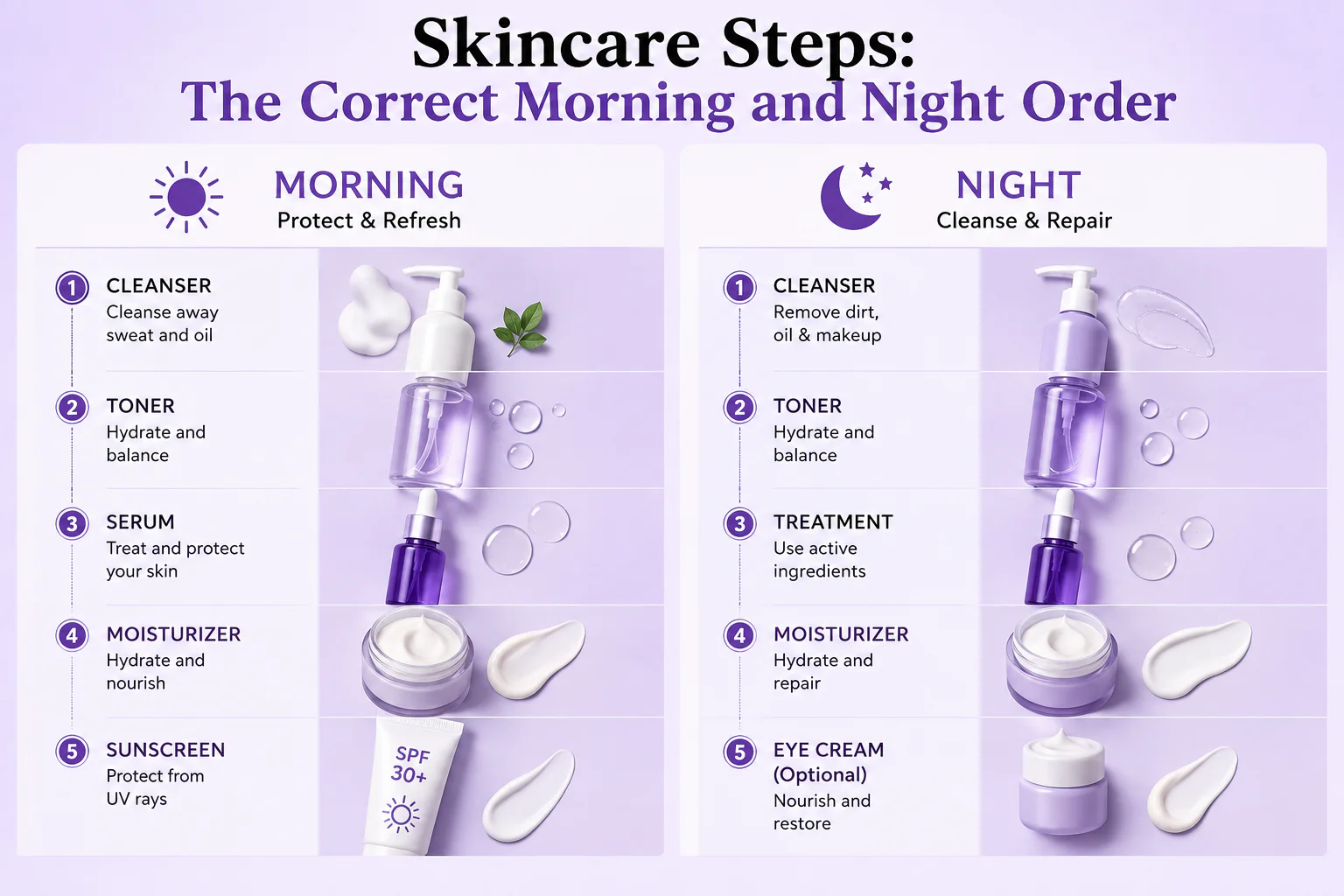
Skincare Steps: The Correct Morning and Night Order
Category: SkincareAuthor: Aiman Shahzadi Skincare order can make a routine much easier to follow, especially when you use cleanser, toner, serum, moisturiser, retinol and sunscreen. The confusing part is often not what each product does but where it goes. Product order matters most when it affects contact with the skin, comfort or sun protection. It does not need to become a ten-step ritual. For more on this, see our guides to how to build the perfect skincare routine for your skin type, skincare tips that actually make a difference and what vitamin C serum actually does for your skin. Quick answer: A simple morning order is cleanse → treatment/serum → moisturiser → sunscreen. A simple night order is cleanse → treatment → moisturiser. Use prescription products according to your clinician’s directions, and do not layer irritating actives just because they technically “fit” in the order.. The Simple Morning Skincare Order Step Product Purpose 1 Gentle cleanser Remove sweat, oil and residue 2 Optional serum/treatment Target a specific concern 3 Moisturiser Support hydration and barrier comfort 4 SPF 30+ Daily UV protection Dermatology guidance places sunscreen after other skincare products and before makeup. If your sunscreen is moisturising enough for your skin, you may not need a separate morning moisturiser. The Simple Night Skincare Order Step Product Notes 1 Cleanser Remove sunscreen, makeup and daily buildup 2 Treatment Retinoid, acne treatment or other active if appropriate 3 Moisturiser Reduce dryness and support the barrier Where Does Toner Go? Toner usually goes after cleansing and before serums. But it is optional. Modern toners can hydrate, exfoliate or deliver actives, so the word “toner” alone does not tell you whether it belongs in your routine. Check the ingredients and purpose. Where Do Serums Go? Most lightweight, water-based serums go after cleansing and before moisturiser. If you use more than one, there is no universal rule that guarantees better absorption. The more important issue is whether the ingredients are compatible and whether your skin tolerates the combination. Where Does Retinol Go? Retinol and retinoids are commonly used at night. Many beginners apply a small amount to dry skin after cleansing, then moisturise. If you are easily irritated, a moisturiser-before-and-after “sandwich” can make the routine gentler, although product instructions vary. Avoid assuming that stronger or more frequent use is better. Where Does Vitamin C Go? Vitamin C serums are often used in the morning before moisturiser and sunscreen. They do not replace sunscreen. If your formula stings, pills under other products or irritates your skin, using it less often or at another time can be more practical. What About Exfoliating Acids? AHAs, BHAs and PHAs are usually used after cleansing and before moisturiser. You do not need an exfoliating acid every day. If you already use a retinoid or acne medication, frequent acid use may increase irritation. GlowCulture’s skincare treatment guide can help readers identify which active actually fits the concern. Do You Need to Wait Between Skincare Steps? For most basic products, you do not need to wait ten or twenty minutes between layers. Give each product enough time to spread and settle so the next layer does not simply mix into it. Prescription treatments may have specific instructions, so follow those instead of generic social-media rules. Common Skincare Order Mistakes Adjusting Your Routine to Your Skin Type How to Introduce a New Product Safely A few habits reduce the chance of irritation whenever you add something new: Sample Routines Simple morning: gentle cleanser (or rinse with water), moisturiser, then SPF 30 or higher. Simple evening: cleanser (double cleanse if you wear sunscreen or makeup), a treatment if you use one, then moisturiser. With a retinoid: use it in the evening on dry skin, a few nights a week at first, followed by moisturiser, and use sunscreen every morning because retinoids can make skin more sensitive to sun. When to See a Dermatologist Speak to your GP or a dermatologist if you have acne that is painful, leaves scars or does not improve with over-the-counter products, if you have a persistent rash or eczema, or if you notice a mole or skin patch that changes in size, shape or colour. Do not rely on a general routine for these concerns. For more on choosing actives, see our skincare treatment guide and AHA vs BHA vs PHA guide. Frequently Asked Questions Does moisturiser go before or after serum? Usually after serum. The moisturiser then helps reduce water loss and seals in the routine. Can I skip toner? Yes. Toner is optional and should have a clear purpose if you use one. Is eye cream before or after moisturiser? Either can work depending on texture. A light eye product usually goes before a thicker face cream. What is the minimum skincare routine? Gentle cleansing, moisturising as needed and daily sunscreen. Add treatment only when you have a specific concern. Final Thoughts The correct skincare order is less complicated than it looks. Put treatment products on clean skin, moisturise for comfort and keep sunscreen last in the morning. If a routine is irritating, the solution is usually to simplify, not to add another step. Related Reading Browse more in Skin Care or return to the GlowCulture homepage. Sources & Further Reading Editorial note: This article is for general information only and is not medical advice. Please speak to a qualified healthcare professional about any personal health or skin concern. Learn how we research and review our content in our Editorial Policy.
21 Beauty Tips That Make Everyday Skin, Hair and Makeup Easier
Category: BeautyAuthor: Aiman Shahzadi Beauty Tips become much easier to follow when they focus on simple habits rather than endless products. The most useful beauty routines protect your skin, reduce hair damage, simplify makeup and help you look polished with less effort. This guide combines skincare, haircare and makeup without pretending there is one “perfect” beauty standard. For more on this, see our guides to an easy everyday makeup tutorial for beginners, easy everyday eye makeup looks for beginners and a no-nonsense buying guide to Real Techniques brushes. Quick answer: Protect your skin from UV, moisturise consistently, avoid aggressive treatments, keep hair heat moderate, focus makeup on a few features, clean your tools and build routines around what you can maintain. Skin Beauty Tips 1. Make sunscreen part of your morning Daily broad-spectrum SPF 30+ is one of the most reliable ways to reduce preventable UV damage. Apply it after skincare and before makeup. 2. Stop over-cleansing Two strong cleanses a day are not necessary for everyone. If your skin feels tight, switch to a gentler cleanser and adjust frequency. 3. Moisturise for your skin type Light lotions and gels can suit oilier skin; creams can suit drier skin. Texture is a comfort choice, not a moral judgement about “good” or “bad” skin. 4. Introduce actives one at a time This makes it easier to identify what works and reduces the chance of irritation from combining too many acids, retinoids and treatments. 5. Do not pick blemishes Picking increases inflammation and can make marks linger longer. 6. Treat pigmentation with patience Dark marks often take weeks or months to fade. Use evidence-based ingredients and daily sun protection rather than harsh DIY bleaching tricks. Hair Beauty Tips 7. Protect hair before frequent heat styling Use the lowest effective temperature and avoid repeatedly passing hot tools over the same section. 8. Condition the lengths, not just the ends Conditioner helps reduce friction through the hair shaft, especially on longer or chemically treated hair. 9. Detangle gently Work from the ends upward instead of pulling a brush from roots through knots. 10. Do not mistake breakage for slow growth Hair can grow at the scalp while breaking through the lengths. Gentler handling can improve length retention even if growth rate does not change dramatically. 11. Keep tight hairstyles occasional Repeated tension on the same areas can stress hair and the scalp. 12. Focus on scalp comfort Persistent itching, scaling or hair loss deserves a professional assessment rather than endless oils and DIY masks. Makeup Beauty Tips 13. Use less base Apply foundation only where you need evening-out, then use concealer for targeted coverage. 14. Put blush back where foundation removed natural colour Blush can make a minimal base look finished faster than adding more contour. 15. Keep brows soft at the front Short, hair-like strokes usually look more natural than blocking in a solid rectangle. 16. Tightline instead of drawing a thick liner Defining close to the upper lash roots can make lashes look fuller while keeping the lid clean. 17. Choose one focal point A strong lip, defined eye or glowing skin can lead the look. Doing all three heavily can make everyday makeup feel more complicated than necessary. 18. Clean brushes and sponges Product buildup affects blending and hygiene. Wash tools regularly and let them dry fully. Beauty Habits Beyond Products 19. Sleep and stress still show up on your face No serum can fully compensate for chronic sleep deprivation or severe stress. If sleep is a problem, GlowCulture’s sleep quality guide is a useful next read. 20. Eat for overall health, not “beauty detoxes” A varied diet with fruit, vegetables, protein sources, whole grains and healthy fats supports general health. Extreme detox plans are not required for clear skin or shiny hair. 21. Define beauty on your own terms Trends change quickly. A sustainable beauty routine should make you feel cared for and confident, not pressured to erase every line, pore or texture. A Simple Weekly Beauty Routine Ingredients Worth Knowing About Cleaning and Replacing Your Beauty Tools Brushes, sponges and hair tools collect oil, product and bacteria. Wash brushes and sponges regularly, clean hairbrushes and combs of trapped hair and residue, and replace sponges that have started to break down. Avoid sharing eye products and discard mascara two to four months after buying it, as manufacturers usually recommend (see the FDA eye cosmetic safety guidance). When to See a Professional Speak to a GP or dermatologist about acne that is painful or scarring, a rash that does not clear, sudden hair loss, or a mole that changes shape or colour. For more on skin routines, read our guides to skincare tips and the perfect skincare routine for your skin type. Frequently Asked Questions What are the best beauty tips for glowing skin? Gentle cleansing, consistent moisturising, sun protection and treating your actual skin concern are more reliable than harsh DIY glow hacks. How can I look put-together in five minutes? Brush brows, curl lashes, add mascara, use cream blush and apply a tinted lip balm. What is the biggest beauty mistake? Trying to fix several concerns at once with too many products. Simpler routines are easier to troubleshoot. Are natural ingredients always safer? No. Natural ingredients can irritate or cause allergies just like synthetic ones. Safety depends on the specific ingredient and formula. Final Thoughts The best beauty tips reduce friction. Protect, moisturise, style gently, use makeup strategically and keep the routine realistic enough to repeat. Related Reading Browse more in Beauty or return to the GlowCulture homepage. Sources & Further Reading Editorial note: This article is for general information only and is not medical advice. Please speak to a qualified healthcare professional about any personal health or skin concern. Learn how we research and review our content in our Editorial Policy.
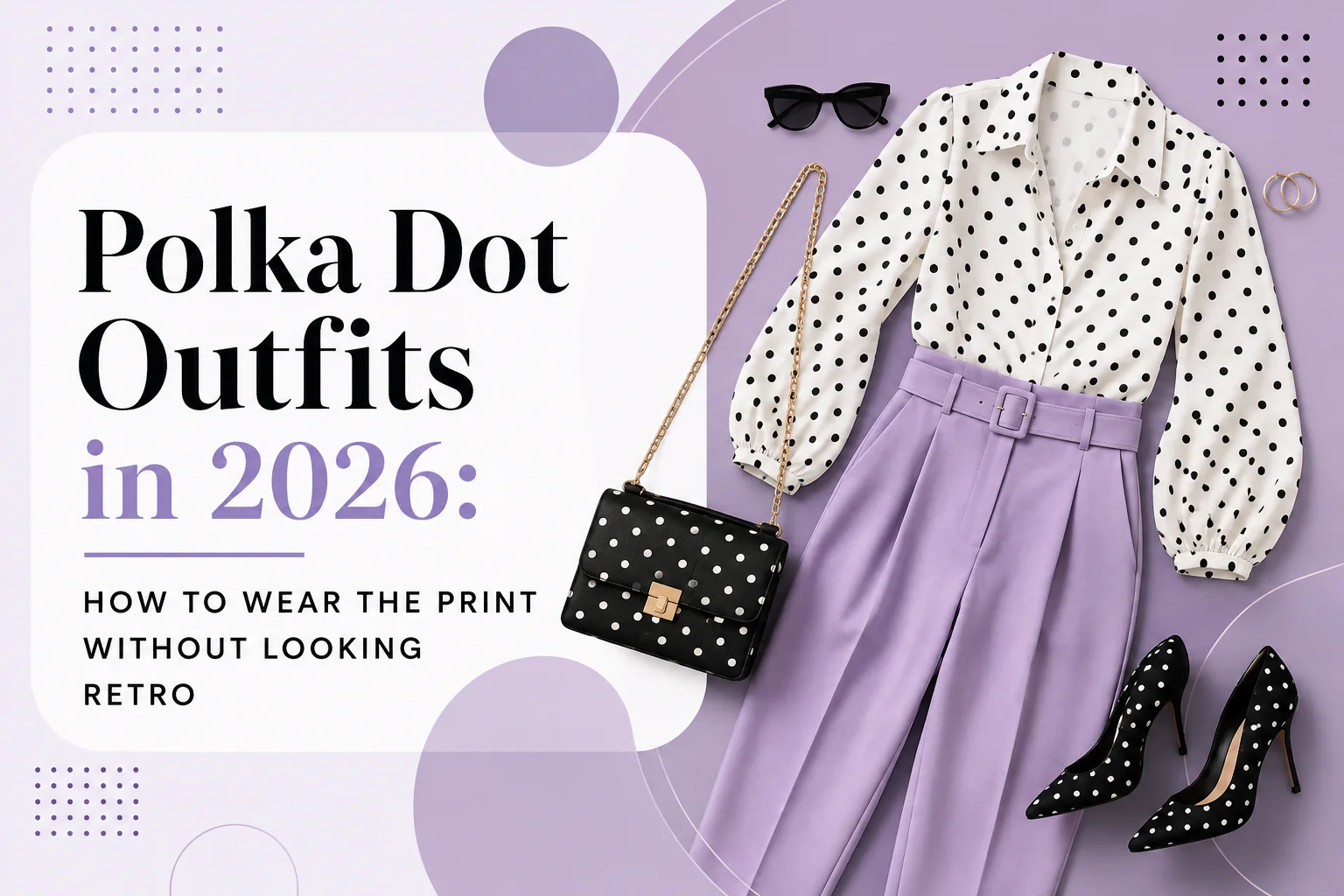
Polka Dot Outfits in 2026: How to Wear the Print Without Looking Retro
Category: FashionAuthor: Aiman Shahzadi Polka Dot Outfits are one of 2026’s most visible fashion trends, but the styling has changed. Instead of building a head-to-toe vintage look, current outfits mix dots with clean tailoring, sporty pieces, sheer layers, denim and simple shoes. That contrast is what makes the print feel modern. For more on this, see our guide to how to wear boho fashion without the costume look. Quick answer: Treat polka dots like a neutral print. Pair a dotted skirt with a plain tank, a dotted dress with a leather or denim jacket, or a dotted top with tailored trousers. Keep one part of the outfit simple so the print stays intentional. Why Polka Dots Are Trending in 2026 Fashion editors have highlighted polka dots across spring/summer 2026, from dresses and skirts to unexpected pieces such as capris, tailored shorts and sheer layers. The print works because it can move between romantic, minimal and edgy styling. 10 Modern Polka Dot Outfit Ideas 1. Polka dot midi skirt + white tank + flat sandals Simple shapes stop the skirt from looking overly formal. 2. Dotted slip dress + oversized blazer The blazer adds structure and makes the dress work for dinner, work events or transitional weather. 3. Polka dot blouse + straight jeans A classic formula that feels current with square-toe flats, loafers or sleek trainers. 4. Sheer dotted skirt + oversized shirt Layer over appropriate lining or a slip and keep the shirt solid-coloured. 5. Dotted trousers + black fitted top Let the trousers be the only print and use simple accessories. 6. Brown-and-cream dots Brown gives the print a softer 2026 transition into autumn than classic black and white. 7. Polka dots + leather jacket Leather adds contrast to a sweet print, especially with a dress or midi skirt. 8. Polka dot scarf + neutral outfit A small accessory is the safest way to test the trend before buying a dress or skirt. 9. Dotted top + tailored shorts This balances playful print with sharp structure. 10. Mixed print, but only with a shared colour If you mix dots with stripes or checks, repeat at least one colour and keep one print smaller than the other. Best Polka Dot Colours for 2026 How to Keep Polka Dots From Looking Dated If you prefer buying fewer trend pieces, use GlowCulture’s capsule wardrobe guide to decide whether a dotted skirt, scarf or blouse will create the most new outfits from what you already own. Choosing the Right Dot Size Scale changes how a polka dot outfit feels more than almost any other detail. How to Style Polka Dots Through the Seasons Spring and summer Lightweight dotted midi skirts, shirt dresses and blouses look fresh with white trainers, flat sandals or a denim jacket. Choose breathable fabrics such as cotton, viscose or linen blends for warm days. Autumn Brown-and-cream or navy dots feel softer than black and white as the weather turns. Layer a dotted blouse under a knit or a dotted skirt with a leather jacket and ankle boots. Our late summer to autumn outfit guide has more transitional ideas. Winter Use dots in small doses: a scarf, a blouse under a tailored coat, or tights with a plain dress. Dark backgrounds with small dots look sophisticated and are easy to layer. Work-Friendly Polka Dot Combinations What to Check Before You Buy a Dotted Piece If you like the idea of a versatile wardrobe with a few print pieces, our capsule wardrobe guide shows how to plan purchases so patterned items still get worn. Accessories That Work With Dots Keep accessories simple: a plain leather belt, a structured bag in a solid colour and small gold or silver jewellery. If the dots are black and white, one accent colour in the shoes or bag can make the outfit feel considered without competing with the print. Frequently Asked Questions Are polka dots in fashion in 2026? Yes. They are a major spring/summer 2026 print and continue into transitional styling through dresses, skirts, tops and polka dot accessories. Can you wear polka dots to work? Yes. Use smaller dots, neutral colours and structured pieces such as trousers, blazers or midi skirts. What shoes go with a polka dot dress? Ballet flats, slingbacks, loafers, minimal trainers and simple sandals all work depending on formality. Do polka dots make you look bigger? No print has a universal effect on every body. Fit, fabric, scale, contrast and silhouette matter more than a simplistic rule about dots. Final Thoughts Polka dots feel fresh in 2026 when they are styled with contrast. Use denim, tailoring, leather, modern shoes or a minimal colour palette, and the print becomes much more versatile than its retro reputation suggests. Related Reading Browse more in Fashion or return to the GlowCulture homepage. Sources & Further Reading Editorial note: This article offers general style guidance. Trends, prices and product availability change, so check current details before you buy. Learn how we research and review our content in our Editorial Policy.